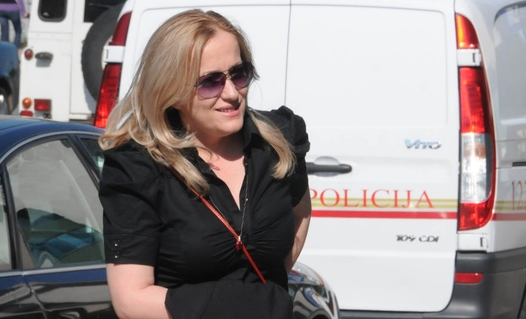
Montenegrin investigative journalist Olivera Lakić shot and injured

The European and the International Federation of journalists (EFJ/IFJ) joined its Montenegrin affiliate, the Trade Union of Journalists of Montenegro (SMCG) in condemning the attack on Vijesti journalist Olivera Lakić, who was shot in the leg outside her home on 8 May 2018, in Podgorica. She was taken to the hospital and remains in stable condition after a man shot her in the right leg, while two other men ran away, according to Vijesti’s editor-in-chief. Olivera Lakić is working as an investigative journalist for the daily newspaper Vijesti. She is known for investigating crime and corruption in Montenegro. According to media reports she…

Exploitation of freelance journalists is a threat to our democracy

By Renate Schroeder, Director of the European Federation of Journalists The gap between the incomes of the diminishing number of journalists with stable contracts and the growing band of freelances in Europe is getting bigger. The European Federation of Journalists (EFJ) and its Freelance Expert Group (FREG) are appalled by this worsening situation. Such unfair pay practices cannot continue, since an increasing proportion of editorial content is written and produced by freelance journalists. This has an impact on the quality of journalism and, in the end, on democracy itself. That is why the EFJ has been supporting the ETUC’s PayRise…

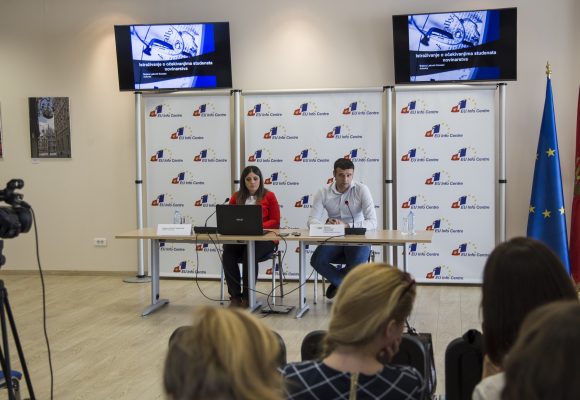
Study reveals one-third of Montenegrin journalism students don’t want to work in the media

A survey carried out by the EFJ affiliate in Montenegro, the Trade Union of Media of Montenegro (SMCG), about the exptectations of journalism students in Montenegro showed that a majority of respondents do not plan to work as a journalist after their studies. Almost 90% of surveyed students believe that getting a job in the profession will not be easy. About a third of Montenegrin journalism students do not see themselves working in this profession in the future – instead they see themselves in public relations (PR) or some other jobs. “Half of the journalism students would love to work at TV stations,…

Freedom of expression deteriorates in EU candidate countries, shows EU progress reports

The European Commission published on 17 April 2018 its annual Enlargement Package, including the country reports (formerly known as “progress reports”), assessing the implementation of the European Union’s enlargement policy regarding the accession process of the Western Balkans and Turkey. These country reports shows alarmingly precarious working conditions of journalists as the level of press freedom deteriorates further. In four countries (Bosnia and Herzegovina, Kosovo, Montenegro and Serbia) no progress has been achieved in the area of press freedom. Issues of attacks on journalists, defamation cases media ownership, lack of funding of the public service broadcasters and self-censorship prevail. Some of…

Young journalists in Germany demand better pay for better journalism

A delegation of about 20 young German journalists together with the Deutscher Journalisten-Verband (DJV) and Deutsche Journalisten Union (dju in ver.di) met with publishers to demand better working conditions on 25 April 2018 in Berlin. They insisted that publishers have to invest in the future generation of journalists or the “generation Erasmus” will leave and with them the young topics that attract young readers. The European Federation of Journalists (EFJ) strongly supports the demands for investing in young journalists. This happened in the context of very difficult negotiations between the unions, DJV and dju in ver.di and the publishers association…

EU conference on digital sector: policymakers and citizens join forces to shape digital future

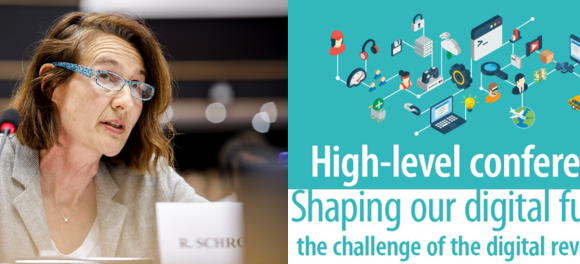
A High Level Conference “Shaping our digital future” brought together around 600 participants including MEPs, ministers and citizens to discuss challenges and opportunities of the digital sector on 25 April in Brussels. The event was jointly organised by the European Parliament and the European Commission in the light of the rapidly changing digital landscape to enter into a dialogue with policy makers and citizens about Europe’s digital future. Four panels discussed the following topics: Investing in connectivity and the data economy infrastructure (5G, High Performance Computing, Artificial Intelligence) and avoiding a digital divide Innovation in the digital age based on…

Resolution calls for protection of investigative journalists in the wake of murders of Ján and Daphne

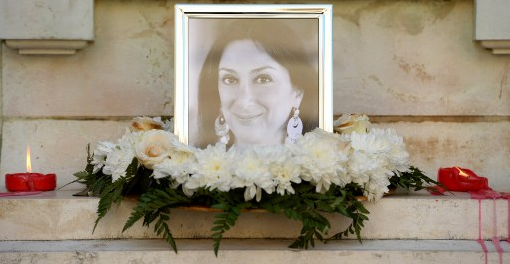
A resolution on the protection of investigative journalists in Europe, passed by Members of the European Parliament (MEPs)  on 19 April 2018 during the plenary session in Strasbourg, calls for better protection of investigative journalists and whistle-blowers. In the wake of the murders of investigative journalists Daphne Caruana Galizia and Ján Kuciak, MEPs demand better protection of journalists who are regularly subject to lawsuits intended to censor their work a permanent financial EU scheme to support independent investigative journalism a draft EU directive to protect whistle-blowers the Commission to address challenges to media freedom and pluralism in the EU better monitoring of media…

Report calls on EU states to collaborate with journalists’ unions for gender equality

A report on “Gender Equality in the Media Sector in the EU”, passed by Members of the European Parliament (MEPs) during the plenary session in Strasbourg on 17 April 2018, calls on Member States and the European Commission to collaborate with journalists’ trade unions and media organisations to promote co-regulation in the media sector through codes of conduct. In order to safeguard and ensure gender equality, media companies are urged to draw up codes of conduct and self-regulation systems together with representatives from journalists’ trade unions. This aims to allow preventive action and impose sanctions regarding gender-based discrimination in media productions. The…

New Council of Europe report calls on Montenegrin legislators to ensure professional rights of journalists

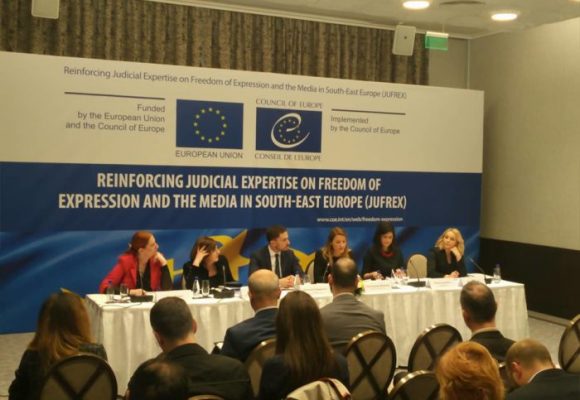
The final report “Montenegro Media Sector Inquiry” published on 5 April 2018, expressed the urgent need for Montenegrin authorities to guarantee professional rights of journalists. A group of independent experts carried out a detailed analysis of the Montenegrin media sector from August 2017 until January 2018. Representatives from the EFJ’s Montenegrin affiliate, the Trade Union of Media of Montenegro (SMCG) were consulted for the investigation. The report found that the private Montenegrin media had failed to engage with the SMCG about a collective agreement prepared by the national journalist trade union a year ago. The EFJ backs the recommendation addressed to private…

Hungary: two media outlets forced to close following Orbán’s electoral win

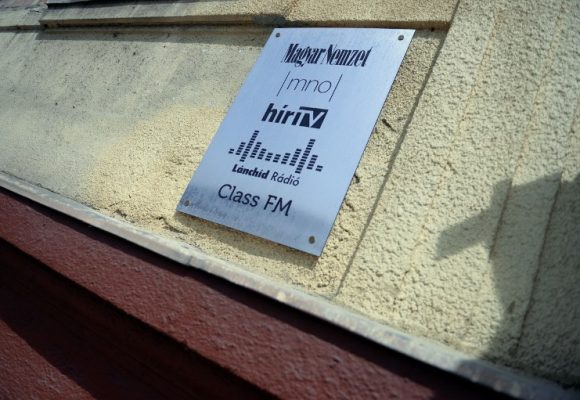
Radio station Lánchíd Rádió as well as Hungarian opposition daily newspaper Magyar Nemzet have shut down on 10 and 11 April 2018. The European Federation of Journalists (EFJ) is appalled by the latest developments following Orbán’s electoral win, which further narrows media pluralism in Hungary. The Hungarian opposition daily newspaper Magyar Nemzet and its online version were forced to close yesterday due to financial reasons. A sudden increase in rent of the publishing buildings, whose owners are reported to be close to the newly re-elected Hungarian Prime minister Viktor Orbán, led it to cease its media production.  The Hungarian radio station Lánchíd Rádió…

EFJ meets Slovak journalists in aftermath of Ján Kuciak’s murder

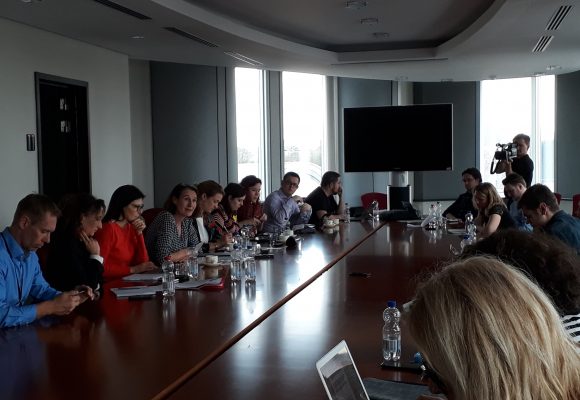
The director of the European Federation of Journalists (EFJ), Renate Schroeder met with a group of Slovak journalists from various Slovak media on 11 April in the European Parliament to discuss the current situation of journalists in Slovakia and what must be done to better protect (investigative) journalists. The meeting “Slovakia and Malta: killed journalists. What is changing in Europe?” organised by the Information Office of the European Parliament in Slovakia brought together 15 Slovak journalists from  TV Markiza, TV TA3. RTVS- public TV and radio, TV JOJ, Daily SME , Daily DennikN, daily PRAVDA and press agency TASR. Nora Wehofsits, advocacy…

Fact-finding mission report to the Baltics published

A new report about the fact-finding mission conducted by the European Federation of Journalists (EFJ) and the European Centre for Press and Media Freedom (ECPMF), which investigated the media situation in Estonia and Lithuania from 22 to 24 January, was published on 9 April 2018. Members of the mission interviewed almost 30 experts: representatives of the government, academia, press councils, public service media, journalists‘ organisations, investigative journalists, editors-in-chief and CEOs of major media companies. The two Baltic states were chosen in the wake of a wave of disinformation spread by Russian specialists during the US election campaign. The question, whether the comparatively small societies…

Serbian journalists attacked by police in Kosovo

The European Federation of Journalists (EFJ) joined its Serbian affiliate, the Journalists’ Union of Serbia (SINOS), the Journalists’ Association of Serbia (UNS) and the Independent Journalists’ Association of Serbia (NUNS) in condemning the attacks on Serbian cameraman Vladimir Milic as well as journalists Dragana Zecevic and Radmila Komazec on 26 March 2018 in Kosovska Mitrovica, Kosovo. They were covering a meeting of the local community about the Kosovo dialogue in the Mitrovica Community Centre. The level of violence was very high as shown in this reportage. Milic, who works for the public television Radio Television of Serbia (RTS), was reportedly attacked by Kosovar policemen who…

Workshop: Robot Journalism – Should we be afraid?

Registration opens for the upcoming MediaRoad event Robot “journalism” is already the reality in many newsrooms churning out content faster than we can consume. News organisations are increasingly experimenting with robot journalism using computer programmes to analyse data and produce news stories because robots are more productive. But how much do we know about these robots behind the news? Are they friends or foes of journalists? Should journalists be afraid or take advantage of the technology to improve their working conditions and quality of journalism? This workshop will focus on these questions and explore the pros and cons of robot…

Norwegian Union of Journalists signs freelance framework agreement

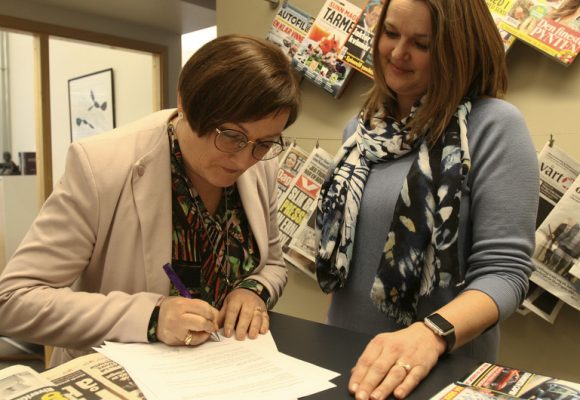
The Norwegian Media Businesses’ Association (MBL) signed an unprecedented  framework agreement for freelance journalists with the Norwegian affiliate of the European Federation of Journalists, the Norwegian Union of Journalists (NJ), concerning purchase, sale and copyrights of freelance materials on Wednesday, 21 March 2018.  The NJ had been in negotiations with the MBL to establish this framework agreement since April 2016. The purpose of the agreement is to ensure predictable frameworks for freelance jobs. The framework agreement will take effect on 1 April 2018. It requires an individual agreement to be concluded between the freelancer and the employer. The NJ and the MBL will prepare templates for  agreements which…

Open letter to diplomats in Malta regarding Daphne’s murder investigation

The European Federation of Journalists (EFJ) co-signed an open letter by seven international freedom of expression organisations on 23 March 2018, urging diplomats in Malta to make their presence felt concerning the investigation of the Daphne Caruana Galizia murder. “Your engagement in this case is setting a standard and precedent for what is permissible in the European Union”: We, the undersigning international organisations are closely monitoring the investigation of the murder of Maltese journalist Daphne Caruana Galizia and the related court proceedings in Malta. Daphne Caruana Galizia was a journalist, a blogger, a mother of three. For years, she reported…