European Federation of Journalists

IMPACT

IMPACT – Independent Media Promoting Accountability, Community, and Trust in European Democracy

A vibrant civil society consists of informed citizens who know their rights within a system that upholds democratic values. Civil society organisations are central to enforcing and upholding EU fundamental rights and values. For a democratic political system to thrive, workers, journalists and human rights defenders must therefore benefit from stable working conditions. Workplaces grounded in democratic standards result in more equitable, innovative, job-rich societies.

The EFJ and its members strive to:

  • protect and strengthen the rights and freedoms of all journalists and journalists’ unions and associations in Europe;
  • promote and defend freedom of information, media freedom and pluralism and independence of journalism;
  • uphold and improve professionalism and to promote high standards of journalism, ethics of journalism, and journalistic education;
  • improve and defend the social and working conditions of all journalists, employed and freelance;
  • promote equality of sex, race, colour, language, religion, political or other opinion, national or social origin, association with a national minority, property, birth or other status, to exercise non-discrimination in its activities and to strive to achieve equality in representation within its statutory bodies;

This project aims to achieve these principles through advocacy, training, and support to our members.

To achieve the priorities and the objectives, the EFJ will carry out the following activities:

  1. Thematic EFJ Expert Groups meetings (promoting workers’ rights and gender equality and diversity)
  2. European capacity building/advocacy training on media freedom issues
  3. A financial scheme “National Capacity building Fund” for EFJ members

The project will run from 1 January to 31 December 2026 and is funded by the European Union. Views and opinions expressed are however those of the EFJ only and do not necessarily reflect those of the European Union or EACEA. Neither the European Union nor the granting authority can be held responsible for them.

Actions

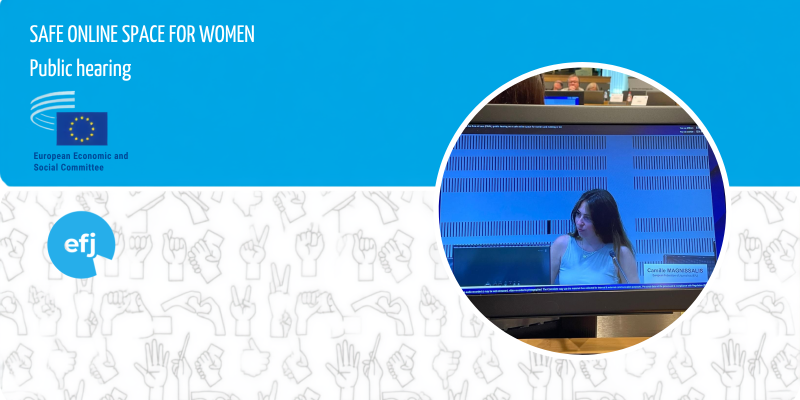
Tackling online harassment of women journalists as a professional risk issue

Today, the European Economic and Social Committee (EESC) held a Fundamental Rights and Rule of Law (FRRL) Group hearing dedicated to the topic of online harassment of women. This provided the European Federation of Journalists (EFJ) with an opportunity to reaffirm the importance of tackling online harassment of women journalists as a professional risk issue. “Online attacks do not remain confined to the screen. We have been monitoring several incidents that have escalated offline, putting women journalists at serious risk and requiring a timely response and safety measures. Unfortunately, online harassment is difficult to tackle as threats are under-reported and…

Ozempic

EFJ condemns fines against Dutch newspapers over weight-loss drug coverage

The European Federation of Journalists (EFJ) condemns the fines imposed by the Dutch Health and Youth Care Inspectorate (IGJ) on four national newspapers, NRC, de Volkskrant, AD and De Telegraaf, over their reporting on weight-loss drugs such as Ozempic. DPG Media, publisher of de Volkskrant and AD, was fined €51,000, while Mediahuis, publisher of NRC and De Telegraaf, was fined €132,000. The IGJ ruled that the coverage amounted to unlawful advertising of prescription medicines. The incident has been documentedon the Mapping media freedom platform EFJ affiliate, The Dutch journalists’ union (NVJ) said the fines “can have a chilling effect on…

Slovenia: International media and journalist organisations call for strong safeguards to protect the independence and financial sustainability of RTV Slovenija

The European Federation of Journalists (EFJ) has joined other media and journalist organisations in calling for any reform of the legal framework for RTV Slovenija to protect its institutional and editorial independence and guarantee adequate, sustainable and predictable funding for its public service remit. On 26 August 2026, the Slovenian Ministry of Culture published proposed amendments to the Law on Radiotelevizija Slovenija. They would restructure the organization’s governance and management and change parts of its financing. We recognize the legitimate aim of an efficient, accountable and financially sustainable public service broadcaster. Different governance and funding models work well across Europe.…

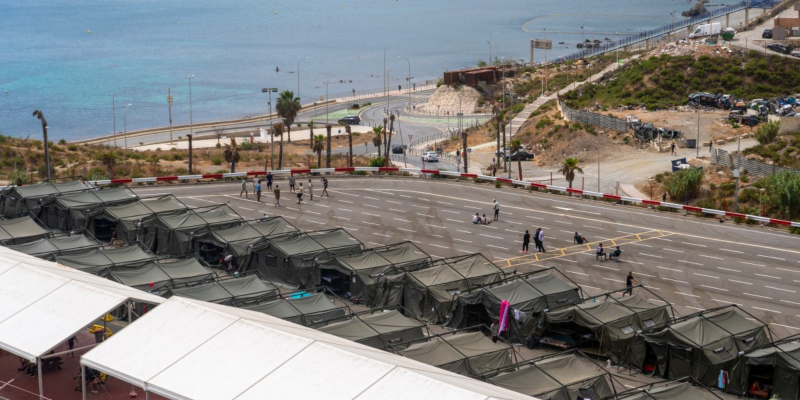
Temporary shelters for migrants are pictured in Ceuta on August 27, 2026

Spain: Journalists harassed by anti-migrant protesters in Ceuta

On 25 and 26 August, journalists covering anti-migrant demonstrations in Ceuta, a Spanish enclave in North Africa, were verbally and physically harassed by protesters. The International and European Federation of Journalists (IFJ-EFJ) join their Spanish affiliates in condemning these attacks and calling on the authorities to guarantee the safety of journalists and media workers. The Spanish enclave of Ceuta experienced a mass influx of migrants over its border with Morocco on 30 and 31 July, with more than seventy thousand people arriving. While many returned to Morocco, between around three and seven thousand migrants, including unaccompanied minors, remain in the enclave.…

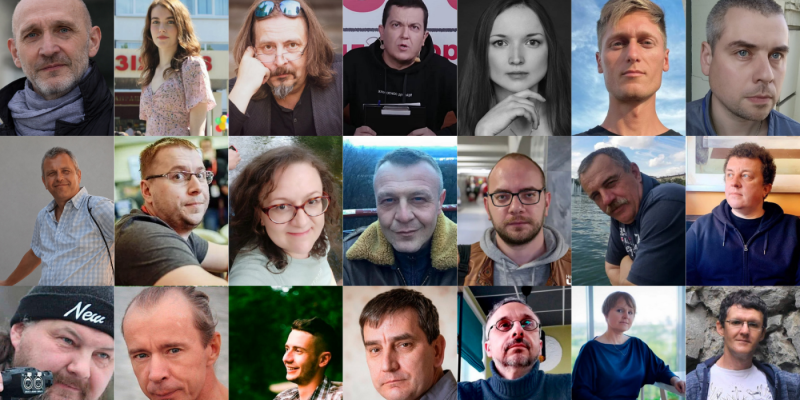
Belarus: Imprisonment and exile of journalists continues six years on from the fraudulent presidential election

Six years on from the fraudulent Belarusian elections of 9 August 2020, the crackdown on press freedom in Belarus has intensified, with 21 journalists currently imprisoned and those in exile facing intimidation. The International and European Federations of Journalists (IFJ-EFJ) joins their affiliate, the Belarusian Association of Journalists (BAJ), in calling for an end to the criminalisation of journalists, and for the immediate and unconditional release of all those imprisoned for doing their job. Since the fraudulent Belarusian elections on 9 August 2020, President Aleksandr Lukashenko’s regime has increased pressure on dissidents and intensified its crackdown on the press, handing out disproportionate…

Greece: Major victory for press freedom as anti-SLAPP legislation is passed

The Greek parliament adopted on 31 July 2026 a bill introducing formal legal safeguards against Strategic Lawsuits Against Public Participation (SLAPPS). The European and International Federations of Journalists (EFJ-IFJ) join their Greek affiliates, in welcoming “a significant step forward for press freedom.” Following key interventions by EFJ-IFJ affiliate, the Journalists’ Union of Athens Daily Newspapers (JUADN), during both the public consultation and the parliamentary committee process, the Deputy Minister of Justice, Mr Bougas, accepted and incorporated, through an amendment, a provision allowing courts to examine – on the basis of the principle of equality before the law – whether a…