European Federation of Journalists

Public Service Broadcasting

The European Federation of Journalists (EFJ) defends public service values in broadcasting. We promote public service values, editorial independence, quality programmes and democratic and accountable systems of administration. The EFJ is a member of the social dialogue in the audiovisual sector of the European Union.

As with other sectors, broadcasting journalists continue to face severe problems for their future. Redundancies are occurring in both public and commercial broadcasting organisations, pension funds are in crisis, and employers are, in many cases, forcing changes in working practices, changes in agreements on pay and conditions, and demanding that workers should take on additional duties and skills. It’s not just employers reducing employment standards; there is a rise in political interference

The EFJ builds union solidarity. It co-ordinates discussions with unions, international organisations and other global groups dealing with media. This action programme should lead to the preservation and expansion of broadcasting of high standards and integrity.

Members: Christiana Jankovics, Anne Berit Larsen, Manuela Bermudez, Nina Bernhardt, Michael Burkard, Gabriella Capparelli, Ago Gaskov, Yannick Hupfer, Fabien Jannic-Cherbonnel, Sanja Mikleušević, Montserrat Montaos, Soraya Morvan-Smith, Pilar Ortega Espejo, Minna Pye, João Rosário, Vlad Sydorenko, Maximiliano Álvarez (reserve), Isabel Venceslau (reserve).

Actions

Lithuania: Concerns remain over law on public broadcaster LRT

The European Federation of Journalists (EFJ) joined the European Broadcasting Union (EBU) and the undersigned organisations – representing public service media, journalists, and press freedom organisations across Europe and globally – in calling on the Lithuanian authorities to ensure all outstanding recommendations of the Council of Europe’s Venice Commission on the Law on Lithuanian National Radio and Television are addressed. With this open letter, we call on the Lithuanian authorities, including the Seimas, the Government and the President, to complete the legislative work begun this year and to ensure that all outstanding recommendations of the Council of Europe’s Venice Commission…

World Press Freedom Day: Protecting Public Service Media as critical infrastructure for democracy

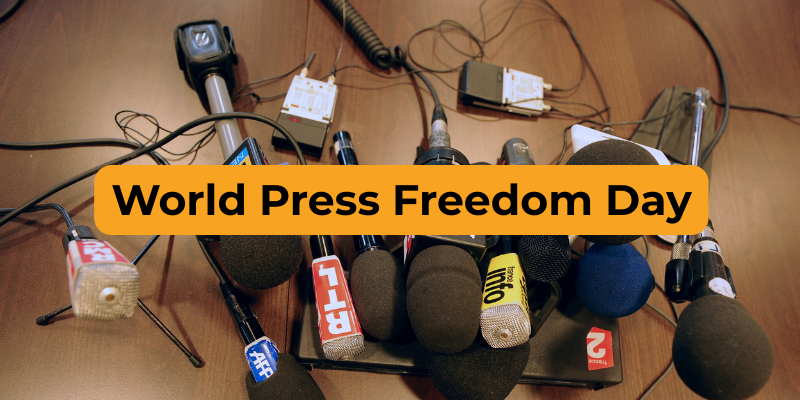
Public Service Media (PSM) in Europe are under unprecedented attacks: from Finland to Italy, by way of France, Slovakia, Lithuania and Czech Republic – you name it. On the occasion of World Press Freedom Day (#WPFD2026), the European Federation of Journalists (EFJ) advocates for public service media as critical democratic infrastructure emphasising that their quality, independence, and robust funding are indispensable for fostering informed and pluralistic debates. It is a domino effect that has been unfolding before our eyes for several years now: European governments are trying to weaken, undermine or exert greater political control over public service media. Almost…

Czechia: Plan to cut public service media funding by a third risk undermining its viability and independence

The European Federation of Journalists (EFJ) joins the European Broadcasting Union (EBU) and the undersigned international media and journalists’ organisations in expressing concerns by the direction of current discussions in Czechia regarding the future of public service media funding. The ruling coalition has announced its intention to submit a parliamentary bill proposing a significant reduction in licence fee contributions – excluding roughly a quarter of all Czech households (seniors over 75, people with disabilities, dependent young people under 26) along with more than 17,000 businesses from payment. Proposals to abolish the inflation clause also cause a concern as indexation ensures…

Lithuania: EFJ, IFJ and media organisations raise concerns over proposed changes to public service media framework

Almost 30 international organisations, including the European and International Federations of Journalists (EFJ-IFJ), raise serious concerns about proposed amendments to Lithuania’s public service media law, warning that the current draft risks undermining the independence and sustainability of the national broadcaster, LRT. The legislative process has lacked transparency and inclusiveness, and key proposals – such as funding freezes and restrictions, vague grounds for dismissing leadership, expanded political oversight, and governance changes – could expose LRT to political pressure and weaken its ability to fulfil its public service mission. We are urging Lithuanian authorities to reconsider the proposals, align reforms with European…

Switzerland: Citizens once again back strong public service media, licence fees must no longer be under attack

Yesterday, Swiss citizens voted by a clear majority to support independent, high-quality journalism and a strong public broadcasting system. The European Federation of Journalists (EFJ) joins its Swiss affiliates, syndicom and impressum, in welcoming the rejection of the “SBC Initiative” which sought to reduce the annual media licence fee for the Swiss Broadcasting Corporation (SBC). Put to a vote on 8 March, the right-wing Swiss People’s Party proposed to cap the annual household licence fee for SBC to 200 Swiss francs (222€) instead of 335 Swiss francs (372€), with businesses becoming exempt. This would have led to drastic job cuts…

It’s time to stand up for public service media journalists

This article was originally published in the journal “Public Value International”, volume 7: “Under Attack! Populism & Public Service Media”, Under Attack! Antidemokratischer Populismus und Medien (Östereichischer Rundfunk, ORF). Public service media is there to serve the public — the citizens, who fund them and to whom they owe responsibility, transparency, and trust. In times of democratic instability, the rise of populism, and increasingly frequent attacks on media freedom, public broadcasters should be the backbone of the media ecosystem – the strongest pillar – precisely because they do not – or less – rely on advertisers or politically influenced funding.…