EU Court of Justice ruling confirms platforms must pay for use of press content
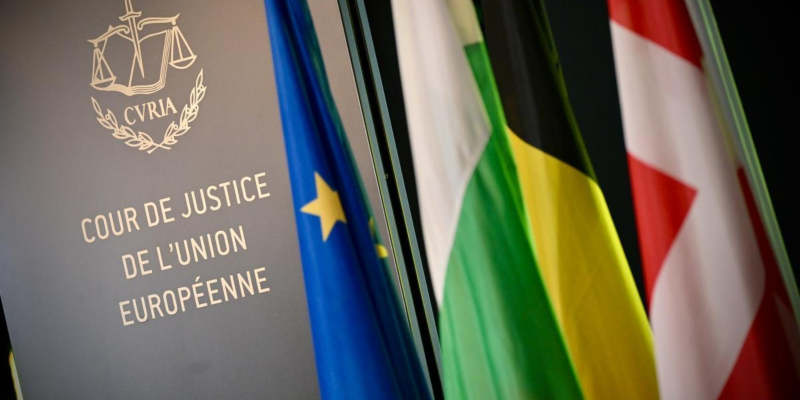
The Court of Justice of the European Union (CJEU) yesterday ordered Meta to compensate Italian publishers for the use of their content. The European Federation of Journalists (EFJ) welcomes an important ruling which upholds the right of Member States to require fair remuneration for the online use of press publications by service providers.
The judgement, issued in a case between Meta and Italy’s media regulator AGCOM, concerns the transposition into Italian law of EU rules on press publishers’ rights. The Court confirmed that EU copyright law allows Member States to establish mechanisms ensuring fair remuneration for the use of press content online, including regulatory oversight of negotiations between platforms and publishers. This reflects the 2019 EU Directive on Copyright in the Digital Single Market, which created a right for press publishers and journalists in the EU to receive payment from online platforms for the use of their publications.
“The Court’s ruling is a significant boost for Member States whose national transposition legislation is also being challenged by the platforms. The Court not only reaffirms the obligations imposed by the Directive, but also emphasises the need for meaningful transparency in determining what constitutes fair remuneration. Furthermore, the condemnation of unfair practices – such as reducing the visibility of news articles in search results while remuneration negotiations are still ongoing – further clarifies the obligations incumbent upon the platforms. All of this matters not only for the sustainability of the publishing industry, but also for journalists, without whose dedication there would be no quality journalism to speak of. Under the Directive, they are entitled to a fair share of that remuneration” said Charlotte Michils, General Secretary of the Flemish Association of Journalists (VVJ), an EFJ affiliate.
For years, journalists and media organisations across Europe have faced an increasing imbalance in the digital market. While platforms benefit from the visibility, credibility and engagement generated by professional journalism, the revenues sustaining independent news production (and therefore decent working conditions for journalists) have been steadily weakened.
The EFJ considers this judgment particularly significant in the broader context of artificial intelligence (AI). Although the case concerns the online use of press content, the principle confirmed by the Court, namely that platforms must negotiate for the commercial use of journalistic content, is directly relevant to ongoing debates around AI training, automated summaries and AI-generated news content. It represents an important step toward ensuring that journalism is not commercially exploited by dominant digital platforms and AI companies without fair compensation, transparency, and accountability.
“The ruling reinforces a simple principle: journalistic work cannot simply be stolen, reused and monetised by large technology companies without authorisation, transparency and fair remuneration,” said Maja Sever, EFJ President. “But the EFJ reiterates that journalists themselves, and not only publishers, must benefit from remuneration mechanisms linked to the exploitation of journalistic works.”
The EFJ calls on the European Commission and Member States to ensure strong and effective enforcement of the press publishers’ right, and for digital platforms to engage in fair and transparent negotiations with publishers and journalists’ organisations. Publishers must also ensure transparency when entering into negotiations with platforms, and ensure revenues are fairly distributed to journalists.