France: MFRR partners and RSF to carry out media freedom mission in Paris
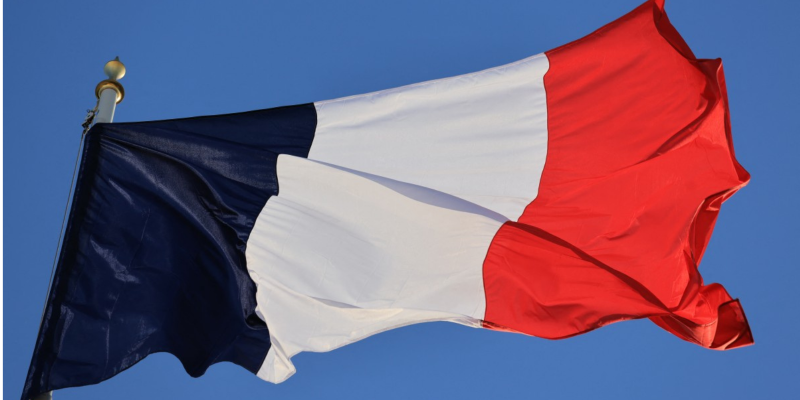
The European Federation of Journalists (EFJ), its partner organisations from the Media Freedom Rapid Response (MFRR), and Reporters Without Borders (RSF) will travel to Paris from 9 to 11 June 2026 to assess the current state of media freedom in France, less than a year before the presidential elections.
While France’s legal and regulatory framework is generally supportive of media freedom, there has been an alarming increase in the number and severity of attacks documented on journalists and media outlets in recent years. As of 3 June 2026, 376 violations of press freedom affecting 590 media professionals had been documented since 2023 onMapping Media Freedom platform. In 2025, verbal abuse (40.6%) was the most frequent type of attack, followed by interference (26%), legal threats (19%), physical attacks (18%) and attacks on property (12%). In the absence of adequate legislation, media concentration continues to increase, and the safeguards designed to ensure genuine protection of journalistic sources have proven to be insufficient.
Led by the European Federation of Journalists (EFJ) and joined by Reporters Without Borders (RSF), ARTICLE 19 Europe, the European Centre for Press and Media Freedom (ECPMF), Free Press Unlimited (FPU), and the International Press Institute (IPI), the mission will engage with journalists, government officials, legal experts, civil society organisations, including the French observatory OFALP, official partner of the MFRR, to evaluate the critical threats to media freedom. It is organised with the support of local partners, the journalists’ trade unions SNJ, SNJ-CGT, and CFDT-Journalistes.
Key areas of concern
The mission will focus on the following key areas of concern:
- Attacks on public service media: France Télévisions faced unprecedented funding cuts in 2025, leading to layoffs, reduced programming and fears of political influence over editorial content, as funding became the subject of growing debate. A parliamentary inquiry into the “neutrality, operation, and funding of public broadcasting” led to 70 recommendations which were strongly criticised as a political attempt to discredit and undermine the role of public service media.
- Stalled EMFA implementation: France has yet to align with the European Media Freedom Act (EMFA), which entered into force in August 2025 and provides mechanisms to protect media independence and pluralism. Key provisions remain unimplemented, including requirements for transparency on media ownership and funding, safeguards against political interference in the appointment and dismissal of public service media leadership, and protections for editorial independence.
- Media landscape highly concentrated in the hands of a few billionaires: Multimillionnaire Vincent Bolloré, in particular, has built a media empire that has expanded significantly in the run-up to the 2027 presidential elections, exercising direct control over a dominant share of French televisions (CNews, most-watched TV channel in 2025), radio (Europe 1), publishing houses and advertising, with an editorial policy aligned with the far-right. The current law is considered outdated and ineffective in preventing such concentration.
- Rising cases of SLAPPs: Recent cases of defamation lawsuits have shown that Strategic Lawsuits Against Public Participation (SLAPPs) are increasingly used to silence journalists and undermine media outlets. On 7 May, a new decree transposing the European Union’s anti-SLAPP directive was adopted with minimal protections and without parliamentary debate, demonstrating a lack of ambition to protect journalists from judicial harassment.
- Weak law on protection of sources. The vague wording of the 2010 legislation coupled with weak safeguards, has enabled judicial harassment against journalists. Two recent cases raised concerns about source protection: Ariane Lavrilleux of Disclose and Philippe Miller of Warning Trading.
- Journalists at risk during protests. Physical safety of journalists remains a persistent concern. As of 3 June, 20 journalists have been assaulted by law enforcement officers since 2025, despite clearly identifying themselves as members of the press. Seven journalists suffered injuries, including photojournalist Anna Margueritat, who was struck in the face, following a police charge on 1 May. Most recently, freelance journalist Enzo Rabouy was hit with a baton and left unconscious while filming the violent clashes after the Champions League final in Paris – another stark reminder of the risks journalists face while covering demonstrations. Seriously injured, police officers provided him with first aid.
A detailed statement will be produced shortly after the mission, sharing the preliminary findings. Following the mission, the coalition will also publish a report based on the mission findings, which will include recommendations.
Media inquiries: Camille Petit, camille@europeanjournalists.org; Camille Magnissalis, cmagnissalis@europeanjournalists.org.
This statement was produced as part of the Media Freedom Rapid Response (MFRR), a Europe-wide mechanism which tracks, monitors and responds to violations of press and media freedom in EU Member States and candidate countries.