
Daphne Caruana Galizia Prize: The importance of funding independent journalism in Europe
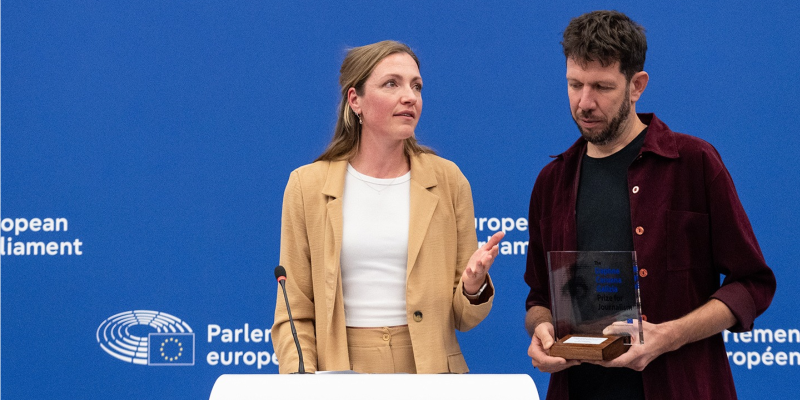
Last Wednesday, the European Parliament hosted the ceremony for the Daphne Caruana Galizia Prize for Journalism. The award honours the memory of the assassinated Maltese journalist by celebrating outstanding professionals in the field and highlighting the crucial role independent journalism plays in protecting democracy.
Roberta Metsola, President of the European Parliament, reflected on Daphne’s impact: “Those who tried to silence her failed, as her stories now travel further than ever.” She also congratulated the winners and pledged that the Parliament would continue to support their cause through concrete action: “Now that the Anti-SLAPP rules we fought for are in force, we will be following very carefully how each Member State puts them into practice.”
Dafydd ab Iago, President of the International Press Association (IPA), also spoke at the ceremony. Using Daphne’s example, he condemned the predatory SLAPP cases that many investigative journalists face: “When she was murdered, she was facing more than 40 libel cases, and her family still carries the burden of the last one. This is an intergenerational punishment for speaking uncomfortable truths.” Addressing the finalists, he remarked: “Your work, like Daphne’s, made someone uncomfortable. That’s why it matters.”
The finalists covered a wide range of topics, including coordinated online hate campaigns against journalists, testimonies from victims of disinformation, the financing of the weapons industry through EU-backed green investment funds, and Europol’s growing clandestine surveillance infrastructure. The winning story examined potential human rights abuses in an Italian detention centre for migrants in Albania.
Giacomo Zandonini and Maite Vermeulen of the Dutch news platform De Correspondent were the reporters behind it. During their investigation, they faced substantial hurdles. For example, they were denied access to the detention centres and had to obtain most of their information from unofficial sources. In her winning remarks, Vermeulen described the goal of this operation as “making independent scrutiny as difficult as possible”, and explained the negative impact it could have over European migration policy.
“The fact that this hidden deal is being seen by many European politicians as a blueprint for future European migration policy is perhaps not surprising, but definitely alarming,” she said. Their work is a prime example of why Europe needs journalism at a time when attacks on fundamental rights are on the rise.
This example of quality reporting highlights a sad reality, that those in power will do anything in their power to silence journalists. While the President’s remarks on institutional support for professionals like Daphne are reassuring, the situation remains worrying. The latest EU budget proposal includes a 30% cut to AgoraEU, the financial programme that is set to include funding for journalism and is already among the smallest financial packages proposed by the EU. The Parliament and Council are expected to establish their positions on the upcoming MFF’s structure by the end of the year, with negotiations between EU institutions beginning in 2027. We hope that Metsola’s strong defence for supporting journalism will be reflected in a viable budget allocation for independent media within the AgoraEU programme.





