Croatia: Weekly Novosti faces drastic funding cuts amid political pressure

The European Federation of Journalists (EFJ) joins the Media Freedom Rapid Response (MFRR) partners today in condemning the drastic annual cuts in funding for the weekly magazine Novosti, the only print media for the Serb minority in Croatia and one of the most respected publications in the country, which is well-known for its critical reporting of the government. Co-financed by the Croatian public body Council for National Minorities as part of the Programme for Cultural Autonomy of Minorities, Novosti recently had its 2025 budget decreased by 35 percent compared to last year, despite an increase of the Council’s annual budget…
EU’s Multiannual Financial Framework: Urgent case for robust and secure funding for journalism

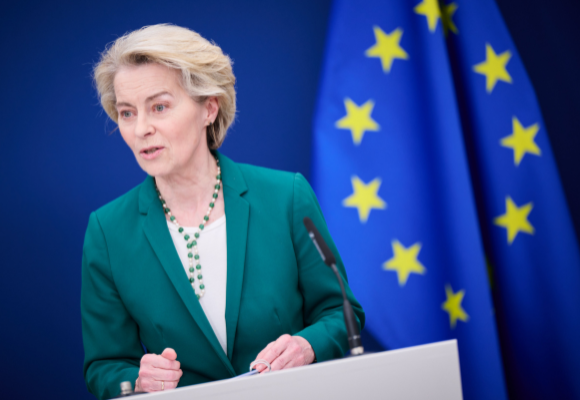
The future of independent editorial media and journalism in Europe is at a critical juncture. The dominance of primarily American Very Large Online Platforms (VLOPs), which now capture over 80% of digital advertising revenue, threatens the sustainability of the media sector. These platforms increasingly exploit journalistic content through generative AI technologies without fair remuneration, further eroding the economic viability of quality journalism. As discussions about the post-2027 Multiannual Financial Framework (MFF) have started, the European Federation of Journalists (EFJ) calls for robust and secure funding for independent journalism in the next EU’s long-term budget. Journalists face mounting internal and external…

Europe at a Crossroads: Defending Democracy Depends on Defending Media Freedom

On this World Press Freedom Day (WPFD), the European Federation of Journalists (EFJ) joins its partners from the Media Freedom Rapid Response (MFRR) in expressing solidarity with all journalists and media professionals who face threats, intimidation, and attacks for their work. In these challenging times of socio-political turmoil in Europe and beyond, public interest journalism is more crucial than ever, as journalists continue to work under increasing pressure. We call for decisive action by the European Union, its member states, and candidate countries to uphold and protect media freedom.  Over the past year, we have seen a sharp rise in…

WPFD 2025: How can we better support Russian and Belarusian journalists in exile?

According to the European Commission, 1,500 independent journalists and editorial newsrooms from Russia and Belarus were estimated to have fled or relocated to EU countries in 2024 alone. Our consultations with the Council of Europe and the Organization for Security and Co-operation in Europe (OSCE) concluded that there was a lack of support from the national public authorities for these journalists in a precarious situation. This is why the European Federation of Journalists, together with the Office of the OSCE Representative on Freedom of the Media, wanted to put them at the centre of attention on UNESCO’s World Press Freedom…

WPFD 2025: Let’s strive for AI that respects the core values of journalism

From automating transcriptions to generating synthetic images, Artificial Intelligence (AI) tools have become embedded in news production. While these tools offer promise, they also raise urgent questions about jobs, ethics, intellectual property, and the safety of journalists. On the eve of World Press Freedom Day 2025, the European Federation of Journalists (EFJ) advocates for an AI future that respects the fundamental values of journalism. “In times of crisis and revolution, it is necessary to refocus on the basics, on what makes journalism what it is: the respect for facts and the public’s right to the truth. AI should help journalists…

Serbia: Media freedom in a state of emergency

On the eve of World Press Freedom Day, the European Federation of Journalists (EFJ) joins its Media Freedom Rapid Response (MFRR) partners in publishing our mission report, with alarming findings about the deteriorating state of press and media freedom in Serbia. The MFRR solidarity mission to Belgrade and Novi Sad, conducted on 7-9 April, alongside ongoing monitoring, revealed a state of emergency – one that demands urgent attention and action from national authorities and the EU. Although the media freedom crisis has persisted for years, the reporting of the deadly collapse of the Novi Sad canopy railway has led to…

Labour Day: Workplace stress epidemic killing 10,000 people a year in Europe

A new research conducted by the European Trade Union confederation (ETUC) has revealed that around 10,000 people in Europe die each year due to workplace stress, making psychosocial risks more lethal than physical accidents. On International Workers’ Day, the European Federation of Journalists (EFJ) joins ETUC in calling for EU legislation on psychosocial risks at work. According to the study, 6,190 deaths are caused by coronary heart disease linked to work-related stress, and 4,843 lives are lost to suicides tied to workplace depression. These figures highlight the severe consequences of job insecurity, long working hours, and workplace bullying, particularly for…