Spain: Journalists harassed by anti-migrant protesters in Ceuta
On 25 and 26 August, journalists covering anti-migrant demonstrations in Ceuta, a Spanish enclave in North Africa, were verbally and physically harassed by protesters. The International and European Federation of Journalists (IFJ-EFJ) join their Spanish affiliates in condemning these attacks and calling on the authorities to guarantee the safety of journalists and media workers.
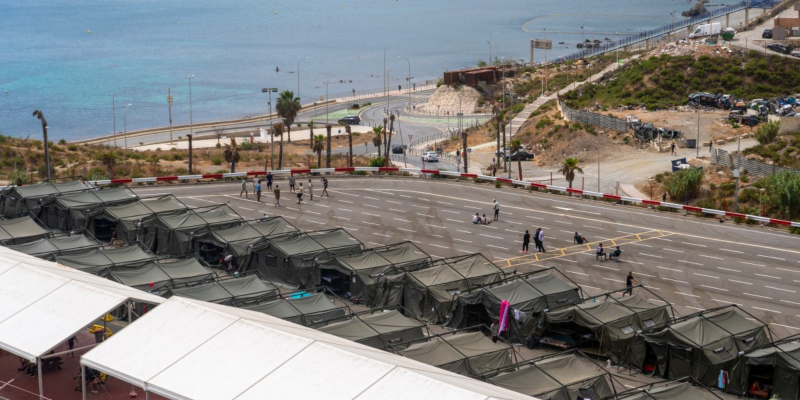
The Spanish enclave of Ceuta experienced a mass influx of migrants over its border with Morocco on 30 and 31 July, with more than seventy thousand people arriving. While many returned to Morocco, between around three and seven thousand migrants, including unaccompanied minors, remain in the enclave. Anti-migrant protesters took to the streets amid ongoing migration issues, resulting in the harassment of journalists.
On 25 August, a La Sexta reporter and cameraman were surrounded by anti-migrant protesters who shouted at them to leave while they were reporting on the demonstration. The journalists were forced to take shelter, and the police intervened after the journalist was physically attacked with a push. On 26 August, anti-migrant protesters insulted journalists, including the crew of public broadcaster RTVE, who were covering the meeting of authorities.
These attacks on press freedom and the public’s right to information are the latest examples of the challenges facing journalists and media workers covering migration issues in Ceuta.
On 13 August Mediapart journalist Nejma Brahim was denied entry to Morocco upon her arrival at the airport, while she was there to cover the migration issue in Ceuta. On 15 August, the Moroccan government expelled Spanish media crews from EFE and TVE who were in the town of Fnideq to report on developments relating to the border with Ceuta.
FAPE said in a statement: “Freedom of the press and the right to information are fundamental pillars of any democratic society. No journalist should be subjected to threats, insults, or attacks simply for carrying out their professional duties, regardless of the tense context in which they operate.”
The FSC-CCOO condemns the attacks in a statement, and adds “We reject the dissemination of racist and xenophobic hoaxes in some media outlets that are contributing to creating a hostile environment in the city of Ceuta against migrants and against those of us who try to give a voice to these people.”
FeSP General Secretary Agustín Yanel said: “The serious events currently unfolding amongst the people of Ceuta must not be used as a pretext to harass or attack journalists. The relevant authorities and police officers must ensure their safety whilst they carry out their work.”
AGP-UGT said: “No climate of social tension, public unrest or political confrontation can justify journalists, camera operators, photographers, technicians or any other media workers becoming the target of insults, threats or assaults simply because they are carrying out their professional duties.”
The IFJ and the EFJ said: “Attacks on journalists covering developments in Ceuta, whose work ensures factual reporting and the public’s right to information, constitute serious violations of press freedom. We condemn the harassment of our colleagues and call on the authorities to ensure the safety of journalists and media workers reporting from Ceuta.”
The Independent Media Promoting Accountability, Community, and Trust in European Democracy (IMPACT) project will run from 1 January to 31 December 2026 and is funded by the European Union. Views and opinions expressed are however those of the EFJ only and do not necessarily reflect those of the European Union or EACEA. Neither the European Union nor the granting authority can be held responsible for them.