Netherlands: Interview with PersVeilig safety advisor Isabella Prins: “If you are a journalist under attack, report it, don’t face it alone”
A few weeks ago, a far-right anti-immigration protest turned particularly violent in The Hague, with several journalists reporting verbal and physical attacks to PersVeilig, the foundation ensuring a safer place for media and journalists operating in the Netherlands. Those reports are not isolated, they echo the monitoring of severe attacks against journalists the European Federation of Journalists (EFJ) has documented since the beginning of the year, thanks to its affiliate, the Dutch Association of Journalists (NVJ), and PersVeilig.
Amid concerns over journalists’ safety in the Netherlands, the EFJ interviewed PersVeilig safety advisor Isabella Prins, to reflect on the ongoing state of media freedom in the country, including the increased legal pressure PersVeilig highlighted in its new published study and share a key message to journalists under pressure: Report your incident, don’t face it alone.
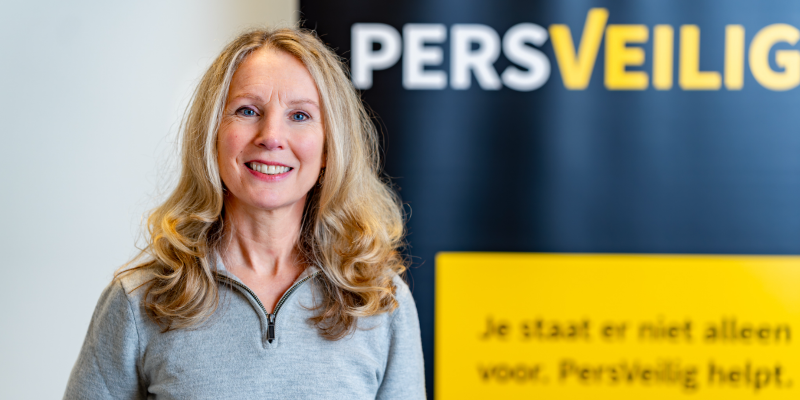
Isabella Prins, could you tell us more about PersVeilig, its mission and your role within the foundation?
Isabella Prins: PersVeilig was founded in 2019 by the NVJ, the police, the Public Prosecution Service and the Society of Chief Editors. Together, the partners signed the PersVeilig Protocol, in which each committed to specific actions to make journalists’ work safer. For example, the police must take journalists seriously when they file a report, and when a suspect is known, investigative steps must follow. Journalists therefore have a preferential position in the Netherlands. When a perpetrator is prosecuted, the prosecutor can request a sentence 200% higher than for an attack on an ordinary citizen. We started as a project and last year we became a foundation. We run a hotline and an online help desk, offer free training, provide protective equipment for freelancers and give legal advice. We also have contacts with social media companies, in case of a death threat or a deepfake, we can ask them to take the content down. And if journalists feel their case has not been taken seriously, we can raise it with the police and the prosecutor’s office.
As a safety advisor, I support the journalists who turn to us for help. We also carry out research every year. This year it focused on legal pressure, so I have been working on that as well.
Since the beginning of the year, the EFJ has been able to document 15 attacks affecting 24 media professionals on Mapping Media Freedom, thanks to our informal collaboration with PersVeilig. The majority of the attacks involve physical violence, with half of the cases resulting in injury. There have also been several severe intimidation cases, including two death threats. From the monitoring, it seems that cases are becoming increasingly violent. Have you witnessed an increase in cases in recent years?
Isabella Prins: Yes, the numbers rise every year, from 2023 through last year. The peak was during the COVID period, around 2020 and 2021, but this year will also be high. The fact that journalists can easily reach us and report their cases to PersVeilig, means more incidents get documented. It has been a really busy year: we receive a lot of notifications, and we see many threats and cases of physical violence. What happened during the far-right riot in The Hague is very concerning. Eight journalists were verbally abused and pushed on the ground from the back, and hit with stones, fireworks and drink cans by individuals believed to be demonstrators. Three of them filed a report to the police with the support of PersVeilig. Similarly, demonstrations last year, for instance against immigration, were also violent, with stones and fireworks being thrown at the police, leaving journalists particularly exposed and vulnerable to injuries.
Photojournalists and photographers are especially at risk. They are visible, and they often work at the scene of accidents, fires or police raids, where emotions and adrenaline run high. There they are easily targeted with intimidation, which in the worst cases turns to physical violence.
Is there a case that has particularly struck you since the start of the year?
Isabella Prins: Yes, I remember a case from June, when the minor son of a famous columnist was injured with a chain lock in Amsterdam-Zuid. The journalist had already received a threatening letter at her newsroom, following the publication of a column, warning that she or her son would be attacked. There are strong suspicions the attack was connected to the journalist’s work. That struck me the most: that a child can be abused because of the writing of his mother. It is really terrible.
Can you see a tendency of Dutch journalists who prefer to remain anonymous while sharing their cases?
Isabella Prins: When something happens to you because of your work, you fear people might follow you or come to your house. At PersVeilig we always guarantee confidentiality. We want journalists to feel safe, that they can come to us, and report their cases without fearing consequences. Every time we do provide the EFJ with cases, we ask journalists for their consent.
On 18 September, PersVeilig presented a new study highlighting increasing legal pressure, including with Strategic Lawsuits Against Public Participation, known as SLAPPs. What are the key findings?
Isabella Prins: The numbers were not good. Some 94% of chief editors experience legal pressure, so almost all of them, which really alarmed us. So do 56% of journalists, especially investigative journalists. The pressure mostly comes from entrepreneurs who built their business themselves and fear reputational damage, so they use legal means to get content removed. In the past, the next day a newspaper was used to wrap fish or line the cat litter. Now everything is online and can be found years later.
Around 30% of chief editors have already faced a SLAPP, with very large sums at stake: claims of 150,000 or even 400,000 euros. Among journalists, the figure is 7%. But imagine you are a freelancer and you read that someone wants 150,000 euros unless you remove your article. I would not sleep well that night. Most of these cases are dismissed by the judge, but the intimidation is real.
It also has a personal cost: 43% of journalists say they enjoy their work less because of legal pressure, and some face financial or health problems. Of course, everyone has the right to go to court if they feel wronged. However, the legal system must never be abused to intimidate or silence journalists and divert attention from ethical public reporting.
The Dutch Parliament recently transposed the EU Anti-SLAPP Directive by publication of the Law of 8 July 2026. Can you tell us more about its transposition which goes beyond the EU Directive?
Isabella Prins: Free Press Unlimited (FPU) launched a petition to the Dutch Parliament calling for the minimum standards in the EU anti-SLAPP Directive to be met and asking for implementing more ambitious and progressive anti-SLAPP protections for public watchdogs. This summer a bill was adopted implementing the European anti-SLAPP Directive. The law goes beyond the Directive by the inclusion of the full costs made by targets from SLAPPs. Judges can also oblige the initiator of the SLAPP case to put financial compensation aside for expected procedural costs and compensation of damages of the target. This is an important step because it will make it harder for individuals, companies or lawyers to intimidate journalists. The transposition also included the support for security-setting in SLAPPs, and the expansion of these to domestic cases.
Before concluding this interview, what would you tell journalists under pressure, and who are afraid to report their incidents ?
Isabella Prins: Always seek help from a colleague or a chief editor. Report your incident. Don’t face it alone. It’s also good to talk about it with friends or family. A chief editor can file a report at the police for an employee, so the name of the journalist won’t be public on the form. As PersVeilig we work confidentially and we help and advise journalists or give them free training to become more resilient. The experienced journalist in the newsroom can be a source of information. Talk about safety in meetings sometimes. As journalists we can help each other.