
Czechia: concern over fast-tracked debate on public service media funding

The European Federation of Journalists (EFJ), its Czech affiliate, the Syndicate of Journalists of the Czech Republic (SNCR), and the undersigned media and journalists’ organisations are deeply concerned by the decision to fast-track legislation in Czechia that would abolish the licence fee and fund Czech Television (ČT) and Czech Radio (ČRo) directly from the state budget. On 23 October 2026, the Chamber of Deputies gave the bill priority in its first reading and agreed to sit late into the night and on Saturday. This raises questions about whether there is enough time for proper parliamentary scrutiny and public consultation on…
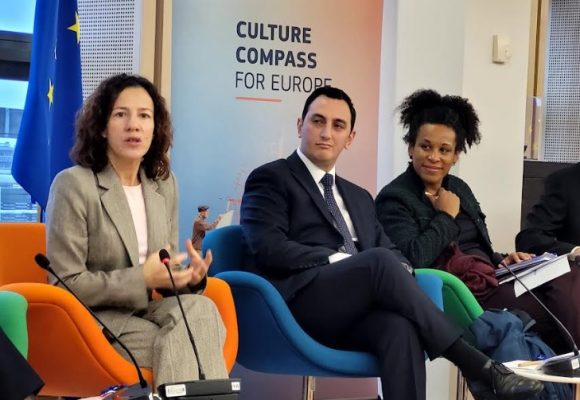
The EFJ calls on the EU to improve working conditions in the cultural sector

On Monday, the European Federation of Journalists (EFJ) participated in the European Commission’s high-level round table on the working conditions of artists and cultural workers. This was an opportunity for the EFJ to present a copy of the recent report by the European Economic and Social Committee (EESC) on Labour rights for journalists to European Commissioners Roxana Minzatu and Glenn Micallef. The EFJ welcomes the start of consultations initiated by the European Commission with a view to adopting a European Charter for Artists and Cultural Workers. The initiative concerns nearly 8 million professionals in Europe who are increasingly vulnerable in…

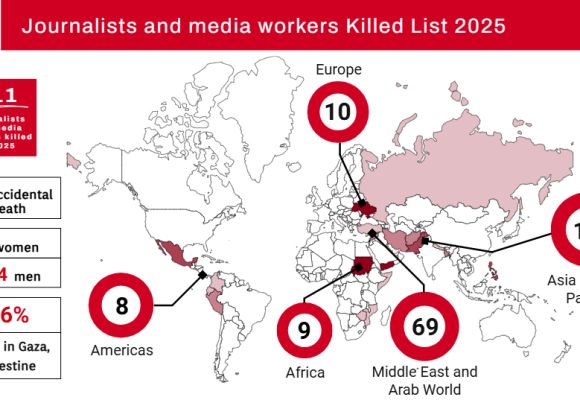
111 journalists killed this year, according to the IFJ

One hundred and eleven journalists, including seven women, have been killed in 2025, according to the International Federation of Journalists’ (IFJ) annual report on journalists and media professionals killed in 2025. Launched ahead of Human Rights Day (10 December), the report’s findings highlight another highly lethal year for journalists and media workers – with 46% of the deaths occurring in Gaza, Palestine. Since 1990 and the launch of its annual Killed list, the IFJ has recorded 3,156 deaths worldwide, an average of 91 deaths per year, and 859 in the last ten years The IFJ has also released the list of…

Montenegro: “We want the Ekipa magazine to serve as a bridge between journalists”

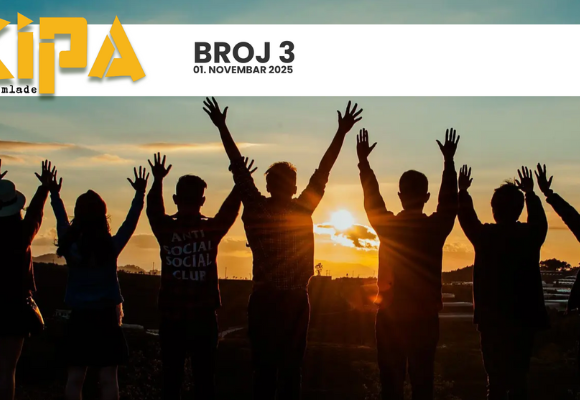
Ekipa (“crew” in English) is a new digital magazine created by the youth section of the Trade Union of Media of Montenegro (TUMM). After a year of activity and three published issues, the magazine – produced by 12 young journalists and journalism students – aims to give young people a voice. We spoke with Ivana Vlaović, coordinator of TUMM’s Youth Journalists and Freelancers Section, and a news reporter at TV Vijesti, one of the country’s most-watched television stations. Can you tell us about the magazine and the mission behind it? The Ekipa magazine, published by the Trade Union of Media…

Open letter to Croatian Prime Minister Plenković over unlawful political pressure against weekly Novosti

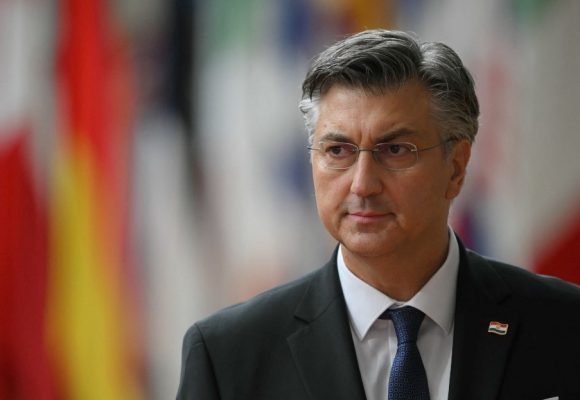
The European Federation of Journalists (EFJ) joined its partners from the Media Freedom Rapid Response (MFRR) in addressing the Croatian Prime Minister Andrej Plenković, regarding the unlawful political pressure being exerted on the weekly Novosti, the only print media outlet for the Serb minority in Croatia. Recent alarming developments include a statement by MP Mlinarić from the ruling Homeland Movement coalition expressing the intention to abolish all budgetary funding for Novosti starting in 2026. This statement followed reports by Novi List that the president of the Homeland Movement, Ivan Penava, had allegedly pressured minority members of the Council for National…

Unanimous call to combat the precarious situation of journalists in Europe

The European Economic and Social Committee (EESC) has just sent a strong signal to European policy makers. Yesterday, in their first ever ruling on the working conditions of journalists in Europe, the three components of the EESC – trade unions, employers and civil society – have joined forces to demand concrete measures against the worrying precariousness of journalists, which poses a serious threat to democracy. The report, adopted on Wednesday by a very large majority in plenary, calls on the European Commission and Member State governments to take concrete measures to support the profession. Although initiated by the trade union…

Lithuania: MFRR raises alarm as political pressure campaign on LRT widens

Proposed legal amendments to the law governing Lithuania’s public broadcaster LRT risk weakening its editorial independence and disrupting its sustainable financing, the European Federation of Journalists (EFJ) and the undersigned partner organisations of the Media Freedom Rapid Response (MFRR) warn today. Earlier this week, LRT journalists announced a protest scheduled for 9 December in front of the Parliament to oppose proposed changes to the Law on the Lithuanian National Radio and Television, which they say would “dismantle the safeguards that protect LRT’s independence.” The protest is organised in reaction to two amendments initiated by the governing Nemunas Dawn party, which…

Ukraine: Peace plan must ensure accountability for crimes against journalists

As negotiations continue over a peace plan to end the Russian war on Ukraine, the European Federation of Journalists (EFJ) and the National Union of Journalists of Ukraine (NUJU) join the Media Freedom Rapid Response (MFRR) and partner organisations in strongly opposing any proposals on granting amnesty for potential war crimes committed in the course of Russia’s full-scale invasion, especially for those against journalists. Our organisations renew our demand that those responsible for the killing of at least 16 journalists, the serious injury of dozens more, as well as for other attacks on media infrastructure, are identified and held accountable…

EFJ President expresses solidarity with Italian journalists on strike

The President of the European Federation of Journalists (EFJ), Maja Sever, on behalf of the 300,000 journalists represented by the EFJ in 44 European countries, expressed her full solidarity with the Italian journalists on strike on Thursday 28 November to demand the renewal of their national collective agreement. “Everywhere in Europe, journalists are faced with increasingly precarious working conditions, which prevent them from fully fulfilling their mission of providing information to the public,” insists Maja Sever. “There can be no real public interest journalism without decent working conditions for journalists. This is why the general strike is a powerful act,…

Open letter: Bosnian public broadcaster BHRT in the final stage of collapse, EU must take swift action

The European Federation of Journalists (EFJ) joins the Media Freedom Rapid Response (MFRR) partners in expressing, in an open letter to the European Commission, serious concerns regarding the future of Bosnia and Herzegovina’s state-level broadcaster, Radio-Television of Bosnia and Herzegovina (BHRT). Our letter comes as BHRT staff today protest in front of Parliament of Bosnia and Herzegovina to raise alarm about the dire financial situation and call for institutional support and immediate action that will end years of disrespecting the Law. For years, BHRT has been facing serious financial challenges due to a deep institutional crisis and debts primarily incurred by…

Switzerland: Public broadcaster SBC to cut 900 jobs

The European Federation of Journalists (EFJ) joins its Swiss affiliates impressum and syndicom in denouncing the dramatic consequences of the restructuring plan announced on Monday by the Swiss public broadcaster SBC, which foresees the loss of 900 jobs. The EFJ calls on the public authorities and all Swiss civil society organisations to counter the “Halbierungsinitiative” initiative, launched by the Swiss People’s Party (SVP-UDC), which risks worsening the state of media pluralism in Switzerland by imposing a new wave of drastic restructuring on SBC. On 24 November, the Swiss Broadcasting Corporation (SBC) announced it will cut 900 of its 5,700 full-time…

Stand Up for Journalism: New report urges recognition of online harassment as a systemic professional risk

On the occasion of the International Day for the Elimination of Violence against Women, the European Federation of Journalists (EFJ) is releasing a new report “Ending the Silence on Online Harassment of Journalists”. Authored by journalist and tech policy advisor Elodie Vialle, the report provides an overview of the widespread phenomenon that is online harassment targeting journalists, whose normalisation makes it harder to address. It documents trends, identifies key challenges, highlights good practices, and offers actionable recommendations for all actors – journalists’ unions and associations, newsrooms, social partners, policy makers, as well as online platforms – to take action to…

Hungary: New EU Media Board should assess Blikk acquisition by pro-government media group

The European Federation of Journalists (EFJ) today joins the undersigned Media Freedom Rapid Response (MFRR) partners and Médiafórum in raising alarm about the recent acquisition of Hungary’s most-read tabloid newspaper by a pro-government media group and calls on the newly established European Board for Media Services to launch an assessment of the merger and its potentially negative impact on media pluralism in Hungary. Our organisations call on the European Board for Media Services (Media Board) – the independent EU advisory body established by the European Media Freedom Act (EMFA) – to initiate an advisory opinion on the takeover, which we…

Serbia: Election of REM Council undermines democratic principles

The European Federation of Journalists (EFJ) joins its partners from the Media Freedom Rapid Response (MFRR) today in expressing renewed concern over the undemocratic process by which the National Assembly conducted the latest election for the Council of the Regulatory Authority for Electronic Media (REM), Serbia’s key media regulator. After a delay of more than one year, the National Assembly last week appointed eight members to the REM Council, including four candidates seen by media experts as independent. However, it failed to approve the ninth appointee representing the country’s national minorities after the ruling majority abstained, drawing criticism of obstruction…

Georgia: EFJ condemns appeal court verdict against journalist Mzia Amaglobeli

The European Federation of Journalists (EFJ) today strongly condemns the appeal court verdict upholding the two-year prison sentence handed down to Sakharov Prize Laureate Mzia Amaglobeli. As the defense will appeal this verdict to the Supreme Court, the EFJ continues to demand its overturn and Mzia Amaglobeli’s immediate release. The Supreme Court will have six months to review the case and issue a final decision. On 18 November, the Kutaisi Court of Appeal upheld the Batumi City Court’s original ruling sentencing journalist Mzia Amaglobeli to two years in prison. The defense team sought a full acquittal, while prosecutors requested that Mzia’s…

European Democracy Shield: Bolstering independent media at the core of democratic resilience

On 13 November 2025, the European Commission adopted its European Democracy Shield, the first comprehensive, flagship strategy for strengthening democratic resilience within the bloc, with a key focus on free and independent media, fighting disinformation and creating healthier information ecosystems to protect European values and security. The European Federation of Journalists (EFJ) today joins the Media Freedom Rapid Response (MFRR) partners in welcoming the Shield which offers, in the face of rising digital manipulation, shrinking civic space and collapsing media business models, an important opportunity to ensure safety of journalists and media viability – but only if turned into concrete…

SUJ: EFJ workshop discusses future of journalism and workers’ rights in the age of AI

The European Federation of Journalists (EFJ) on 6-7 November 2025, the fifth Stand Up for Journalism workshop aimed to discuss the impact of Artificial Intelligence (AI) in journalism, addressing youth and unions’ strength in shaping the future of the profession.  The event took place in Copenhagen, Denmark, currently holding the presidency of the Council of the European Union. Torsten Asbjørn Andersen, Deputy Permanent Secretary at the Ministry of Culture, opened the workshop with his keynote speech on the Copenhagen Declaration that was signed on 4 November on the importance of independent media and culture in Europe (1).  It is expected…