EFJ welcomes European Parliament’s call for an EU regulatory framework that protects copyright in the age of AI

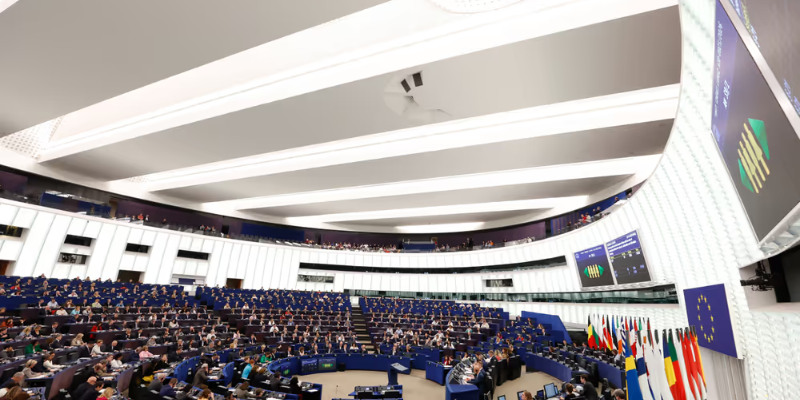
Today the European Parliament adopted the report on “copyright and generative artificial intelligence” drafted by MEP Axel Voss (by 460 votes to 71, 88 abstentions). The European Federation of Journalists (EFJ) welcomes this first step as a sign of political will to strengthen and make fairer the copyright framework protecting journalists from the unauthorised use of their work in AI training and content generation. Until now, AI companies have been relying on journalistic content without seeking consent, providing remuneration, or ensuring transparency about how such material is used. This practice not only undermines journalists’ intellectual property rights but also threatens…
EFJ Webinar: Entrepreneurial Journalism

If you missed the Webinar on Entrepreneurial Journalism, you can catch up the key points and tips provided by our guest speakers, Heike Rost, freelance photojournalists and Tim Dawson, entrepreneurial journalist. German freelance photojournalist, Heike Rost, spoke about her experience in “selling” her journalistic work and share some useful tips on how to build an audience. How to build an audience? 10 Tips from Heike Rost, a photojournalist in Germany. Before building an audience, you need to build yourself an image that is attractive for the audience. It is not just a professional image but also a personal one (‘integer’…

TGS-EFJ Kicks Off First Capacity Building Workshop

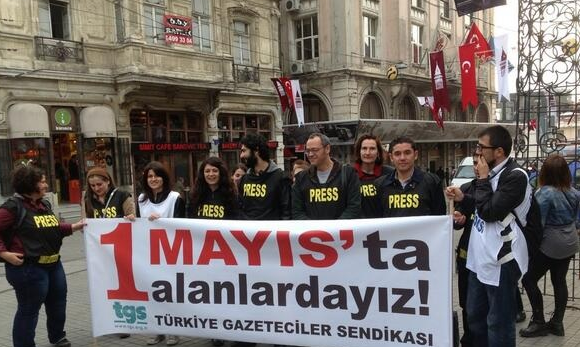
(26-27.04.2014) The European Federation of Journalists (EFJ) and its affiliate in Turkey, the Journalists Union of Turkey (TGS for Türkiye Gazeteciler Sendikasi), organised the first workshop for a two-year project called “Press Freedom and Empowering the Journalists Trade Union Movement in Turkey”. The project is funded by the EIDHR (European Instrument for Democracy and Human Rights) of the European Commission. The workshop covered the issues on union capacity-building, recruitment strategies, legal assistance and the TGS-EFJ campaign for the freedom of imprisoned journalists. The workshop also discussed the preparation of a major international conference for 2016. Renate Schroeder (EFJ Director) and Mehmet Koksal…

The right thing – An authors’ rights handbook for journalists – English and French

This is a manual for journalists in Europe, on authors’ rights. Authors’ rights laws provide the legal foundation for charging money for journalists’ work – as the law of ownership of physical property is the foundation for the business of a shoe-maker or a pin-factory. In other words, authors’ rights are in economic theory what gives journalists’ essentially non-physical product, words and pictures, value in the market. Labour rights laws intervene to give journalists the right to be paid for their time and first use of their work. Read in English or French  

Members of Labour Rights Expert Group

Elected members of the Labour Rights Expert Group (LAREG) in 2014 are Chair     Philippe Leruth     Renate Gensch     Rainer Reichert     Yannis Kotsifos     Seamus Dooley     Franco Siddi     Marta Barcenilla     Nathalie Weber     Michelle Stanistreet  

Managing change in journalism: innovation and trade unions in the news industry

(2011) The media industry is undergoing a revolutionary change. Only few actors attempt to untangle the changing relationship and deal with some important questions raised over the quality of journalism and the increasingly volatile working conditions faced by journalists. The report Managing Change in Journalism published by the European Federation of Journalists (EFJ) attempts to answer these questions through a thorough analysis of a drastically changing media environment. Download the report

Charter of freelance rights

The European Federation of Journalists (EFJ) has produced a Charter of Freelance Rights to defend and raise awareness of the rights of freelance journalists. Download the Charter below Handvest van de rechten van freelancers  1. Iedere freelancer heeft het recht zich bij een vereniging aan te sluiten en via collectieve actie te proberen de situatie te verbeteren van freelancers en andere journalisten. De freelancers en hun verenigingen moeten het recht hebben diensten te leveren die de solidariteit onder de freelancers en tussen freelancers en journalisten in loondienst versterken, zoals tariefaanbevelingen en collectieve overeenkomsten. 2. Iedere freelancer zou dezelfde professionele rechten…