European Federation of Journalists

openMedia, investigating press freedom

Title of the project : openMedia, investigating press freedom
Lead Applicant
: openDemocracy

Partner organisations : EFJ, Index on censorship, King’s College London

The recently launched openMedia project aims to investigate and expose commercial interference in editorial decisions. The project is run by openDemocracy with the European Federation of Journalists (EFJ) as a partner alongside the Index on Censorship and King’s College London.

The project believes that there has not been enough of a concerted, ongoing spotlight on the extent and effects of commercial influence over the media, despite the dangerous consequences it poses for press freedom. For now, the project focuses on 47 countries across Europe but also has ambitions to expand.

Despite the recent launch, the project is adamant that it is not a response to the “fake news” hype of the past year or so. Rather, the project responds to scandals of commercial sponsors influencing media content; for example the Daily Telegraph’s suppression of investigations into its advertiser HSBC; and allegations that Buzzfeed deleted articles which advertisers found unfavourable.

According to the project, this power dynamic can suppress investigations of banks, pharmaceuticals, agriculture, fossil fuel giants, energy companies and other big businesses.

In addition, the project recognizes how for many readers, “sponsored content” is difficult to distinguish from genuine news content. The project therefore aims to clarify the commercial interests apparent in media to readers, and as part of the project, King’s College London will develop digital tools to help readers be better informed about news sources.

The findings of the project will be used to campaign for greater transparency and press freedom in news organisations and to empower journalists to advocate for transparency.

In order to do this, openMedia is currently conducting a confidential and anonymous survey of journalists across Europe, asking about their own working practices and experiences of commercial pressure inside newsrooms. The survey is available in English here and in many other languages here.

Actions

Greece: EFJ calls for Karaivaz’s murder not to go unpunished

On 5 July 2024, the Athens Court of First Instance will hold the start of the trial of suspects accused of murdering Greek investigative journalist Giorgos Karaivaz in 2021. The trial which was initially scheduled on 26 May 2024, must conclude by 28 October this year, when the suspects’ pre-trial detention ends. The European Federation of Journalists (EFJ) and its Greek affiliates (JUADN, ESIEMTH, PFJU, PEPU – ESPIT) welcome the steps taken to prosecute Karaivaz’s murder and urge authorities to conduct an independent and transparent investigation to ensure that all perpetrators are held to account, including those who ordered the…

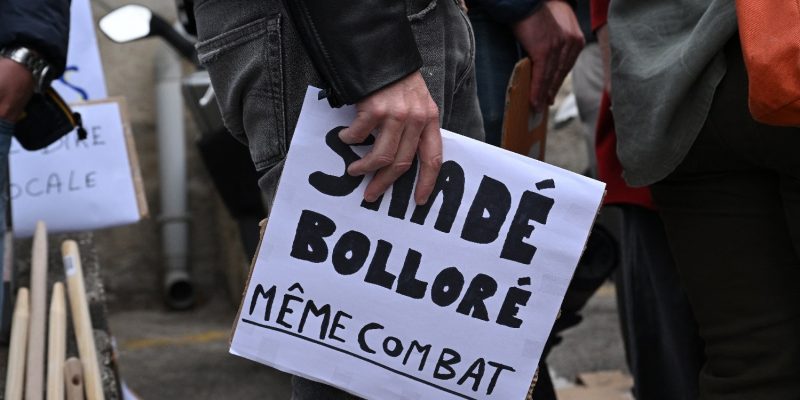
France: The number of attacks targeting journalists quadrupled in June

The European Federation of Journalists (EFJ) and its four affiliates in France (SNJ, SNJ-CGT, CFDT-Journalistes, FASAP-FO) call on the French authorities to take the necessary measures in view of the worrying increase in threats and violence against journalists in France. It is the responsibility of the public authorities to guarantee press freedom and an environment that allows journalists to carry out their work in safety. The number of press freedom violations in France recorded by the EFJ on the EU-funded MFRR platform almost quadrupled in the month of June compared to the number reported since the beginning of the year.…

Reuters Digital News Report 2024: Platforms reset amidst tense global context

The Reuters Institute, in cooperation with Oxford University, recently published the Digital News Report 2024, revealing the worldwide latest trends in online news consumption. The report is set in a particular context of global elections and ongoing conflicts in Ukraine and the Middle East, feeding online news with misinformation and disinformation. This year, the report showcases the growing role of visual and video-led platforms and analyses for the first time audience attitudes towards Artificial Intelligence (AI) in news.  Trust in news  In this year’s report, 40% of all respondents said they trust the news, a similar rate compared to last…

The new European Commission must ensure structural continuity for the media industry

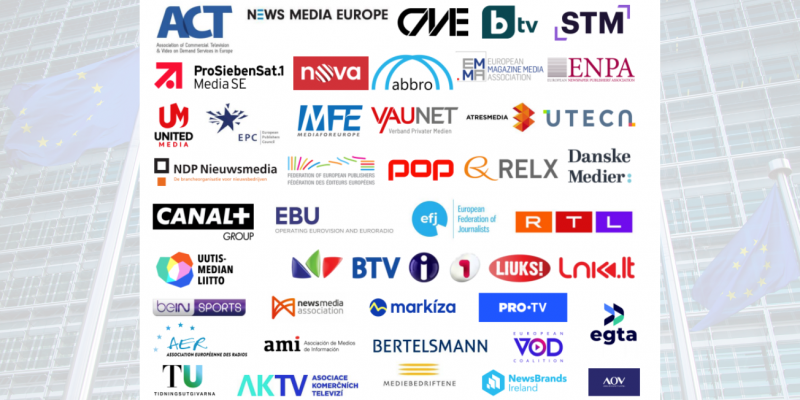
The European Federation of Journalists (EFJ) joins a coalition of Europe’s leading media, publishers, journalists, cultural and creative organisations and associations in calling upon the European Commission to guarantee that cultural and creative industries remain sustainable in the next mandate. The issue addressed by this joint call is the risk of seeing cultural and media content integrated into DG EAC (Education and Culture) and withdrawn from DG CNECT, which is responsible for innovation and digital policies.

Kosovo: Dangerous attack by MP Dimal Basha on ECPMF Senior legal advisor Flutura Kusari

The European Federation of Journalists (EFJ) joins the Media Freedom Rapid Response Partners (MFRR) in strongly condemning Lëvizja Vetëvendosje MP Dimal Basha’s abusive speech against ECPMF Senior legal advisor Flutura Kusari during a speech in the Kosovo Parliament. Kusari, found herself singled out in a personal attack aimed at silencing the prominent activist and resulting in a wave of online abuse and sex-based insults. On 27 June 2024, Kosovo’s Vetëvendosje MP Dimal Basha delivered a speech in Parliament, during the second reading of Kosovo’s draft media law (IMC). This draft bill has been criticized for not taking into account recommendations…

Gaza: EFJ joins ETUC in calling the EU to consider a military embargo

The European Federation of Journalists strongly supported the Resolution for a ceasefire in Israel and Palestine adopted by the European Trade Union Confederation (ETUC). The resolution commends the work of journalists “risking their lives in Gaza for crucial service to humanity and democracy”. It encourages Governments to consider what they can do unilaterally to prevent war crimes, including the introduction of sanctions, and calls on the EU to consider a military embargo. During the debate preceding the adoption of the resolution by the ETUC Executive Committee, the EFJ general secretary Ricardo Gutiérrez highlighted the fact that the International Federation of Journalists…