European Federation of Journalists

openMedia, investigating press freedom

Title of the project : openMedia, investigating press freedom
Lead Applicant
: openDemocracy

Partner organisations : EFJ, Index on censorship, King’s College London

The recently launched openMedia project aims to investigate and expose commercial interference in editorial decisions. The project is run by openDemocracy with the European Federation of Journalists (EFJ) as a partner alongside the Index on Censorship and King’s College London.

The project believes that there has not been enough of a concerted, ongoing spotlight on the extent and effects of commercial influence over the media, despite the dangerous consequences it poses for press freedom. For now, the project focuses on 47 countries across Europe but also has ambitions to expand.

Despite the recent launch, the project is adamant that it is not a response to the “fake news” hype of the past year or so. Rather, the project responds to scandals of commercial sponsors influencing media content; for example the Daily Telegraph’s suppression of investigations into its advertiser HSBC; and allegations that Buzzfeed deleted articles which advertisers found unfavourable.

According to the project, this power dynamic can suppress investigations of banks, pharmaceuticals, agriculture, fossil fuel giants, energy companies and other big businesses.

In addition, the project recognizes how for many readers, “sponsored content” is difficult to distinguish from genuine news content. The project therefore aims to clarify the commercial interests apparent in media to readers, and as part of the project, King’s College London will develop digital tools to help readers be better informed about news sources.

The findings of the project will be used to campaign for greater transparency and press freedom in news organisations and to empower journalists to advocate for transparency.

In order to do this, openMedia is currently conducting a confidential and anonymous survey of journalists across Europe, asking about their own working practices and experiences of commercial pressure inside newsrooms. The survey is available in English here and in many other languages here.

Actions

European Media Freedom Act (EMFA): What does it mean for journalists ?

The European Media Freedom Act (EMFA) entered into force on 7 May 2024. The new rules will fully apply at national level in each EU member state as of 8 August 2025. It has been said this is a historic act as the European Media Freedom Act, called “EMFA”  is the first European regulation dealing with all media. The European Federation of Journalists (EFJ), together with other media freedom groups, the European Broadcasting Union (EBU) and civil society organisations, has worked hard for over two years to get an ambitious act. A future-proof act against the growing attacks against journalism,…

European Commission study on journalist safety lacks solutions while security deteriorates

The European Federation of Journalists (EFJ) joins the undersigned organisations in welcoming the recent study on the actions taken by Member States to implement the European Commission’s Recommendation on the protection and safety of journalists. However, our coalition finds that the report lacks a critical assessment of on-the-ground realities that reduce the effectiveness of initiatives that otherwise look good on paper. We stress therefore the need for more effective measures, and a deeper engagement with journalists and media freedom organizations, to build structures that can genuinely safeguard journalist safety in Europe. The Media Freedom Rapid Response (MFRR) coalition reviewed the recently published…

Georgia: MFRR partners call for lifting ban on journalists’ access to Parliament

The European Federation of Journalists (EFJ) joined the Media Freedom Rapid Response (MFRR) partners in condemning the barring of journalists from reporting within the Parliament of Georgia. We urge the Parliament to reinstate the accreditation of all journalists including online media. Since the start of the debate on the foreign agent bill titled “Law on Transparency of Foreign Influence in Georgia,” journalists from online outlets have been barred from the Parliament. On 27 May 2024, Speaker of the Parliament Shalva Papuashvili signed a decree on “enhancing security levels,” indefinitely barring online media journalists and visitors from attending parliamentary sessions. Since…

Poland: Engaging local communities to fight government-funded “news” portals

TuŁódź is an independent Polish news portal that reports on local and community media in central Poland city Łódź and the surrounding area, among which is Piątek. No independent news existed in this area so TuŁódź decided to start writing about this commune as part of the Local Media for Democracy (LM4D) project. TuŁódź is a traditional newsroom that covers a wide range of local and community news topics. With only 2,000 inhabitants, Piątek is normally a news desert. TuŁódź felt that this project was important to the local community as the people who live there have no information on…

Voices, the European Festival of Journalism and Media Literacy travels to Zagreb in 2025

The highly-anticipated second edition of Voices will be hosted at the Museum of Contemporary Art in Zagreb on 28 February-1 March 2025. “New technologies are dramatically reshaping opinion-making dynamics and the media landscape. After the success of the first edition in Florence, the next edition of Voices will continue to raise awareness about the current risks to ethical journalism, media pluralism, and European democracy,” said Giovanni Melogli, the project coordinator. Reflecting on the value of incorporating media literacy into the event, he added, “It is crucial for citizens to become more critical users of media and social media. Voices aims…

Slovakia: Media freedom groups call on Parliament to reject public broadcasting bill

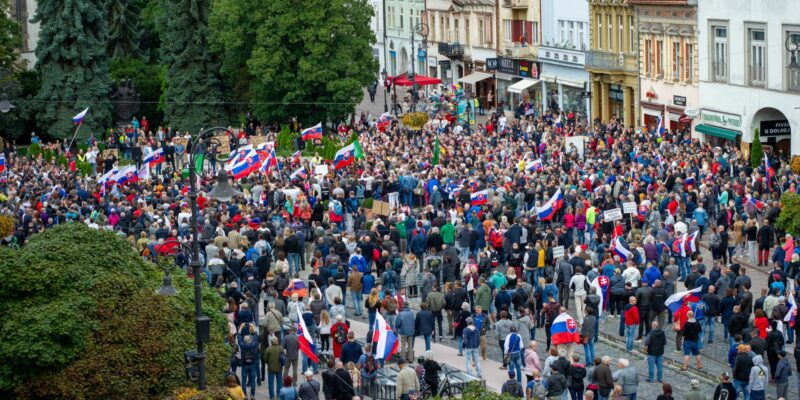
Journalists and media freedom groups are urging Slovakia’s MPs to reject the proposed public service broadcasting bill scheduled for parliamentary review next week. Despite recent amendments to the bill, the new structure would lead to the politicization of the broadcaster in breach of the European Media Freedom Act. The public broadcasting bill aiming to replace Radio and Television of Slovakia (RTVS) with a new entity, Slovak Television and Radio (STVR), will be discussed by the Parliament next week after its finalization by the government in May.  If passed into law, the governing coalition will also remove the current Director-General and…