European Federation of Journalists

openMedia, investigating press freedom

Title of the project : openMedia, investigating press freedom
Lead Applicant
: openDemocracy

Partner organisations : EFJ, Index on censorship, King’s College London

The recently launched openMedia project aims to investigate and expose commercial interference in editorial decisions. The project is run by openDemocracy with the European Federation of Journalists (EFJ) as a partner alongside the Index on Censorship and King’s College London.

The project believes that there has not been enough of a concerted, ongoing spotlight on the extent and effects of commercial influence over the media, despite the dangerous consequences it poses for press freedom. For now, the project focuses on 47 countries across Europe but also has ambitions to expand.

Despite the recent launch, the project is adamant that it is not a response to the “fake news” hype of the past year or so. Rather, the project responds to scandals of commercial sponsors influencing media content; for example the Daily Telegraph’s suppression of investigations into its advertiser HSBC; and allegations that Buzzfeed deleted articles which advertisers found unfavourable.

According to the project, this power dynamic can suppress investigations of banks, pharmaceuticals, agriculture, fossil fuel giants, energy companies and other big businesses.

In addition, the project recognizes how for many readers, “sponsored content” is difficult to distinguish from genuine news content. The project therefore aims to clarify the commercial interests apparent in media to readers, and as part of the project, King’s College London will develop digital tools to help readers be better informed about news sources.

The findings of the project will be used to campaign for greater transparency and press freedom in news organisations and to empower journalists to advocate for transparency.

In order to do this, openMedia is currently conducting a confidential and anonymous survey of journalists across Europe, asking about their own working practices and experiences of commercial pressure inside newsrooms. The survey is available in English here and in many other languages here.
Actions

Bosnia and Herzegovina: EFJ denounces interruption of public broadcaster FTV

The European Federation of Journalists (EFJ) joins its affiliate in Bosnia and Herzegovina, the Bosnia-Herzegovina Journalists’ Association (BHJA), in demanding the reactivation throughout the country of the federal public channel FTV, whose TV and radio broadcasts were interrupted at 6am on 8 May following a decision by the management of the public broadcaster BHRT in a financial dispute between the two entities. The EFJ and BHJA denounce the mess that has led to the interruption of FTV’s broadcasting, in a context of irresponsible political interference contrary to the public interest. We call on the journalists of the two public broadcasters…

North Macedonia: We urge authorities to cease harassment of journalist Furkan Saliu

The European Federation of Journalists (EFJ) joined four international media freedom organisations and its six affiliates in the SafeJournalist network in demanding that the authorities in Northern Macedonia put an end to the harassment of journalist Furkan Saliu. Here is the letter we sent on 8 May to the Minister of the Interior, Pance Toskovski, and the President of the VMRO-DPMNE right-wing party, Hristijan Mickoski. Dear Minister for Internal Affairs Mr. Pance Toskovski, Dear President of VMRO DPMNE Mr. Hristijan Mickoski, The undersigned media freedom and freedom of expression organisations are writing to express our grave concern at the harassment…

MFRR to conduct a mission to Italy amid worsening state of media freedom in the country

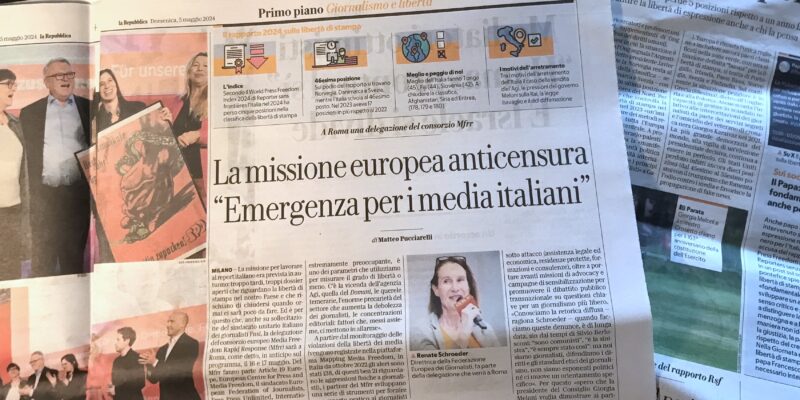
The growing pressure on press freedom in Italy has prompted the Media Freedom Rapid Response (MFRR) consortium to organise an urgent mission to Rome on May 16 and 17. The unprecedented political interference in the public service media, the increasing cases of vexatious lawsuits against journalists, and the possible sale of the AGI news agency will be the focus of the two-day visit. Meetings will be held with institutional stakeholders, journalists, trade unions and civil society. In light of the recent legislative developments on media freedom at the EU level, in particular the adoption of the anti-SLAPP Directive and the…

France: Full support for journalist Nassira El Moaddem and her media Arrêt sur images

Since 1 May 2024, French journalist Nassira El Moaddem has been the target of an unprecedented campaign of racist harassment. Her media, Arrêt sur images (ASI), specialised in media issues, has also received several death threats referring to the Charlie Hebdo attack. The European Federation of Journalists (EFJ) joins its French affiliates the SNJ, SNJ-CGT and CFDT-Journalistes in expressing full solidarity with Nassira El Moaddem and ASI, and in calling for appropriate sanctions to be taken against the perpetrators of the threats. The harassment campaign started with a tweet posted by Nassira El Moaddem on 30 April 2024, in reaction…

Croatia: Interview with Lika Club, bringing the local to diaspora

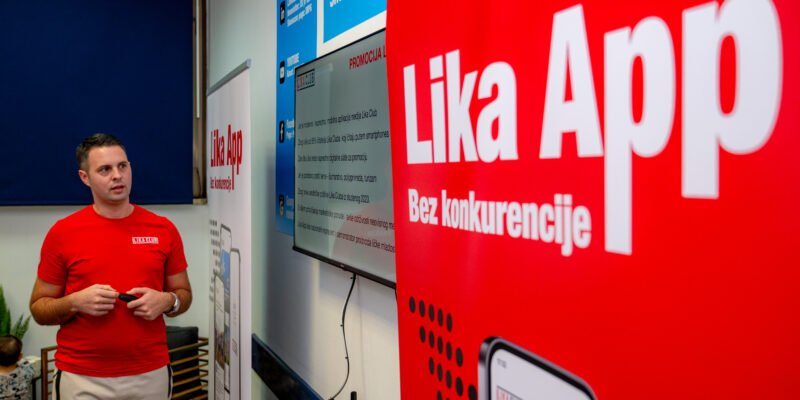
Based on a recent study by the Centre of Media Pluralism and Media Freedom (CMPF) that maps news deserts in Europe, the Local Media for Democracy (LM4D) project financially supports independent local media outlets operating in areas at risk of becoming news deserts. We talked to Ante Fumić, owner of Lika Club, about the opportunities from the development of the Lika App, which aims to provide relevant news, information, and content that directly serves the interests and concerns of the local community. By focusing on their specific needs, the app will enhance accessibility to regional media and foster a stronger…

Danish journalists faced a surge in false advertising on Meta platforms

Danish newspapers Politiken with TjekDek revealed last month that thousands of false advertisement campaigns published on the Meta platforms were targeting in particular DR and TV2 journalists. Most of the fake articles were not removed by Meta, despite being reported as fraudulent. The European Federation of Journalists (EFJ) urges Meta to take responsibility for protecting the credibility and professionalism of journalists and remove all the fakes from its platforms.  Deepfake is a growing phenomenon worldwide that involves the unauthorised use of well-known journalists’ images or voices to spread false stories and lure people into sending money.  Among the journalists targeted,…