European Federation of Journalists

openMedia, investigating press freedom

Title of the project : openMedia, investigating press freedom
Lead Applicant
: openDemocracy

Partner organisations : EFJ, Index on censorship, King’s College London

The recently launched openMedia project aims to investigate and expose commercial interference in editorial decisions. The project is run by openDemocracy with the European Federation of Journalists (EFJ) as a partner alongside the Index on Censorship and King’s College London.

The project believes that there has not been enough of a concerted, ongoing spotlight on the extent and effects of commercial influence over the media, despite the dangerous consequences it poses for press freedom. For now, the project focuses on 47 countries across Europe but also has ambitions to expand.

Despite the recent launch, the project is adamant that it is not a response to the “fake news” hype of the past year or so. Rather, the project responds to scandals of commercial sponsors influencing media content; for example the Daily Telegraph’s suppression of investigations into its advertiser HSBC; and allegations that Buzzfeed deleted articles which advertisers found unfavourable.

According to the project, this power dynamic can suppress investigations of banks, pharmaceuticals, agriculture, fossil fuel giants, energy companies and other big businesses.

In addition, the project recognizes how for many readers, “sponsored content” is difficult to distinguish from genuine news content. The project therefore aims to clarify the commercial interests apparent in media to readers, and as part of the project, King’s College London will develop digital tools to help readers be better informed about news sources.

The findings of the project will be used to campaign for greater transparency and press freedom in news organisations and to empower journalists to advocate for transparency.

In order to do this, openMedia is currently conducting a confidential and anonymous survey of journalists across Europe, asking about their own working practices and experiences of commercial pressure inside newsrooms. The survey is available in English here and in many other languages here.

Actions

Belgium: Police raided two Kurdish TVs and seized journalistic materials

On the night of 22-23 April 2024, the Belgian federal police searched the premises of the building of the Kurdish television channels Stêrk TV and Medya Haber (Medya News) in Denderleeuw, Flanders. The police operation was conducted as part of a European Investigation Order (EPO) on terrorist financing. The news channels reported serious material damage and equipment seizure. The European Federation of Journalists (EFJ) joined its Belgian affiliate, the Flemish Association of Journalists (VVJ), in strongly condemning the show of force that accompanied the search and urged authorities to guarantee that the confidentiality of journalists’ sources is respected. The search…

Report: More than half of Serbian journalists experienced self-censorship

The 2023 Report on the state of media freedom and the safety of journalists in Serbia was published on 15 March 2024, assessing the pressure experienced by media professionals in the country. Entitled “Behind the headlines: Threats, attacks and pressure on journalists in Serbia”, the research was conducted in collaboration with the Journalists Association of Serbia (UNS) and the Independent Journalists Association of Serbia (NUNS), with the support of the European Union and Council of Europe, based on a survey of 130 journalists and media workers. The report presents the major challenges to the safety of Serbian journalists by examining…

Bulgaria Minister urged to drop defamation lawsuit

The Media Freedom Rapid Response consortium partners criticise the criminal defamation lawsuit filed by Interior Minister Kalin Stoyanov against investigative journalists Atanas Chobanov and Dimitar Stoyanov of the Bureau for Investigative Reporting and Data (BIRD). The undersigned organisations believe that the lawsuit is designed to silence legitimate investigative reporting and should be immediately withdrawn. The legal action stems from the journalists’ reporting on a property deal that allegedly connected the current Minister of Interior to Martin Bozhanov, an individual known as ‘the Notary’, who was murdered earlier this year following extensive allegations of corruption against him. Kalin Stoyanov has denied…

EFJ and union members kick off new project on capacity-building and social rights for journalists

The European Federation of Journalists (EFJ) launched its new project “Stand Up for Journalism (SUJ)” in Brussels, on 22 April 2024. The kick-off meeting was attended by representatives of journalists unions and associations from Denmark, France, Montenegro, Serbia and Turkey, the project partners, and affiliated entities European Broadcasting Union (EBU) and Eurocadres.  The project is led by the EFJ and will be financially supporting six partners, journalists’ unions and associations in the EU and candidate countries: NUNS (Serbia), TUMM (Montenegro), DJ (Denmark), TGS (Turkey), SNJ-CGT (France), all of them being EFJ members. Stand Up for Journalism is an EU-funded project with…

Italy: EFJ supports Domani journalists facing up to 9 years in prison

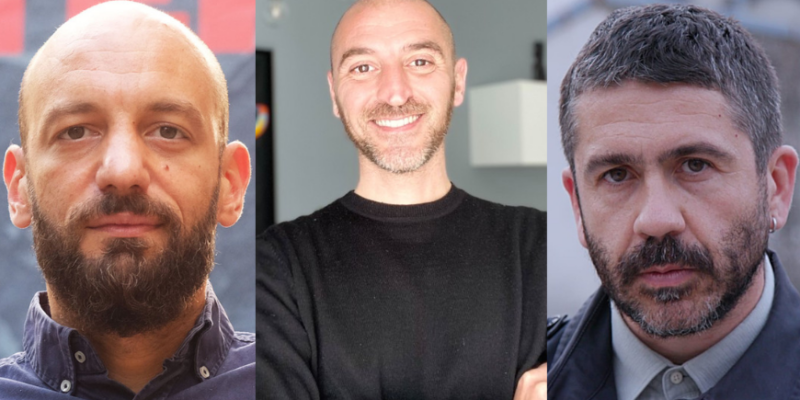
The European Federation of Journalists (EFJ) reiterates its solidarity with Domani newspaper subjected to constant attacks as well as with its journalists Giovanni Tizian, Nello Trocchia, and Stefano Vergine. They are under investigation for complicity in a concerted action with a public official regarding unauthorised access to documents and for revealing secrets through the publication of information contained in those documents. They face up to 9 years in prison. We believe that the decision by the Perugia prosecutor’s office to prosecute the journalists is an attempt to identify their sources. The following call for support was signed by more than…

Czech Republic: Media start-up Okraj.cz develop its own code of conduct for AI

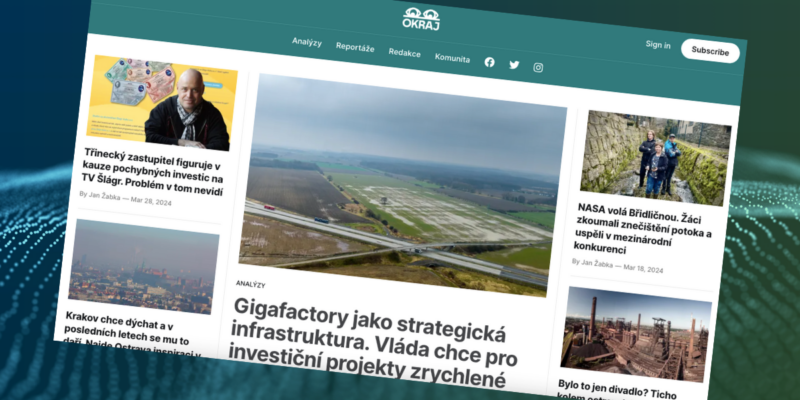
Most journalists use Artificial Intelligence (AI) tools to improve their work and manage their workload. Okraj.cz, a group of three passionate, young journalists from Ostrava, Czech Republic, are no exception. Thanks to funding and mentorship from the Local Media for Democracy (LM4D) project, the media startup developed its own code of conduct for  AI to generate illustrations for their articles, but within reason. The three journalists come from different journalistic backgrounds. Jan Žabka worked in Prague looking into disinformation and digital chaos, Simona Janikova has experience in a range of topics, including local businesses, human stories and environment, and Klara…