European Federation of Journalists

openMedia, investigating press freedom

Title of the project : openMedia, investigating press freedom
Lead Applicant
: openDemocracy

Partner organisations : EFJ, Index on censorship, King’s College London

The recently launched openMedia project aims to investigate and expose commercial interference in editorial decisions. The project is run by openDemocracy with the European Federation of Journalists (EFJ) as a partner alongside the Index on Censorship and King’s College London.

The project believes that there has not been enough of a concerted, ongoing spotlight on the extent and effects of commercial influence over the media, despite the dangerous consequences it poses for press freedom. For now, the project focuses on 47 countries across Europe but also has ambitions to expand.

Despite the recent launch, the project is adamant that it is not a response to the “fake news” hype of the past year or so. Rather, the project responds to scandals of commercial sponsors influencing media content; for example the Daily Telegraph’s suppression of investigations into its advertiser HSBC; and allegations that Buzzfeed deleted articles which advertisers found unfavourable.

According to the project, this power dynamic can suppress investigations of banks, pharmaceuticals, agriculture, fossil fuel giants, energy companies and other big businesses.

In addition, the project recognizes how for many readers, “sponsored content” is difficult to distinguish from genuine news content. The project therefore aims to clarify the commercial interests apparent in media to readers, and as part of the project, King’s College London will develop digital tools to help readers be better informed about news sources.

The findings of the project will be used to campaign for greater transparency and press freedom in news organisations and to empower journalists to advocate for transparency.

In order to do this, openMedia is currently conducting a confidential and anonymous survey of journalists across Europe, asking about their own working practices and experiences of commercial pressure inside newsrooms. The survey is available in English here and in many other languages here.

Actions

Physical confrontation with journalist in Serbia is unacceptable and must be sanctioned

The European Federation of Journalists (EFJ) joined the SafeJournalists Network and the Media Freedom Rapid Response partners in strongly condemning the behaviour of the local authorities in Indjija, Serbia, who forcibly removed the journalist Verica Marincic from the municipality building and prevented her from doing her job. We appeal to the competent authorities to investigate this incident in which the journalist was injured. The journalist of the In media portal from Indjija, Verica Marincic, was kicked out of the Indjija municipality building because she “wasn’t on the list” to monitor the conference regarding the residents’ protest against the abolition of…

Ukraine: “In times of war, journalists become targets of information attacks”

To mark the two years since Russia’s full-scale invasion of Ukraine, the International and the European Federations of Journalists (IFJ-EFJ) conversed with Serhiy Shturkhetskyy, chairperson of the Independent Media Trade Union of Ukraine (IMTUU) to examine how the reality of Ukrainian journalists have changed and what the journalistic community and sister unions can do to continue supporting journalists on the ground. How is the situation on the ground and how do you feel? The situation remains dire. With a devastated economy, cities raised to the ground and occupied, families divided, constant rocket and drone attacks, there is no place in…

News deserts on the rise: a first comparative study indicates the fragile situation for local media across the EU

The study “Uncovering news deserts in Europe. Risks and opportunities for local and community media in the EU” by the Centre for Media Pluralism and Media Freedom (CMPF) was published today. This research detects challenges and opportunities for local and community media in the 27 EU Member States, analysing the news deserts phenomenon from a holistic perspective. A network of researchers spanning all the 27 EU Member States ran the investigation, using the methodology developed by CMPF. They assessed risks based on 55 variables that relate to the local media market conditions; local journalists’ safety and working conditions, local outlets’…

Poland: we demand a fair trial for journalist Pablo González, in pre-trial detention for two years

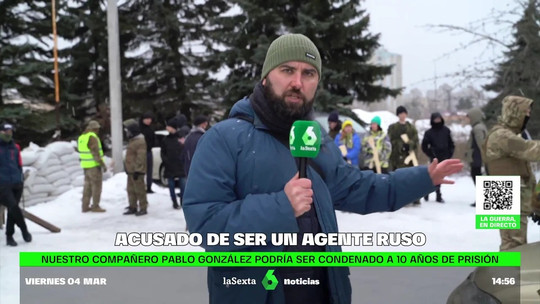
Spanish freelance reporter Pablo González is the only journalist imprisoned in an EU member state. On 28 February, it will be two years since he was arrested and held in pre-trial detention in Poland without any evidence of the allegations against him being made public and no trial in sight. The International and European Federations of Journalists (IFJ-EFJ), together with their Spanish affiliates, urge the Polish authorities to release him, so that he can defend himself in court, and ensure that he receives a fair trial. A Polish court extended González’s pre-trial detention for the eighth time on 15 February…

We demand release of journalist Dicle Müftüoğlu in upcoming trial

As the next hearing of Turkish journalist Dicle Müftüoğlu approaches on February 29, 2024, the European Federation of Journalists (EFJ) joined International media freedom and human rights organisations in calling for immediate attention to her case and her unjust detention. Müftüoğlu, Co-Chair of the Dicle Fırat Journalists Association (DFGD), has been wrongfully held for over nine months on unsubstantiated terrorism charges in a case that starkly violates international legal standards and media freedom. Case Overview: A Miscarriage of Justice Müftüoğlu’s arrest occurred during a broader crackdown on Kurdish activists and politicians by the Ankara Prosecutor’s Office in April 2023. The…

EFJ welcomes the adoption of the Anti-SLAPP Directive, expects Member States to measure up to the task

The European Parliament today adopted with an overwhelming majority (546 in favour, 47 against, 31 abstentions) the Anti-SLAPP Directive, intended to protect journalists and media outlets from abusive litigations. The European Federation of Journalists (EFJ) joined the organisations of the Coalition Against SLAPPs in Europe (CASE) in welcoming an important step in the fight against SLAPPs, but regrets the considerable room for manoeuvre left to the Member States on several crucial points. “Some refer to this law as Daphne’s law (Daphne Caruana Galizia) and I think it’s important to mention it here in this room named after Daphne. We achieved…