European Federation of Journalists

openMedia, investigating press freedom

Title of the project : openMedia, investigating press freedom
Lead Applicant
: openDemocracy

Partner organisations : EFJ, Index on censorship, King’s College London

The recently launched openMedia project aims to investigate and expose commercial interference in editorial decisions. The project is run by openDemocracy with the European Federation of Journalists (EFJ) as a partner alongside the Index on Censorship and King’s College London.

The project believes that there has not been enough of a concerted, ongoing spotlight on the extent and effects of commercial influence over the media, despite the dangerous consequences it poses for press freedom. For now, the project focuses on 47 countries across Europe but also has ambitions to expand.

Despite the recent launch, the project is adamant that it is not a response to the “fake news” hype of the past year or so. Rather, the project responds to scandals of commercial sponsors influencing media content; for example the Daily Telegraph’s suppression of investigations into its advertiser HSBC; and allegations that Buzzfeed deleted articles which advertisers found unfavourable.

According to the project, this power dynamic can suppress investigations of banks, pharmaceuticals, agriculture, fossil fuel giants, energy companies and other big businesses.

In addition, the project recognizes how for many readers, “sponsored content” is difficult to distinguish from genuine news content. The project therefore aims to clarify the commercial interests apparent in media to readers, and as part of the project, King’s College London will develop digital tools to help readers be better informed about news sources.

The findings of the project will be used to campaign for greater transparency and press freedom in news organisations and to empower journalists to advocate for transparency.

In order to do this, openMedia is currently conducting a confidential and anonymous survey of journalists across Europe, asking about their own working practices and experiences of commercial pressure inside newsrooms. The survey is available in English here and in many other languages here.

Actions

EMFA: seven EU member states want to legalise spying on journalists

The European Federation of Journalists (EFJ) strongly condemns the request by seven governments to legalise spying on journalists through the EU Media Freedom Act. The EFJ calls on the European Parliament and the European Commission to reject this illiberal and repressive request. The negotiations on the European Media Freedom Act (EMFA) are coming to an end. On Friday 15 December, the last trilogue will only deal with Article 4 of EMFA and the deployment of spyware against journalists. In the meantime, Investigate Europe, Disclose and Follow The Money revealed documents, showing that some governments (France, Italy, Malta, Greece, Cyprus, Sweden,…

Ninety-four journalists killed in 2023, says IFJ

The International Federation of Journalists (IFJ) records that 94 journalists and media workers, including 9 women, have been killed in 2023. Since 7 October, more than one journalist a day has lost their lives during the war in Gaza, a scale and pace of loss of media professionals’ lives without precedent. Publishing ahead of International Human Rights Day, on the 10th December, the IFJ insists that far greater action is required from the international community to safeguard journalists’ lives and hold to account their attackers. This year, like 2022, was marked by the deaths of journalists in war. In 2023 …

Italy: Solidarity with journalist Emilio Orlando, threatened with death

An envelope containing a bullet was sent to Italian journalist Emilio Orlando, whose investigations on the Roman mafia had already made him the target of threats. The letter was delivered to the Roman Trade Union of Journalists (Sindacato dei Cronisti Romani, SCR), a local branch of the FNSI. The European Federation of Journalists (EFJ) joins its affiliate the FNSI in expressing solidarity with the reporter. In the envelope, discovered on 28 November, the police found a 357 Magnum calibre bullet and a note: “This (bullet) is one of the six that we will stick in the head of the bast***…

Hungary: Draft Sovereignty Protection Act poses fresh threat to independent media

The European Federation of Journalists (EFJ) joins other partners of the Media Freedom Rapid Response (MFRR) today to alert the European Union about the chilling impact that the Hungarian ruling party’s proposed Sovereignty Protection Act will have on what remains of the country’s embattled independent media community. Our organisations stress that while media are not named directly within the text of the draft bill, the intentionally vague language and broad scope for application of the proposed law would effectively open the door to state-sponsored pressure on those media which receive foreign funding and produce journalism critical of the government. The…

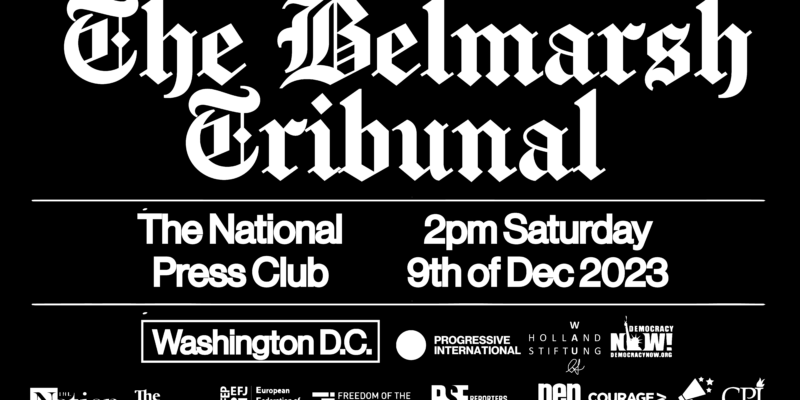
EFJ takes part in the Belmarsh Tribunal on Julian Assange

The European Federation of Journalists (EFJ) and its president Maja Sever are proud to partner on the Belmarsh Tribunal on Julian Assange at the National Press Club in Washington DC, next Saturday, 9 December. The extradition case against Julian Assange, who is a member of 20 European journalists’ organisations, is now entering its final phase and the international pressure for his freedom is mounting. From Presidents and Prime Ministers to Nobel Peace Prize winners, the international community is crying out against the injustice of Assange’s prosecution and its implication for press freedom worldwide. On 2 October 2020, Progressive International launched…

EMFA: Protection of journalists and their sources must be in line with human rights standards

As the negotiations on the European Media Freedom Act (EMFA) are drawing to a close, the European Federation of Journalists (EFJ) today co-signed a letter to the policymakers calling for international standards to be respected on the protection of journalistic sources (Article 4). Considered a basic condition for press freedom by the European Court of Human Rights (ECHR), the protection of sources risks being weakened by EU Member States. The signatories are deeply concerned about the chilling effect that could ensue if the final text maintains the paragraph to the national security responsibilities of Member States and sets conditions for…