European Federation of Journalists

openMedia, investigating press freedom

Title of the project : openMedia, investigating press freedom
Lead Applicant
: openDemocracy

Partner organisations : EFJ, Index on censorship, King’s College London

The recently launched openMedia project aims to investigate and expose commercial interference in editorial decisions. The project is run by openDemocracy with the European Federation of Journalists (EFJ) as a partner alongside the Index on Censorship and King’s College London.

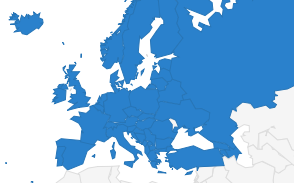
The project believes that there has not been enough of a concerted, ongoing spotlight on the extent and effects of commercial influence over the media, despite the dangerous consequences it poses for press freedom. For now, the project focuses on 47 countries across Europe but also has ambitions to expand.

Despite the recent launch, the project is adamant that it is not a response to the “fake news” hype of the past year or so. Rather, the project responds to scandals of commercial sponsors influencing media content; for example the Daily Telegraph’s suppression of investigations into its advertiser HSBC; and allegations that Buzzfeed deleted articles which advertisers found unfavourable.

According to the project, this power dynamic can suppress investigations of banks, pharmaceuticals, agriculture, fossil fuel giants, energy companies and other big businesses.

In addition, the project recognizes how for many readers, “sponsored content” is difficult to distinguish from genuine news content. The project therefore aims to clarify the commercial interests apparent in media to readers, and as part of the project, King’s College London will develop digital tools to help readers be better informed about news sources.

The findings of the project will be used to campaign for greater transparency and press freedom in news organisations and to empower journalists to advocate for transparency.

In order to do this, openMedia is currently conducting a confidential and anonymous survey of journalists across Europe, asking about their own working practices and experiences of commercial pressure inside newsrooms. The survey is available in English here and in many other languages here.

Actions

Open letter: e-Evidence package lacks appropriate safeguards, EU Parliament must reject it

On June 13, the European Parliament will vote on the so-called “e-Evidence” package. There are serious concerns about how this proposal would undermine people’s fundamental rights and set an unwelcome precedent for cross-border access to people’s personal data in criminal investigations. The European Federation of Journalists (EFJ) joined civil society, doctors, lawyers and journalists’ associations, as well as internet service providers in calling on MEPs to reject the so-called “e-Evidence” package during the plenary vote on June 13. We consider that the proposed system of cross-border access to data in criminal matters would severely undermine fundamental rights. Initially proposed by…

Poland: International support for TOK FM amidst regulatory pressure

The renewal of Polish radio station TOK FM’s broadcasting licence is still pending after a six-month delay, casting doubt on a possible non-renewal. The European Federation of Journalists (EFJ) joined the undersigned members of the Media Freedom Rapid Response (MFRR) in supporting TOK FM, the largest independent news and talk radio station in Poland, in their plea for the licence renewal to be made by the National Broadcasting Council (KRRiT), in a timely and independent manner and based on strict professional criteria.  TOK FM, which is the fourth-most popular radio in Poland, is nearing the end of its broadcasting licence…

EU Council adopts watered-down position on anti-SLAPP directive

The Council of the European Union adopted today a common position (general approach) on the so-called Anti-SLAPP directive. This legislation, proposed by the European Commission in 2022, is meant to tackle the growing problem of strategic lawsuits targeting journalists, activists, and other public watchdogs across Europe. However, the European Federation of Journalists (EFJ) considers that the text, which has been considerably watered down, falls far short of the legislation’s original objective: to protect journalists and the right to information in the European Union. Strategic Lawsuits Against Public Participation (SLAPPs) are a form of legal harassment used to intimidate and silence…

UK: Assange closer to extradition to the US after appeal rejected by High Court

In a judgement issued on 6 June, a High Court in the UK has rejected the latest appeal by Wikileaks founder Julian Assange against an extradition order issued by the United States. The International and the European Federations of Journalists (IFJ-EFJ) are appalled by the decision, which brings Assange closer to being extradited to the US where, if found guilty, he could spend the rest of his life in jail. The IFJ-EFJ renewed their call on the US government to close the case against Assange on the basis that it poses a grave threat to media freedom and the rights…

Press councils trained young journalists on digital journalism practices

Twenty-seven journalists and students from 20 EU countries were trained on digital journalism practices as part of a Master Class taking place in Brussels from 31 May to 2 June. The training was organised by the Belgian press councils CDJ and Raad voor de Journalistiek, the Université Libre de Bruxelles (ULB) and the European Federation of Journalists (EFJ) in the framework of the EU-funded project Media Councils in the Digital Age (MCDA). Journalists and journalism students aged between 19 and 30 came together to share their professional experiences, practices, and ideas on digital journalism. The event fostered an environment where…

North Macedonia: Press freedom mission finds fragile progress in need of further support

From 5-7 June 2023, the European Federation of Journalists (EFJ), European Centre for Press and Media Freedom (ECPMF), Free Press Unlimited (FPU), International Press Institute (IPI) and the Osservatorio Balcani e Caucaso Transeuropa (OBCT) took part in a fact-finding mission to North Macedonia, organised by the Association of Journalists of Macedonia (ZNM). While we recognise progress for media freedom and journalists’ working conditions in recent years, this improvement is fragile and must be consolidated. We welcome the recent adoption of amendments to the Penal Code. Under the new provisions, developed in collaboration with local civil society, attacks on journalists will…