
European Federation of Journalists

openMedia, investigating press freedom

Title of the project : openMedia, investigating press freedom
Lead Applicant
: openDemocracy

Partner organisations : EFJ, Index on censorship, King’s College London

The recently launched openMedia project aims to investigate and expose commercial interference in editorial decisions. The project is run by openDemocracy with the European Federation of Journalists (EFJ) as a partner alongside the Index on Censorship and King’s College London.

The project believes that there has not been enough of a concerted, ongoing spotlight on the extent and effects of commercial influence over the media, despite the dangerous consequences it poses for press freedom. For now, the project focuses on 47 countries across Europe but also has ambitions to expand.

Despite the recent launch, the project is adamant that it is not a response to the “fake news” hype of the past year or so. Rather, the project responds to scandals of commercial sponsors influencing media content; for example the Daily Telegraph’s suppression of investigations into its advertiser HSBC; and allegations that Buzzfeed deleted articles which advertisers found unfavourable.

According to the project, this power dynamic can suppress investigations of banks, pharmaceuticals, agriculture, fossil fuel giants, energy companies and other big businesses.

In addition, the project recognizes how for many readers, “sponsored content” is difficult to distinguish from genuine news content. The project therefore aims to clarify the commercial interests apparent in media to readers, and as part of the project, King’s College London will develop digital tools to help readers be better informed about news sources.

The findings of the project will be used to campaign for greater transparency and press freedom in news organisations and to empower journalists to advocate for transparency.

In order to do this, openMedia is currently conducting a confidential and anonymous survey of journalists across Europe, asking about their own working practices and experiences of commercial pressure inside newsrooms. The survey is available in English here and in many other languages here.
Actions

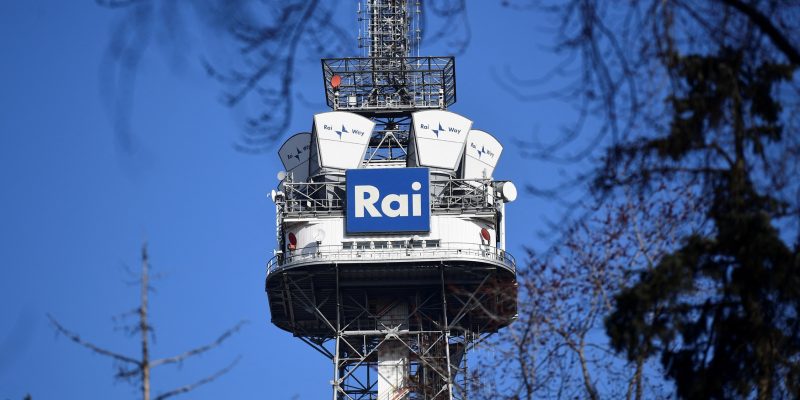
Italy: EFJ in solidarity with RAI journalists on strike today

Today, journalists at Italian public broadcaster RAI have called a one-day byline strike. The European Federation of Journalists (EFJ) joins them in denouncing the disastrous image given by Paolo Petrecca, the RAI sports director, throughout his commentary on the opening ceremony of the Milano Cortina Winter Olympics. The Winter Olympic Games started with a slick ceremony last Friday at Milan’s San Siro stadium, but the event was marred for Italian TV viewers by a stream of on-air mistakes from the head of RAI’s sports division, Paolo Petrecca, who was appointed to the role in 2025. Today, RAI journalists omitted their…

Serbia: Coordinated bot attacks on Instagram accounts of independent media emerge as new weapon of censorship

The European Federation of Journalists (EFJ) joins its Media Freedom Rapid Response (MFRR) partners today in raising alarm over a recent wave of bot-driven cyber attacks targeting the social media accounts of Serbian media outlets. Our organisations warn that the dozen recorded incidents are not isolated cases but part of a broader pattern of coordinated attacks on the free flow of news and independent information in Serbia, which remains in a period of media freedom crisis. Between 8 and 30 January, the Independent Journalists’ Association of Serbia (NUNS) recorded at least 12 coordinated bot attacks against Instagram accounts of independent…

Journalists’ organisations increasingly engaging with news creators, though ethical concerns remain high, EFJ survey finds

A new survey by the European Federation of Journalists (EFJ) reveals a mixed approach among its members toward so-called ‘news creators’, with journalists’ organisations split on whether to recognise these emerging actors as part of the information landscape. The findings show that concerns over journalistic ethics and conflicts with organisational statutes remain the main barriers to their inclusion.  In its latest Digital News Report, the Reuters Institute highlights how news creators (see definition below) are successfully reaching large audiences, often at the expense of traditional media, including within the news sector. As the boundaries of the information landscape shift rapidly,…

Bosnia and Herzegovina: Attack on journalist Sanja Vasković yet another alarm for the state of media freedom

The European Federation of Journalists (EFJ) joins the SafeJournalists Network (SJN) in strongly condemning the recent physical attacks against journalists and media professionals in the Republika Srpska, Bosnia and Herzegovina, which represent a severe threat to media freedom and the safety of those working in the public interest. On 7 February, journalist Sanja Vasković, editor-in-chief of the Spin portal, was verbally abused and physically hindered while reporting on a story in East Sarajevo. Her phone was forcibly seized, and her safety was jeopardised as she sought to investigate environmental and transparency concerns. The law enforcement classified the incident as a…

Montenegro: IFJ and EFJ raise concerns about labour and trade union rights at public service broadcaster RTCG

The International and European Federation of Journalists (IFJ-EFJ), and their Montenegrin affiliate, the Trade Union of Media in Montenegro (TUMM), have expressed serious and growing concern about the situation of labour and trade union rights at the public service broadcaster Radio and Television of Montenegro (RTCG). They wish to draw particular attention to persistent reports of anti-union discrimination and pressure on employees to withdraw from union membership, as well as the systematic weakening of the Trade Union of RTCG Employees. On 6 February 2026, the IFJ, the EFJ and the TUMM sent the following letter to the country’s authorities.

Eurobarometer shows the EU must strengthen Europe’s media ecosystem

EU leaders must considerably strengthen the European media ecosystem. This is the conclusion drawn by the European Federation of Journalists (EFJ) after reading the results of the latest Eurobarometer survey on citizens’ concern about communication-related risks, such as disinformation, fake content generated by artificial intelligence, independence of the media, Big Tech’s dominance, and threats to freedom of expression. The Eurobarometer, which surveyed 26,453 people across all EU members states found that tackling inflation, rising prices and the cost of living is people’s top priority for EU action, followed by the economy and job creation (35%). Defence and security, public services and…



