European Federation of Journalists

openMedia, investigating press freedom

Title of the project : openMedia, investigating press freedom
Lead Applicant
: openDemocracy

Partner organisations : EFJ, Index on censorship, King’s College London

The recently launched openMedia project aims to investigate and expose commercial interference in editorial decisions. The project is run by openDemocracy with the European Federation of Journalists (EFJ) as a partner alongside the Index on Censorship and King’s College London.

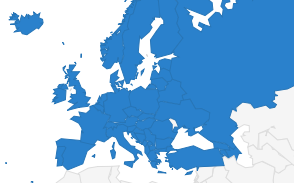
The project believes that there has not been enough of a concerted, ongoing spotlight on the extent and effects of commercial influence over the media, despite the dangerous consequences it poses for press freedom. For now, the project focuses on 47 countries across Europe but also has ambitions to expand.

Despite the recent launch, the project is adamant that it is not a response to the “fake news” hype of the past year or so. Rather, the project responds to scandals of commercial sponsors influencing media content; for example the Daily Telegraph’s suppression of investigations into its advertiser HSBC; and allegations that Buzzfeed deleted articles which advertisers found unfavourable.

According to the project, this power dynamic can suppress investigations of banks, pharmaceuticals, agriculture, fossil fuel giants, energy companies and other big businesses.

In addition, the project recognizes how for many readers, “sponsored content” is difficult to distinguish from genuine news content. The project therefore aims to clarify the commercial interests apparent in media to readers, and as part of the project, King’s College London will develop digital tools to help readers be better informed about news sources.

The findings of the project will be used to campaign for greater transparency and press freedom in news organisations and to empower journalists to advocate for transparency.

In order to do this, openMedia is currently conducting a confidential and anonymous survey of journalists across Europe, asking about their own working practices and experiences of commercial pressure inside newsrooms. The survey is available in English here and in many other languages here.

Actions

MFRR partners’ position on EU Democracy Shield

The Media Freedom Rapid Response (MFRR), led by the European Centre for Press and Media Freedom (ECPMF) and supported by ARTICLE 19 Europe, the European Federation of Journalists (EFJ), Free Press Unlimited (FPU), the International Press Institute (IPI), and the Osservatorio Balcani e Caucaso Transeuropa (OBCT), has developed its official input for the EU Democracy Shield, the European Commission’s initiative to establish a robust response to threats against democracy. This input emphasises the need for a rights-based approach, promoting media resilience and the safety of journalists as core requirements for preserving democracy in Europe. It focuses on critical areas such…

Commissioner Virkkunen acknowledges crucial role of journalism in Europe’s Defense and Preparedness agenda

The European Federation of Journalists (EFJ) together with partner organisations of the Media Freedom Rapid Response (MFRR) met with European Commission Executive Vice-President for Tech Sovereignty, Security and Democracy, Henna Virkkunen, on 27 April 2025, to address increasing challenges concerning the economic viability, online safety of journalists, and the impact of Artificial Intelligence (AI) on the media landscape. Stressing the link between security and media freedom, Vice-President Virkkunen acknowledged the critical role of journalism as part of the essential infrastructure for security and preparedness. Highlighting main points for media safety, the MFRR partners emphasised the need for ensuring sustainability for…

Albania: Constitutional Court strengthens protection of journalistic sources in Elton Qyno case

The European Federation of Journalists (EFJ) joined the undersigned organisations in welcoming the decision of the Constitutional Court of Albania, which overturned the lower-court orders allowing the search and seizure of journalist Elton Qyno’s equipment, reinforcing the importance of protecting journalistic sources and freedom of expression in line with international standards. On 22 April 2025, the Constitutional Court of Albania delivered a unanimous 8–0 judgement setting aside lower-court orders authorising the search of journalist Elton Qyno and the seizure of his electronic equipment and directed that all data extracted from those devices be destroyed. The Court held that these measures amounted to a…

Turkey: Swedish journalist Joakim Medin to face terrorism and insult charges as pre-trial detention continues

The Media Freedom Rapid Response (MFRR) partners strongly condemned the decision to charge Joakim Medin with terrorism related actions in addition to the insult charges that were used to justify his initial arrest. Medin, whose first court hearing has been scheduled for 30 April, now faces up to twelve years imprisonment if convicted of both indictments. Since 19 March, over 13 journalists have been arrested and charged with different offences, with at least 12 journalists subjected to police violence. The situation has taken an unprecedented turn with Medin’s detention—marking a rare case where a foreign journalist has faced such charges. His treatment, mirroring…

Turkey: EFJ calls for acquittal of Swedish journalist Joakim Medin

Swedish journalist Joakim Medin, a regular contributor to the Swedish daily newspaper Dagens ETC and member of the Swedish Union of Journalists (SJF), is facing up to 12 years in prison in Turkey for allegedly ‘insulting the President’ and belonging to “a terrorist organisation’. The European Federation of Journalists (EFJ) condemned these unfounded accusations, which are used as a recurring tactic to criminalise journalistic activities. The first hearing will take place on 30 April in Ankara. Joakim was detained on 27 March 2025, shortly after landing in Istanbul to cover the widespread protests against the recent arrest of Istanbul Mayor…

IP Day: “We can avoid an information apocalypse only if we strengthen laws that protect authors’ rights”

“Democracy is not possible unless members of the electorate have access to reliable news on which to base their voting decisions. That cannot happen without ethical, independent journalism”, said the International and European Federations of Journalists (IFJ/EFJ) ahead of World Intellectual Property Day on 26 April. The federations point at a new troubling force in the information ecosystem: artificial intelligence. Developed using the works of human authors, often without consent or compensation, these systems generate content rife with inaccuracies and fabrications. The IFJ/EFJ warn that their unchecked use threatens the integrity of public discourse and poses a serious risk to…