European Federation of Journalists

openMedia, investigating press freedom

Title of the project : openMedia, investigating press freedom
Lead Applicant
: openDemocracy

Partner organisations : EFJ, Index on censorship, King’s College London

The recently launched openMedia project aims to investigate and expose commercial interference in editorial decisions. The project is run by openDemocracy with the European Federation of Journalists (EFJ) as a partner alongside the Index on Censorship and King’s College London.

The project believes that there has not been enough of a concerted, ongoing spotlight on the extent and effects of commercial influence over the media, despite the dangerous consequences it poses for press freedom. For now, the project focuses on 47 countries across Europe but also has ambitions to expand.

Despite the recent launch, the project is adamant that it is not a response to the “fake news” hype of the past year or so. Rather, the project responds to scandals of commercial sponsors influencing media content; for example the Daily Telegraph’s suppression of investigations into its advertiser HSBC; and allegations that Buzzfeed deleted articles which advertisers found unfavourable.

According to the project, this power dynamic can suppress investigations of banks, pharmaceuticals, agriculture, fossil fuel giants, energy companies and other big businesses.

In addition, the project recognizes how for many readers, “sponsored content” is difficult to distinguish from genuine news content. The project therefore aims to clarify the commercial interests apparent in media to readers, and as part of the project, King’s College London will develop digital tools to help readers be better informed about news sources.

The findings of the project will be used to campaign for greater transparency and press freedom in news organisations and to empower journalists to advocate for transparency.

In order to do this, openMedia is currently conducting a confidential and anonymous survey of journalists across Europe, asking about their own working practices and experiences of commercial pressure inside newsrooms. The survey is available in English here and in many other languages here.

Actions

Germany: New study confirms SLAPPs is increasingly used against journalists

Strategic Lawsuits Against Public Participation (SLAPPs) are being used as a tool to silence journalists, activists, and civil society groups through costly and time-consuming legal battles. The No-SLAPP Alliance, a coalition of around 15 civil society organisations including the German journalists’ union dju in ver.di, calls on the German government to take decisive action against these abusive legal tactics, following a survey conducted in September 2024 with 227 respondents. A study commissioned by the dju in ver.di, the Society for Civil Rights, the Munich Environmental Institute, and the Otto Brenner Foundation, indicates that 60% of those affected are journalists, with…

Turkey: Foreign journalists arrested amid massive crackdown on journalists

On 30 March, Turkish authorities officially confirmed the arrest of Swedish journalist Joakim Medin upon his arrival in Türkiye. His detention came shortly after British journalist Mark Lowen from the BBC was arrested and deported from Türkiye on 28 March. The International and European Federations of Journalists (IFJ-EFJ) joined the National Union of Journalists (NUJ) in the UK and the Swedish Union of Journalists (SJF) in calling on Turkish authorities to immediately release Joakim Medin and all local and foreign journalists who have been detained. BBC journalist Mark Lowen was detained on 26 March and deported after 17 hours in…

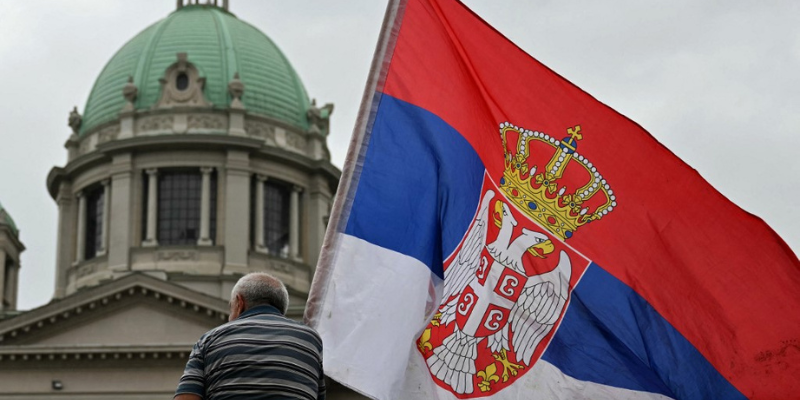
Serbia: Spyware attacks on BIRN journalists further deepen press freedom crisis

The European Federation of Journalists (EFJ) along with partner organisations of the Media Freedom Rapid Response (MFRR) today raise further alarm about the deepening press freedom crisis in Serbia in the wake of revelations showing evidence of the abuse of advanced Pegasus spyware to target two journalists from leading investigative media platform BIRN. Our organisations warn that the ultimately failed attempt to use military-grade surveillance technology to spy on journalists from the award-winning Balkan Investigative Reporting Network (BIRN) represents another milestone in the deteriorating situation in Serbia, which requires immediate and strong interventions from the European Union. The confirmation of…

Serbia: MFRR media freedom mission to visit Belgrade and Novi Sad

The partner organisation of the Media Freedom Rapid Response (MFRR) will conduct a mission to Serbia between 7-9 April to meet with journalists, media stakeholders and law enforcement authorities amidst a rapidly worsening media freedom crisis. During the three-day visit, the delegation will travel to Belgrade and Novi Sad to meet with journalists, editors, media outlets, journalist associations and civil society groups to gather information about the serious spike in pressure on independent journalism and media freedom by state authorities and government officials. The mission has sought meetings with officials from the State Prosecutor’s Office and the Serbian Police, as…

Russia: Channel One journalist killed by a landmine near Ukrainian border

Anna Prokofieva, a Russian war correspondent for the state-controlled Channel One, was killed and her cameraman Dmitry Volkov was seriously wounded by a landmine explosion on 26 March in the Belgorod region, near the border with Ukraine. The International and the European Federations of Journalists (IFJ-EFJ) condemn the killing and call for a swift investigation that clarifies the circumstances of the journalist’s death. Prokofieva had been covering the war in Ukraine for state-controlled Channel One since 2023. Channel One’s cameraman Dmitry Volkov, who was injured in the mine explosion, was transferred to a hospital in the Kursk region. This incident follows the killing of three Russian…

Ukraine: Three Russian media workers killed in rocket attack

On 24 March, Russian state-controlled newspaper Izvestia’s correspondent Alexander Fedorchak was killed in a rocket attack in Ukraine, along with state-controlled Zvezda TV cameraman Andrei Panov and driver Alexander Sirkeli. The International and European Federation of Journalists (IFJ-EF) call for an investigation into the attack and demand warring parties respect media workers and protect them, especially in conflict zones. The air strike hit the media workers’ car in Luhansk, an eastern Ukrainian region under Russian occupation, where they were covering the news. Three other civilians were also reported killed in the strike. Zvezda correspondent Nikita Goldin was reported to be in critical…