European Federation of Journalists

openMedia, investigating press freedom

Title of the project : openMedia, investigating press freedom
Lead Applicant
: openDemocracy

Partner organisations : EFJ, Index on censorship, King’s College London

The recently launched openMedia project aims to investigate and expose commercial interference in editorial decisions. The project is run by openDemocracy with the European Federation of Journalists (EFJ) as a partner alongside the Index on Censorship and King’s College London.

The project believes that there has not been enough of a concerted, ongoing spotlight on the extent and effects of commercial influence over the media, despite the dangerous consequences it poses for press freedom. For now, the project focuses on 47 countries across Europe but also has ambitions to expand.

Despite the recent launch, the project is adamant that it is not a response to the “fake news” hype of the past year or so. Rather, the project responds to scandals of commercial sponsors influencing media content; for example the Daily Telegraph’s suppression of investigations into its advertiser HSBC; and allegations that Buzzfeed deleted articles which advertisers found unfavourable.

According to the project, this power dynamic can suppress investigations of banks, pharmaceuticals, agriculture, fossil fuel giants, energy companies and other big businesses.

In addition, the project recognizes how for many readers, “sponsored content” is difficult to distinguish from genuine news content. The project therefore aims to clarify the commercial interests apparent in media to readers, and as part of the project, King’s College London will develop digital tools to help readers be better informed about news sources.

The findings of the project will be used to campaign for greater transparency and press freedom in news organisations and to empower journalists to advocate for transparency.

In order to do this, openMedia is currently conducting a confidential and anonymous survey of journalists across Europe, asking about their own working practices and experiences of commercial pressure inside newsrooms. The survey is available in English here and in many other languages here.

Actions

Lithuania: Journalists’ organisations warn LRT audit risks threatening editorial independence

The European Federation of Journalists (EFJ) joined the undersigned international media freedom and journalist groups today in raising concerns over a planned “political neutrality” audit recently approved by the supervisory body of the Lithuanian National Radio and Television (LRT) and warn that the measure could negatively affect editorial independence at the public broadcaster. Our organisations jointly question the need for such an action by the LRT Council Committee and warn that rather than improve political neutrality it could instead lead to self-censorship by journalists and management at the broadcaster. As press freedom organisations working at the EU level, we note…

Ukraine: The killing of journalist Tetiana Kulyk by Russian drone must be investigated

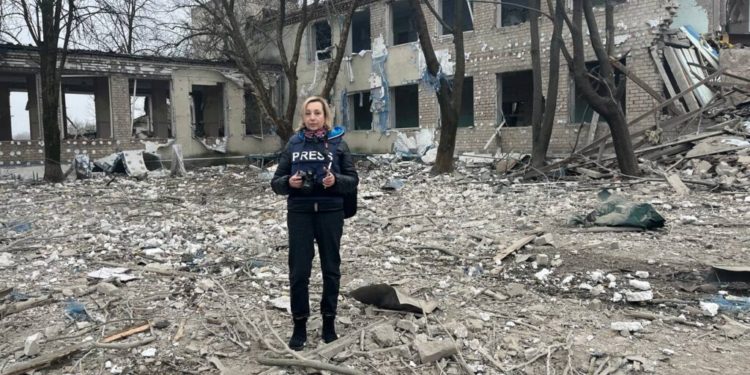
The European and the International Federations of Journalists (EFJ-IFJ) join their Ukrainian affiliates, in condemning the killing of Ukrainian journalist Tetiana Kulyk, a member of the National Union of Journalists of Ukraine (NUJU), by a Russian drone attack in the Kyiv region on 26 February 2025.  Two days after the third anniversary of the start of Russia’s full-scale invasion, journalist Tetyana Kulyk of the Ukrinform news agency and her husband, Pavlo Ivanchov, were killed in their home by a Russian drone, in the Bucha district of Kyiv Oblast. According to Ukrinform, rescuers found the two dead bodies while extinguishing the…

EFJ and IFJ condemn Azerbaijan’s brutal policy against critical media

Azerbaijan is continuing its repression by arresting more journalists and creating an environment in which media that are not aligned with the government cannot operate untroubled. The European and International Federations of Journalists (EFJ-IFJ) condemn the latest moves by the Azerbaijani authorities to further control the information space, and call for the immediate release of the detained journalists. The last few weeks have seen yet another level of repression by the Azerbaijani authorities with the detention of several journalists and the closure of the BBC News office in Baku. On 21 February, a court sentenced journalist Nurlan Gahramanli (known as…

Voices Festival: EFJ, EBU and Lie Detectors to train local journalists for back-to-school initiative

In a one-day workshop organised by the VOICES partners, the European Federation of Journalists (EFJ), the European Broadcasting Union (EBU), and delivered by the award-winning media literacy organisation Lie Detectors on 27 February, Croatian journalists working with public and commercial media will learn how to teach children aged 10-15 basic fact-checking methods in an interactive format. The journalists will then be ready to deliver free 90-minute training sessions in local schools. “In times of unprecedented disinformation campaigns in particular via social networks, it is crucial to explain the complex and hard work of journalists and their public interest role to school kids.…

Croatia report: Tackling political pressure, legal challenges and precarity to revive media freedom

Outdated media laws, compromised public media independence, SLAPPs, as well as mounting economic, political, and physical pressures are undermining journalism and media freedom in Croatia, as outlined in the latest Media Freedom Rapid Response (MFRR) report. Media freedom in Croatia is marred by institutional and legal challenges that successive governments have failed to address, exacerbating the erosion of media pluralism, hostility against journalists, and precarious working conditions. This environment fosters censorship and restricts access to vital public information. The outdated Media Act is ill-suited to tackle the challenges of today’s digitalised media landscape, while overly broad criminal provisions on defamation…

Ukraine: We stand with journalists, 3 years since start of full-scale invasion

On 24 February 2025, Ukraine marks three years since the start of Russia’s full-scale invasion. While the current scale of Russian attacks against journalists cannot be compared to that at the start of the war, they remain worryingly high and persistent. Over the past two years, Ukraine has seen fewer cases of journalists killed coming under fire while reporting in Ukraine, however the number of media workers wounded while covering the war remains high. In 2024, the media community reported two more losses: Victoria Roshchyna, a freelance journalist who died in Russian captivity, in which she had been held since 2023,…