European Federation of Journalists

openMedia, investigating press freedom

Title of the project : openMedia, investigating press freedom
Lead Applicant
: openDemocracy

Partner organisations : EFJ, Index on censorship, King’s College London

The recently launched openMedia project aims to investigate and expose commercial interference in editorial decisions. The project is run by openDemocracy with the European Federation of Journalists (EFJ) as a partner alongside the Index on Censorship and King’s College London.

The project believes that there has not been enough of a concerted, ongoing spotlight on the extent and effects of commercial influence over the media, despite the dangerous consequences it poses for press freedom. For now, the project focuses on 47 countries across Europe but also has ambitions to expand.

Despite the recent launch, the project is adamant that it is not a response to the “fake news” hype of the past year or so. Rather, the project responds to scandals of commercial sponsors influencing media content; for example the Daily Telegraph’s suppression of investigations into its advertiser HSBC; and allegations that Buzzfeed deleted articles which advertisers found unfavourable.

According to the project, this power dynamic can suppress investigations of banks, pharmaceuticals, agriculture, fossil fuel giants, energy companies and other big businesses.

In addition, the project recognizes how for many readers, “sponsored content” is difficult to distinguish from genuine news content. The project therefore aims to clarify the commercial interests apparent in media to readers, and as part of the project, King’s College London will develop digital tools to help readers be better informed about news sources.

The findings of the project will be used to campaign for greater transparency and press freedom in news organisations and to empower journalists to advocate for transparency.

In order to do this, openMedia is currently conducting a confidential and anonymous survey of journalists across Europe, asking about their own working practices and experiences of commercial pressure inside newsrooms. The survey is available in English here and in many other languages here.
Actions

The EU, AI and Journalism

The AI Act came into force on 1 August 2024. The EFJ participated to the plenary dedicated to drafting the Code of Practice on Generative AI for the EU AI Office, alongside nearly 1,000 other organisations and individuals. The plenary will set guidelines for the responsible use of Generative AI within the EU’s AI regulatory framework. EFJ members have also discussed in expert groups the impact of generative AI and have raised concerns on controlling and regulating the use of AI in newsrooms. The EFJ Authors’ Rights Expert Group (AREG) drafted recommendations on the right of identification and personality, fair…

Cyprus pauses fake news law to consult media stakeholders 

The European Federation of Journalists (EFJ) joined its Media Freedom Rapid Response (MFRR) partners in welcoming the decision to pause the passage of the law criminalizing fake news and to hold an expert committee meeting on media freedom in Cyprus. The discussion comes at a critical juncture, as concerns grow over draft legislation to criminalize offensive content and “fake news”. A freshly published article on media freedom in Cyprus gives an overview of the current situation for journalists on the island. The meeting, set up by the Cypriot Minister of Justice and scheduled for 11 October 2024, follows the discussion…

Albania: Smear campaigns against independent media and civil society organisations must stop

The European Federation of Journalists (EFJ) joined the SafeJournalists Network and its partners from the Media Freedom Rapid Response (MFRR) in strongly condemning the attacks on the Council of Media Ethics of Albania (KSHM) and the think tank – Center Science and Innovation for Development (SCiDEV) that has issued a shadow report on media freedom in Albania, as well as on researcher Blerjana Bino. In early October 2024, the Council of Media Ethics of Albania (KSHM) became the target of coordinated smear campaigns by two online platforms, Sot.com.al and Prapaskena.com. These incidents mark a disturbing trend of hostility toward independent…

Serbia: Public debate on advertising law raises major concerns

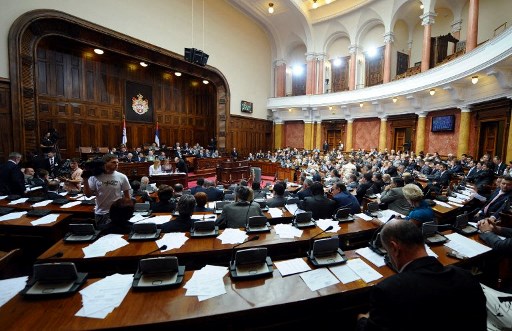
The European Federation of Journalists (EFJ) joins the Coalition for Media Freedom in condemning this legislative process for its lack of transparency and calls for an extension of the deadline and a restructuring of the law, including the creation of a regulatory framework in the areas of public information and advertising by public authorities and political advertising. A working group on amendments to the Advertising Law was set up without the participation of media associations. As the Coalition for Media Freedom pointed out, the government promised to ensure that cooperation between ministerial working groups and representatives of media associations, the…

Belgian TV crew assaulted by a group of men in Beirut

The European Federation of Journalists (EFJ) joins its Belgian affiliate Vlaamse Vereniging van Journalisten (VVJ) in condemning the attack against Belgian journalists Robin Ramaekers and Stijn De Smet in Beirut. They were assaulted, beaten and shot at on Wednesday night after a group of men accused them of working for Israel. The EFJ calls for the assailants to be identified, prosecuted and convicted. Ramaekers was hospitalised for injuries to his face, while De Smet had to be treated for gunshot wounds to the leg. Both are waiting to be evacuated as soon as possible. The two journalists working for the…

Interview: Exploring media pluralism across Europe with Iva Nenadic

To mark the publication of the book entitled “Media pluralism in the digital era: Legal, Economic, Social, and Political Lessons Learnt from Europe”, the European Federation of Journalists (EFJ) interviewed Iva Nenadic, Research Fellow at the Centre for Media Pluralism and Media Freedom (CMPF) at the European University Institute. Co-edited with Elda Brogi and Pier Luigi Parcu, this book draws from over a decade of research through the Media Pluralism Monitor (MPM) and provides essential insights into the evolving media landscape across Europe. Could you tell us about your role at the Centre for Media Pluralism and Media Freedom (CMPF)…