European Federation of Journalists

openMedia, investigating press freedom

Title of the project : openMedia, investigating press freedom
Lead Applicant
: openDemocracy

Partner organisations : EFJ, Index on censorship, King’s College London

The recently launched openMedia project aims to investigate and expose commercial interference in editorial decisions. The project is run by openDemocracy with the European Federation of Journalists (EFJ) as a partner alongside the Index on Censorship and King’s College London.

The project believes that there has not been enough of a concerted, ongoing spotlight on the extent and effects of commercial influence over the media, despite the dangerous consequences it poses for press freedom. For now, the project focuses on 47 countries across Europe but also has ambitions to expand.

Despite the recent launch, the project is adamant that it is not a response to the “fake news” hype of the past year or so. Rather, the project responds to scandals of commercial sponsors influencing media content; for example the Daily Telegraph’s suppression of investigations into its advertiser HSBC; and allegations that Buzzfeed deleted articles which advertisers found unfavourable.

According to the project, this power dynamic can suppress investigations of banks, pharmaceuticals, agriculture, fossil fuel giants, energy companies and other big businesses.

In addition, the project recognizes how for many readers, “sponsored content” is difficult to distinguish from genuine news content. The project therefore aims to clarify the commercial interests apparent in media to readers, and as part of the project, King’s College London will develop digital tools to help readers be better informed about news sources.

The findings of the project will be used to campaign for greater transparency and press freedom in news organisations and to empower journalists to advocate for transparency.

In order to do this, openMedia is currently conducting a confidential and anonymous survey of journalists across Europe, asking about their own working practices and experiences of commercial pressure inside newsrooms. The survey is available in English here and in many other languages here.

Actions

Croatia: Major challenges ahead to improve media freedom 

The international media freedom mission to Croatia has highlighted several significant concerns regarding media law reform, transparency of state advertising, and the safety of journalists including SLAPPs. While some promising initiatives have been noted, the path is still long ahead for Croatia to ensure a free and independent media landscape.  The Media Freedom Rapid Response (MFRR) consortium concluded an onlinefact-finding mission to Croatia. Between 9 and 20 September 2024, the delegation met with the Ministry of Culture and Media, the Ministry of Justice, the Ministry of the Interior, an MP from the political party We Can!, the Agency for Electronic Media,…

Poland: More ambitious reform needed to secure media freedom

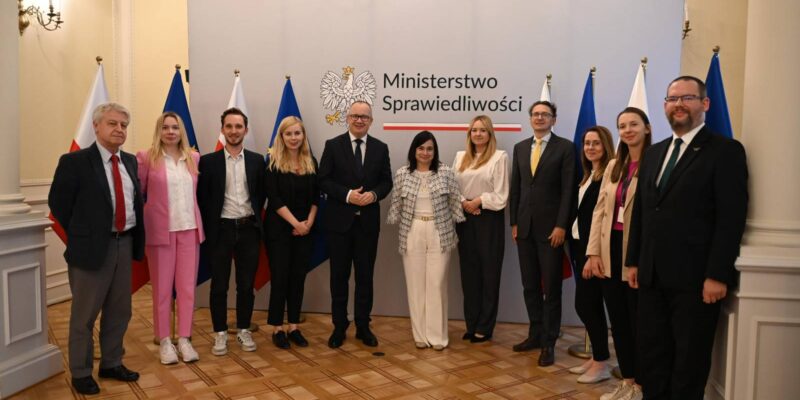
The Media Freedom Rapid Response (MFRR) consortium completed a two-day mission to Poland, 16-17 September, where it held meetings with the Minister of Justice, Adam Bodnar, the Ministry of Culture as well as journalists, publishers, regulators, media law experts. The mission focused on measures to reform public service media, to protect journalists from Strategic Lawsuits Against Public Participation (SLAPPs), and proposals to reform the media landscape in line with the European Media Freedom Act (EMFA). The meetings discussed the changes within the public service media since the Civic Coalition-led government of Donald Tusk used contested legal mechanisms to remove senior…

Poland: Bauer Media Group management should reconsider workers’ demands

The International and the European Federations of Journalists (IFJ-EFJ) and its affiliate the German Journalists Union (dju) in ver.di sent a letter to the management of Bauer Media Group Poland, on 19 September, following the failure of the last conciliatory stage over pay dispute with union representatives from Inicjatywa Pracownicza (“Workers’ Initiative”).  The IFJ, EFJ and dju urge the management to reconsider workers specific demands and engage in open consultation and discussion with the union’s representatives, before workers have no choice but to take strike action.

Turkey: Alarming death threats against journalist Murat Ağırel

The European Federation of Journalists (EFJ) joins the undersigned press freedom and freedom of expression groups in strongly condemning the ongoing and intensifying threats against prominent Turkish journalist Murat Ağırel. We are deeply alarmed by the persistent pattern of intimidation, surveillance, and death threats targeting Ağırel, which represent a severe assault on press freedom and the safety of journalists in Turkey. These threats and acts of intimidation are not isolated incidents but part of a broader, systemic issue affecting press freedom in Turkey, where independent journalists frequently face significant risks in their pursuit of truth. We urgently call on the…

Press freedom on trial in Greece: support Alterthess’ appeal

The European Federation of Journalists (EFJ) joined its Media Freedom Rapid Response (MFRR) partners in expressing full support for Greek journalist Stavroula Poulimeni and media outlet Alterthess ahead of their appeal on 19 September 2024. Today’s hearing follows a court ruling that partially upheld a civil lawsuit demanding damages over Poulimeni’s report on the conviction of two Hellas Gold executives for water pollution – which were overturned in 2022, as the journalist also reported at the time.  In 2023, Alterthess was ordered to pay €3,000 to one of the company’s executives for reporting his court conviction in October 2020. The…

Montenegro: EFJ calls for action over unlawful RTCG Director appointment

The European Federation of Journalists (EFJ) and its Montenegrin affiliate, the Trade Union of Media in Montenegro (SMCG), express concerns about the way the Director-General of the Public Service RTCG has been elected on 31 August 2024. The organisations call on all relevant institutions, primarily the Labor Inspectorate, to take action as soon as possible to clarify the situation in which Boris Raonić has become the Director-General of the Public Service for the third time. The Montenegrin parliamentarians ignored the appeals sent to them before the adoption of the amendments to the Law on RTCG, which were related to the…