Hungary: threats against the country’s last progressive daily newspaper

The European Federation of Journalists (EFJ) joins its Hungarian affiliates, HPU and MUOSZ, in condemning the manoeuvres that led to the closure of the print edition of Népszava, the largest national political daily in Hungary and the last and only remaining liberal, social democratic political daily in the country. Mediaworks, the media holding company with close ties to the Fidesz party, and the logistics company Medialog-DMHM, which belongs to the same group, suddenly announced on Thursday the immediate termination of their printing and distribution contract with the publisher of Népszava, a contract that had been in place for over ten years.…

Our letter to the EU on Gaza: starvation as a weapon, silence as complicity

The worsening situation in Gaza and the requests sent to the European Federation of Journalists (EFJ) by numerous journalists have prompted our federation, in coordination with the Palestinian Journalists Syndicate (PJS), to send the following letter to the European Commission. The EFJ suggests that its affiliates and all journalists who feel concerned send similar letters to their respective governments. Brussels, 24 July, 2025 Dear President von der Leyen, Dear Vice-President Kallas, Dear European Commissioners, We address you as representatives of the European Federation of Journalists (EFJ), representing 300,000 journalists in Europe, at a time when the world is witnessing one…

Kosovo: authorities must guarantee funding for public broadcaster RTK

The European Federation of Journalists (EFJ) joins its affiliate the Association of Journalists of Kosovo (AJK) in calling on authorities to guarantee funding for Kosovo’s public broadcaster RTK. For several months, RTK has been facing a severe financial crisis as a result of the deliberate failure of the Kosovo institutions to allocate the legally approved budget. The warning that RTK may run out of funding within days and be unable to pay its employees for the month of July is alarming. In the absence of a functional Parliamentary Assembly, the EFJ and AJK call on the Government of Kosovo to…

Israel: Stop starving Gazan journalists to silence the truth

The Israeli government is deliberately using starvation as a weapon against the people of Gaza, including journalists and media workers, who are the only ones bearing witness to the atrocities amid Israel’s ban on foreign media. The European Federation of Journalists (EFJ) joins the International Federation of Journalists (IFJ) in demanding that governments across the world, the United Nations General Assembly and the international community take urgent action to halt Israel’s human rights violations in Gaza, including restrictions on humanitarian aid and life-threatening danger that journalists are being exposed to. The Federations reiterate their call on the Israeli government to…

EU Rule of Law Report: A welcome but insufficient response to deteriorating media freedom

Following the publication of the European Commission’s 2025 Rule of Law report, the Media Freedom Rapid Response (MFRR) calls on the EU to act on the alarming findings to bolster its defence of media freedom and independent journalism across the bloc. As media freedom across the European Union and candidate countries continues its overall deterioration, the findings of the report must now act as the foundation for sustained action to safeguard EU values and push for strong implementation of the upcoming European Media Freedom Act (EMFA). General overview Media Freedom Rapid Response (MFRR) is pleased to see the ongoing recognition of…

Closure of Al Jazeera Balkans is a major blow to media freedom and pluralism in the region

The Media Freedom Rapid Response (MFRR) partners joined the SafeJournalists Network (SJN) in expressing deep concern and solidarity with over 200 journalists and media workers affected by the sudden announcement of the closure of Al Jazeera Balkans after 14 years of continuous operation. This is not merely the end of a respected regional media outlet—it is a serious blow to media pluralism, freedom of expression, and the public’s right to be informed across the Western Balkans. For over a decade, Al Jazeera Balkans was a synonym for  professional, independent, and quality journalism, covering vital political, economic, and social issues from…

Serbia: New death threat referring to Charlie Hebdo against independent N1 television channel requires urgent police protection

The independent television channel N1’s editorial staff, regularly threatened for their critical reporting, recently faced a frightening shift from online violence to offline threats within the newsroom. Among them, a threatening letter reminding N1 of the 2015 terrorist attack at the French satirical magazine Charlie Hebdo that killed 12 journalists and media workers, was addressed to the staff. The European and International Federations of Journalists (EFJ-IFJ), joined their Serbian members in urging the Ministry of Interior for police protection of the independent television channel N1 whose security needs to be stepped up. The evident escalation occurred after the President of…

Journalism under siege: newsroom closures, layoffs – Who’s next?

The brutal announcement on 10 July of the definitive closure of the Al Jazeera Balkans (AJB) TV channel shocked the journalistic community in the Balkans. The last news broadcast was on Saturday. Previously recorded material will continue to be broadcast until the end of July, after which the signal will be permanently switched off. Qatari media outlet Al Jazeera launched its Balkans channel in 2011. It was known for its investigative journalism and regional network of correspondents from Sarajevo, Belgrade, Zagreb, Skopje, Podgorica, Ljubljana and Prishtina. The dramatic news inspired the following comment from the President of the European Federation…

Turkey: Sözcü TV censored by the state regulator

Turkish media regulator RTÜK has imposed an administrative fine and a 10-day broadcasting suspension on Sözcü TV over a statement “Turkey is not a Muslim country” made by Murat Kubilay, a columnist in national media outlets in Turkey, on the ‘Money Politics’ programme. The European Federation of Journalists (EFJ) and its Turkish affiliates condemn this disproportionate decision which amounts to censorship. According to RTÜK’s decision, Sözcü TV is off the air for 10 days from 9 July. Journalists representing several organisations, including EFJ Turkish affiliates (TGS, DİSK Basın-İş, GCD…) visited the channel’s office in Ankara to express their support. “RTÜK…

Serbia: Media freedom continues to decline at alarming speed, EU must take action

The undersigned journalists and media freedom organisations are profoundly appalled by the new attacks against journalists across Serbia, many of which are perpetrated by state representatives and law enforcement authorities. The situation of emergency of media freedom in Serbia – as assessed by the Media Freedom Rapid Response (MFRR) during its April solidarity mission – has not only persisted but significantly deteriorated at alarming speed, despite our repeated warnings and recommendations.  As of 11 July, the Mapping Media Freedom platform, has documented a total of 95 cases of press freedom violations against 184 journalists, media outlets, and journalists associations in…

Greece: attempted bomb attack on journalist Yannis Pretenteris

An explosive device containing five kilos of TNT was discovered and defused on Thursday afternoon by Greek police outside the home of journalist Yannis Pretenteris in the Athens region. The European Federation of Journalists (EFJ) joins its Greek affiliates, including the Journalists’ Union of Athens Daily Newspapers (JUADN), in calling for the identification and arrest of the perpetrators of this attempted terrorist attack. An explosive device consisting of five kilos of ammonium-based TNT and a detonator was discovered and defused on Thursday afternoon by a Greek police munitions disposal unit outside the home of Yannis Pretenteris, editor of the weekly…

2025 Rule of Law Report: European Commission fails to raise its voice and continues to ignore emergency situations

On 8 July, the European Commission published its 6th Rule of Law (RoL) report, assessing countries’ advancements and progress in four key areas, one of which is media freedom. The same four candidate countries as in 2024 – Albania, Serbia, North Macedonia and Montenegro – are included alongside the 27 EU Member States. The European Federation of Journalists (EFJ) deplores the fact that the report does not reflect the decline in human rights and press freedom observed in several of the countries monitored, starting with Serbia. The RoL Report is the result of multiple stakeholder consultations (including with the EFJ…

Ireland: Concern over the Defamation (Amendment) Bill’s failure to protect public interest speech

On 2 July, the Dáil passed the Defamation (Amendment) Bill by 83 votes to 61. The European Federation of Journalists (EFJ) shares the disappointment of the undersigned organisations that, although the Bill contains anti-SLAPP provisions, it does not include the strong safeguards necessary to meaningfully protect public interest speech. Nearly a decade after the review of the Defamation Act 2009 began, this is a frustrating outcome and a missed opportunity to protect the freedom of expression that is the lifeblood of our democracy. The Ireland Anti-SLAPP Network – a coalition of civil society organisations, media lawyers, and academics – has engaged…

MEPs debated the entry into force of the European Media Freedom Act

“This is a totalitarian regime in the making. May our grandchildren forgive us…”. It was in these dramatic terms that some MEPs spoke out yesterday at the European Parliament’s plenary session in Strasbourg on the European Media Freedom Act (EMFA). This act, which is due to come into force on 8 August, is supposed to guarantee the independence of the media, the protection of journalists and the transparency of media ownership in the European Union. However, the debate showed just how deeply divided and opposed the positions are, from those who consider the EMFA absolutely essential to those who see…

Turkey: EFJ-IFJ condemn censorship of satirical magazine LeMan

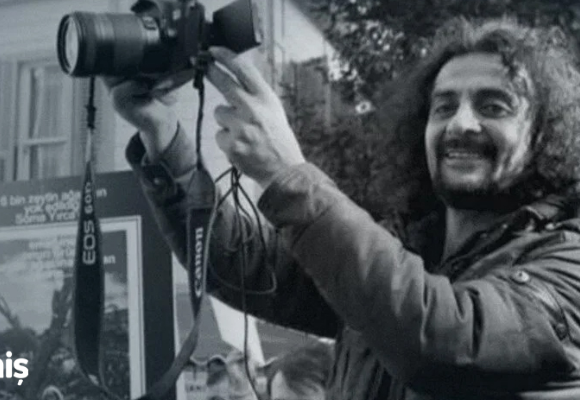
The European and International Federations of Journalists (EFJ-IFJ) strongly condemn the arrests of cartoonists and media workers of the satirical magazine LeMan on charges of “inciting the public to hatred and enmity” and call for the charges to be dropped.  On 2 July 2025, Turkish authorities arrested four staff members of satirical magazine LeMan on charges of “inciting the public hatred and enmity” over a controversial cartoon, published in the 26 June issue, that officials claim depicts the Prophet Muhammad. Cartoonist Dogan Pehlevan, editorial manager Zafer Aknar, graphic designer Cebrail Okcu, and manager Ali Yavuz are in custody pending trial.…

Switzerland: Article 47 of the Banking Act must be amended to include strong public interest protections

Following recent legal developments against journalists reporting on information deemed of public interest but classified under bank secrecy, the European and International Federations of Journalists (EFJ-IFJ) join their Swiss affiliates, impressum and syndicom, in calling for urgent reform of Article 47 of the Swiss Banking Act to include strong public interest protections for journalists and whistleblowers. Article 47 poses a significant threat to watchdog journalism by criminalising the disclosure of confidential banking information without any public interest exception. Journalists who publish leaked information regarding money laundering, tax evasion, and other financial crimes face severe penalties, including up to five years…

MPM2025: What the latest data says about being a journalist in Europe

Conducted by the Centre for Media Pluralism and Media Freedom (CMPF), the Media Pluralism Monitor (MPM) offers one of the most comprehensive assessments of media conditions in Europe. While it evaluates a wide range of topics, the 2025 edition showcases a growing difficulty in the media landscape, caused by decreasing working conditions, employer instability, and an increasingly hostile political climate. Digital safety emerged as the greatest concern, with journalists increasingly targeted by hacking, doxing, surveillance or harassment online. All of these forms of intimidation have been particularly prevalent for journalists covering difficult and polarizing issues such as environmental degradation, corruption,…