Czechia: concern over fast-tracked debate on public service media funding

The European Federation of Journalists (EFJ), its Czech affiliate, the Syndicate of Journalists of the Czech Republic (SNCR), and the undersigned media and journalists’ organisations are deeply concerned by the decision to fast-track legislation in Czechia that would abolish the licence fee and fund Czech Television (ČT) and Czech Radio (ČRo) directly from the state budget. On 23 October 2026, the Chamber of Deputies gave the bill priority in its first reading and agreed to sit late into the night and on Saturday. This raises questions about whether there is enough time for proper parliamentary scrutiny and public consultation on…
Greece: attempted bomb attack on journalist Yannis Pretenteris

An explosive device containing five kilos of TNT was discovered and defused on Thursday afternoon by Greek police outside the home of journalist Yannis Pretenteris in the Athens region. The European Federation of Journalists (EFJ) joins its Greek affiliates, including the Journalists’ Union of Athens Daily Newspapers (JUADN), in calling for the identification and arrest of the perpetrators of this attempted terrorist attack. An explosive device consisting of five kilos of ammonium-based TNT and a detonator was discovered and defused on Thursday afternoon by a Greek police munitions disposal unit outside the home of Yannis Pretenteris, editor of the weekly…

2025 Rule of Law Report: European Commission fails to raise its voice and continues to ignore emergency situations

On 8 July, the European Commission published its 6th Rule of Law (RoL) report, assessing countries’ advancements and progress in four key areas, one of which is media freedom. The same four candidate countries as in 2024 – Albania, Serbia, North Macedonia and Montenegro – are included alongside the 27 EU Member States. The European Federation of Journalists (EFJ) deplores the fact that the report does not reflect the decline in human rights and press freedom observed in several of the countries monitored, starting with Serbia. The RoL Report is the result of multiple stakeholder consultations (including with the EFJ…

Ireland: Concern over the Defamation (Amendment) Bill’s failure to protect public interest speech

On 2 July, the Dáil passed the Defamation (Amendment) Bill by 83 votes to 61. The European Federation of Journalists (EFJ) shares the disappointment of the undersigned organisations that, although the Bill contains anti-SLAPP provisions, it does not include the strong safeguards necessary to meaningfully protect public interest speech. Nearly a decade after the review of the Defamation Act 2009 began, this is a frustrating outcome and a missed opportunity to protect the freedom of expression that is the lifeblood of our democracy. The Ireland Anti-SLAPP Network – a coalition of civil society organisations, media lawyers, and academics – has engaged…

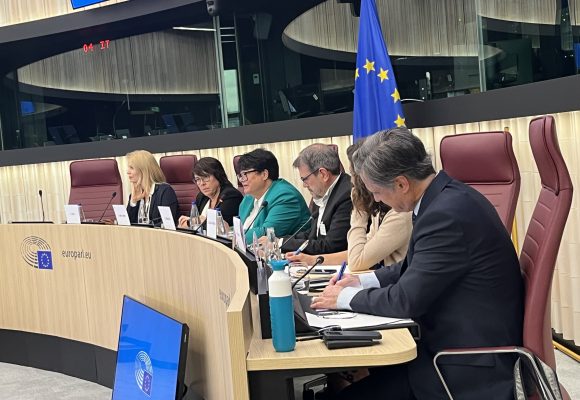
MEPs debated the entry into force of the European Media Freedom Act

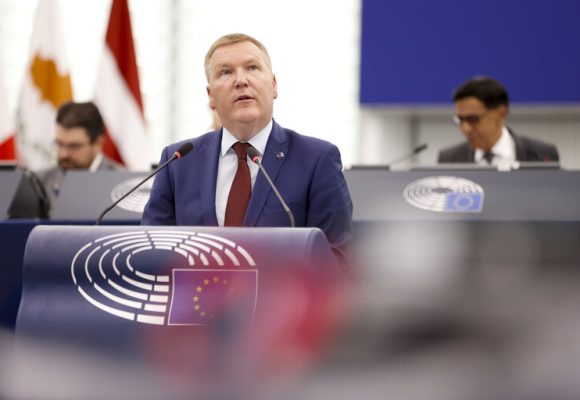
“This is a totalitarian regime in the making. May our grandchildren forgive us…”. It was in these dramatic terms that some MEPs spoke out yesterday at the European Parliament’s plenary session in Strasbourg on the European Media Freedom Act (EMFA). This act, which is due to come into force on 8 August, is supposed to guarantee the independence of the media, the protection of journalists and the transparency of media ownership in the European Union. However, the debate showed just how deeply divided and opposed the positions are, from those who consider the EMFA absolutely essential to those who see…

Turkey: EFJ-IFJ condemn censorship of satirical magazine LeMan

The European and International Federations of Journalists (EFJ-IFJ) strongly condemn the arrests of cartoonists and media workers of the satirical magazine LeMan on charges of “inciting the public to hatred and enmity” and call for the charges to be dropped.  On 2 July 2025, Turkish authorities arrested four staff members of satirical magazine LeMan on charges of “inciting the public hatred and enmity” over a controversial cartoon, published in the 26 June issue, that officials claim depicts the Prophet Muhammad. Cartoonist Dogan Pehlevan, editorial manager Zafer Aknar, graphic designer Cebrail Okcu, and manager Ali Yavuz are in custody pending trial.…

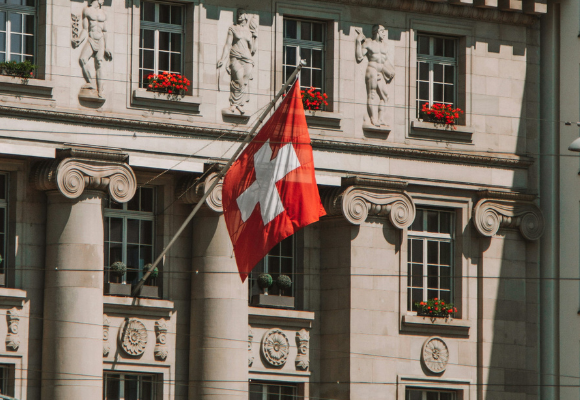
Switzerland: Article 47 of the Banking Act must be amended to include strong public interest protections

Following recent legal developments against journalists reporting on information deemed of public interest but classified under bank secrecy, the European and International Federations of Journalists (EFJ-IFJ) join their Swiss affiliates, impressum and syndicom, in calling for urgent reform of Article 47 of the Swiss Banking Act to include strong public interest protections for journalists and whistleblowers. Article 47 poses a significant threat to watchdog journalism by criminalising the disclosure of confidential banking information without any public interest exception. Journalists who publish leaked information regarding money laundering, tax evasion, and other financial crimes face severe penalties, including up to five years…

MPM2025: What the latest data says about being a journalist in Europe

Conducted by the Centre for Media Pluralism and Media Freedom (CMPF), the Media Pluralism Monitor (MPM) offers one of the most comprehensive assessments of media conditions in Europe. While it evaluates a wide range of topics, the 2025 edition showcases a growing difficulty in the media landscape, caused by decreasing working conditions, employer instability, and an increasingly hostile political climate. Digital safety emerged as the greatest concern, with journalists increasingly targeted by hacking, doxing, surveillance or harassment online. All of these forms of intimidation have been particularly prevalent for journalists covering difficult and polarizing issues such as environmental degradation, corruption,…

Big Tech cannot dismantle the Digital Markets Act

The European Federation of Journalists (EFJ) has expressed concern over reports that the European Commission intends to grant U.S. tech giants a say in the implementation of the Digital Markets Act (DMA). “This disregards the European Parliament, which passed the DMA in 2022 to protect democracy and fair competition. European values must not be sacrificed for dirty deals to avoid car tariffs,” warns Hanna Möllers, legal adviser of the German Journalists’ Association (Deutscher Journalisten-Verband, one of EFJ’s affiliates in Germany). The DMA is intended to curb the dominance of large platforms and create a fairer digital marketplace. It forces the…

Greece: Unions launch first code of ethics for AI in journalism

The Panhellenic Federation of Journalists’ Unions (POESY) launched itsCode of Ethics covering the use of artificial intelligence by journalists at its unveiling event in Athens, on 13 May 2025. Adopted by the five member unions of the federation, the code was developed over the course of a year by a committee of legal experts, journalists and ethics experts.  At the heart of the initiative is a ten point ethical framework that aims to protect journalistic integrity, uphold public trust, and safeguard democratic values, some including training and awareness, journalism ethics as a compass, editorial responsibility,  transparency and accountability, and impartiality…

Euronews Serbia must immediately stop dismissing its media workers for defending the profession

The European Federation of Journalists (EFJ) joined its affiliates, the Journalists’ Association of Serbia (UNS), the Independent Journalists’ Association of Serbia (NUNS), and the “Nezavisnost” Branch Trade Union in expressing deep concern over the ongoing and increasingly intense pressures, professional degradation, and systematic erosion of labor rights of journalists and media workers at Euronews Serbia. In the latest wave of layoffs, at least 12 journalists and employees received termination notices due to alleged redundancy, citing organizational changes and the cessation of need for their positions. At the same time, some employees were offered annexes to their contracts with reduced salaries.…

Budapest: Together in Pride, Together in Protest

This Saturday, the European Federation of Journalists (EFJ) joined the European Trade Union Confederation (ETUC), ILGA-Europe, the European Public Service Unions (EPSU) and trade unionists from across Europe at Budapest Pride to stand for equality, dignity and human rights in Hungary and beyond. We stand united to defend the rights and freedoms of LGBTIQ people and workers across Europe. The ban on Budapest Pride is not just an attack on LGBTIQ people: it’s an attack on democracy, freedom of assembly, and the right to organise. On 18 March 2025, a law was adopted in Hungary restricting the freedom of assembly, by connecting it…

Serbia: IFJ/EFJ strongly condemn coordinated attacks on their member NUNS

The International and European Federation of Journalists (EFJ) lend their full support to their Serbian member, the Independent Journalists of Serbia (NUNS), targeted by a coordinated campaign initiated by the newly formed pro-government Association of Journalists of Serbia (AJS/ANS). NUNS was labeled as an organisation that “supports the riot organisers” simply for opening its office in Belgrade to journalists and media workers who would have difficulty in reaching their newsrooms due to traffic disruptions on demonstration days.  This direct attack on NUNS have sparked a smear campaign across media supported by dozens of pro-government media outlets spreading hostile narrative and…

Open letter: Recent spyware abuse cases require urgent EU action

The European Federation of Journalists (EFJ) joined CDT Europe and 11 civil society and journalists’ organisations, all members of the Spyware Coordination Group, in an open letter to the EU institutions expressing its grave concerns about the continued unchecked use of spyware within the European Union. We hence urge EU Institutions to take concrete, coordinated action to respond to the growing threats posed by spyware, strengthen the security and resilience of Europe’s digital infrastructure and cyberspace, and address the proliferation of commercial surveillance technologies within the EU internal market. The letter highlights that despite continued evidence of spyware misuse, including…

Turkey: EFJ and partners call for the release of journalist Fatih Altaylı

Update (26/11/25): A Turkish court sentenced Fatih Altaylı to four years and two months in prison for “threatening” Turkish President Recep Tayyip Erdogan. The European Federation of Journalists (EFJ) joins the undersigned press freedom, freedom of expression and journalists’ organizations today in stronglying condemn the arrest of Turkish journalist Fatih Altaylı over his political commentary during a YouTube live broadcast and call for his immediate release. Fatih Altaylı, a prominent journalist and columnist, was taken into custody and arrested on June 21, 2025, hours after a segment of his YouTube broadcast went viral on social media. In the video, Altaylı…

Azerbaijan: seven journalists sentenced in latest crackdown on press freedom

On 20 June, the Baku Court of Serious Crimes, in Azerbaijan, sentenced seven media workers affiliated with the independent investigative outlet Abzas Media – including director Ulvi Hasanli, editor-in-chief Sevinc Vagifgizi, investigative journalist Hafiz Babaly, reporters Nargiz Absalamova and Elnara Gasymova, translator Muhammad Kekalov, and Radio Free Europe correspondent Farid Mehralizade – to prison terms ranging from seven and a half to nine years. The charges included “currency smuggling,” “money laundering,” “tax evasion” and forgery of documents. The European Federation of Journalists (EFJ) denounces this rigged trial based on trumped-up charges, and calls on the European Union to step up…

Ukraine: Vladyslav Yesypenko freed after four years in Russian detention

As of June 24, 2025, Vladyslav Yesypenko, a Ukrainian journalist unlawfully held for over four years, has been freed from Russian occupied Crimea. Yesypenko was a freelance contributor to Krym.Realii (a project of Radio Free Europe/Radio Liberty), when he was seized in March 2021 by Russia’s Federal Security Service. In a closed trial, after a forced confession (which he eventually renounced saying it was forced out of him through torture), Yesypenko was wrongfully sentenced to six years on fabricated charges. Yesypenko was deprived of independent legal assistance during his detention, and domestic and international observers were prohibited from his trial.…