European Federation of Journalists

IFJ-EFJ Regional Development Fund

Czech Republic


The European Federation of Journalists (EFJ) signed an agreement on 18 December 2014 with the Union of Journalists and Media Workers of Czech Republic (OSNPM) in order to investigate the working conditions of Czech journalists and media workers. The project is implemented with the cooperation of Judith Reitstatter, from the Austrian union GPA-djp.

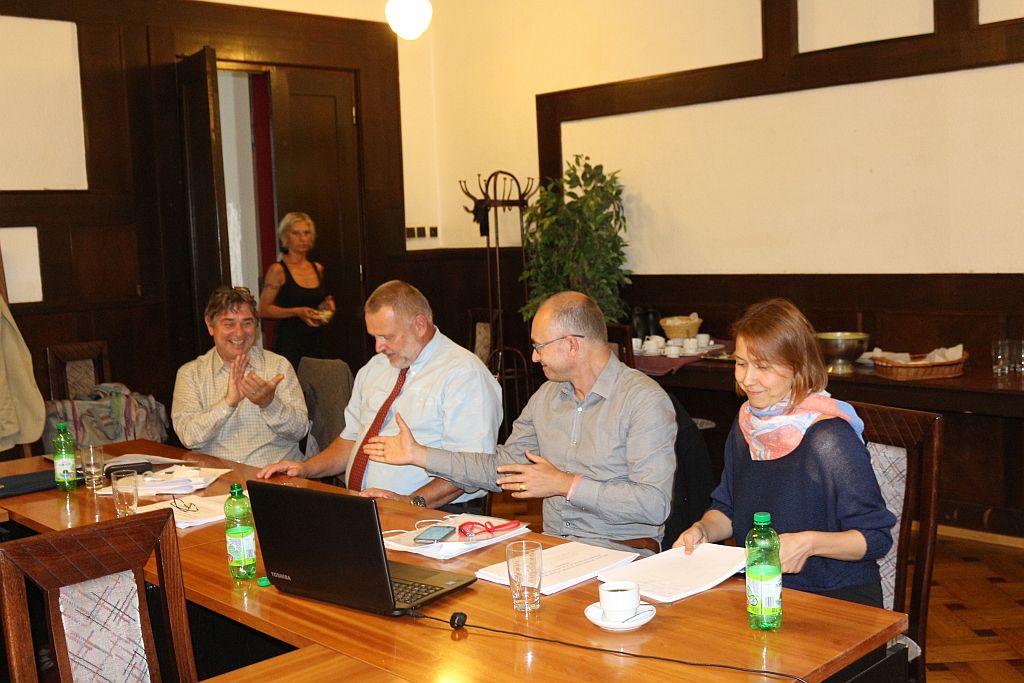
The online survey was launched on 19 May 2015. Around 2,500 journalists and media workers were invited to participate to the survey. The EFJ, OSNPM and GPA-djp analysed together the main outcomes of the survey during a round table conference, on 19 August 2015, in Prague.

The questionnaire focus mainly on labour rights. “This area is underestimated by the Czech media, journalists themselves and their employers as well,” explains Zdeněk Kučera, chairman of OSNPM.

“Over the past 25 years, journalists’ attention was focused primarily toward freedom of speech, access to information, relations with media ownership and the development of media houses. These are very serious topics. However, journalists’ status remained grossly underrated. A specific problem is the status of freelance journalists, which are increasingly numerous, particularly in regional media.”

The main findings of the survey are available on the EFJ website, here.
FOCUS EFJ

Side event of our project: a high school magazines national competition (Nejinspirativnější středoškolský časopis 2015). Here are the winners (picture credit: F. Cakl):

Czech

Contact details: OSNPM, e-mail: odborovy-svaz-novinaru@seznam.cz, website: http://www.odborovysvaznovinaru.cz


Slovakia

The European Federation of Journalists (EFJ), its Austrian union GPA-djp and the Slovak Union of Journalists (Slovenský syndikát novinárov) organized a meeting in Vienna, on 30 October 2014. Trade unionists and media students from both countries met in GPA-djp offices, in Vienna. The discussion on media convergence was launched by Dr. Roman Hummel, from the university of Salzburg.

Contact details: Judith Reitstaetter, judith.reitstaetter (at) gpa-djp.at


Estonia

The European Federation of Journalists (EFJ), the Estonian Union of Journalists (Eesti Ajakirjanike Liit, EAL) and the Union of Journalists in Finland (Suomen Journalistiliitto, UJF) agreed on 6 February 2015 to jointly implement the project “Workshops to Strengthen Journalists’ organisation in Estonia”.

The main objective of the project is to strengthen journalists’ organisation in Estonia, through three activities:

  • a freelance workshop in Helsinki,
  • a radio & TV negotiators workshop in Helsinki,
  • an authors’ rights seminar in Tallinn.

An action plan will be proposed for the next period.

Contact details: Juha Rekola, Juha.Rekola (at) journalistiliitto.fi, and Helle Tiikmaa, helle (at) eal.ee


Actions

Bosnia and Herzegovina: Attack on journalist Sanja Vasković yet another alarm for the state of media freedom

The European Federation of Journalists (EFJ) joins the SafeJournalists Network (SJN) in strongly condemning the recent physical attacks against journalists and media professionals in the Republika Srpska, Bosnia and Herzegovina, which represent a severe threat to media freedom and the safety of those working in the public interest. On 7 February, journalist Sanja Vasković, editor-in-chief of the Spin portal, was verbally abused and physically hindered while reporting on a story in East Sarajevo. Her phone was forcibly seized, and her safety was jeopardised as she sought to investigate environmental and transparency concerns. The law enforcement classified the incident as a…

Montenegro: IFJ and EFJ raise concerns about labour and trade union rights at public service broadcaster RTCG

The International and European Federation of Journalists (IFJ-EFJ), and their Montenegrin affiliate, the Trade Union of Media in Montenegro (TUMM), have expressed serious and growing concern about the situation of labour and trade union rights at the public service broadcaster Radio and Television of Montenegro (RTCG). They wish to draw particular attention to persistent reports of anti-union discrimination and pressure on employees to withdraw from union membership, as well as the systematic weakening of the Trade Union of RTCG Employees. On 6 February 2026, the IFJ, the EFJ and the TUMM sent the following letter to the country’s authorities.

Eurobarometer shows the EU must strengthen Europe’s media ecosystem

EU leaders must considerably strengthen the European media ecosystem. This is the conclusion drawn by the European Federation of Journalists (EFJ) after reading the results of the latest Eurobarometer survey on citizens’ concern about communication-related risks, such as disinformation, fake content generated by artificial intelligence, independence of the media, Big Tech’s dominance, and threats to freedom of expression. The Eurobarometer, which surveyed 26,453 people across all EU members states found that tackling inflation, rising prices and the cost of living is people’s top priority for EU action, followed by the economy and job creation (35%). Defence and security, public services and…

USA: mass layoffs at Washington Post as Bezos gives millions to Melania Trump

On 4 February, The Washington Post announced the firing of more than 300 employees, approximately one third of its staff. This followed weeks of uncertainty and rumours about widespread layoffs, during which time management remained silent. The European and International Federations of Journalists (EFJ-IFJ) join the NewsGuild-CWA in condemning the mass cuts. Post employees who have been laid off will continue to be on staff through 10 April, though they will not be required to work. They will receive six months of continued health insurance coverage. The affected employees include Caroline O’Donovan, who primarily covers Amazon, the company founded by…

Ukraine: No power, no heat, no water – how journalists in Kyiv keep working amid blackouts and freezing temperatures

By Valeriia Muskharina (Information Service of the National Union of Journalists of Ukraine) This winter in Ukraine has become another severe test. Large-scale Russian attacks targeting energy infrastructure have caused constant power outages and heating disruptions, while temperatures have dropped to −25 °C. These conditions have made everyday life extremely difficult and forced people to find ways to stay warm and meet basic needs. For journalists in Kyiv, such realities create additional obstacles while working outdoors, preparing materials, and maintaining communication. Routine tasks such as charging equipment or filming a story have turned into tests of endurance. To help journalists…

Georgia: Restrictive new funding law would further cut off media and journalists

The European Federation of Journalists (EFJ) joins the Media Freedom Rapid Response (MFRR) partners in strongly condemning the proposals of the Georgian Dream (GD) ruling party to implement a series of legislative amendments that would impose additional restrictions and penalties on recipients of grants and foreign funding. If implemented, our organisations warn the amendments would strengthen an already restrictive web of legislation targeting financial support to media and civil society and could eliminate the ability of Georgian journalists and media outlets to receive any form of independent funding. The proposed changes were announced on January 28 by Georgian Dream’s parliamentary…