European Federation of Journalists

IFJ-EFJ Regional Development Fund

Czech Republic


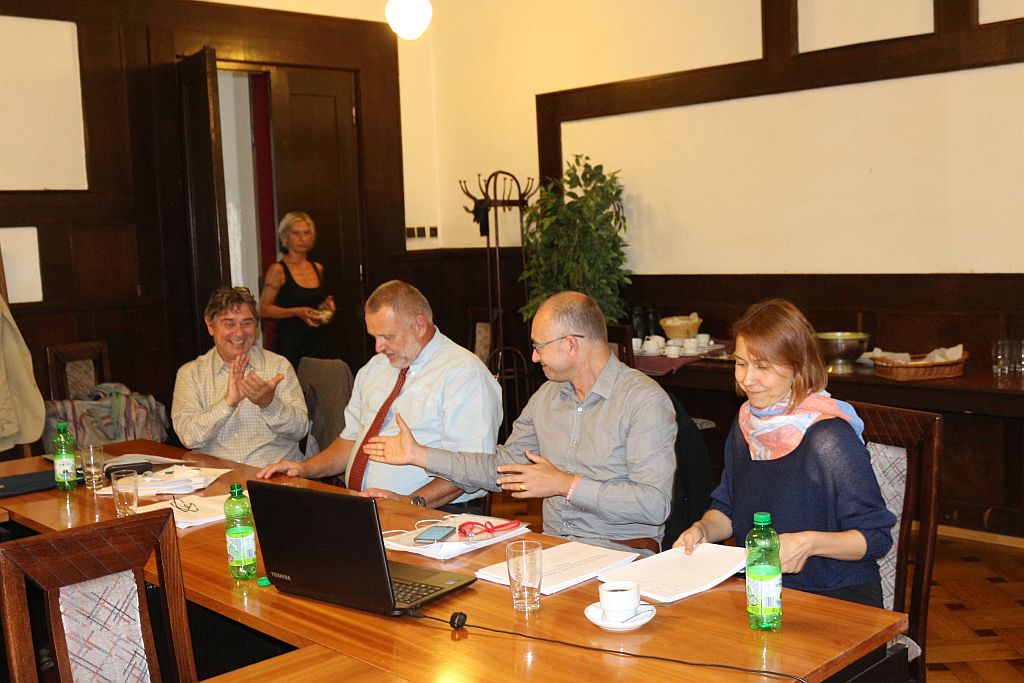
The European Federation of Journalists (EFJ) signed an agreement on 18 December 2014 with the Union of Journalists and Media Workers of Czech Republic (OSNPM) in order to investigate the working conditions of Czech journalists and media workers. The project is implemented with the cooperation of Judith Reitstatter, from the Austrian union GPA-djp.

The online survey was launched on 19 May 2015. Around 2,500 journalists and media workers were invited to participate to the survey. The EFJ, OSNPM and GPA-djp analysed together the main outcomes of the survey during a round table conference, on 19 August 2015, in Prague.

The questionnaire focus mainly on labour rights. “This area is underestimated by the Czech media, journalists themselves and their employers as well,” explains Zdeněk Kučera, chairman of OSNPM.

“Over the past 25 years, journalists’ attention was focused primarily toward freedom of speech, access to information, relations with media ownership and the development of media houses. These are very serious topics. However, journalists’ status remained grossly underrated. A specific problem is the status of freelance journalists, which are increasingly numerous, particularly in regional media.”

The main findings of the survey are available on the EFJ website, here.
FOCUS EFJ

Side event of our project: a high school magazines national competition (Nejinspirativnější středoškolský časopis 2015). Here are the winners (picture credit: F. Cakl):

Czech

Contact details: OSNPM, e-mail: odborovy-svaz-novinaru@seznam.cz, website: http://www.odborovysvaznovinaru.cz


Slovakia

The European Federation of Journalists (EFJ), its Austrian union GPA-djp and the Slovak Union of Journalists (Slovenský syndikát novinárov) organized a meeting in Vienna, on 30 October 2014. Trade unionists and media students from both countries met in GPA-djp offices, in Vienna. The discussion on media convergence was launched by Dr. Roman Hummel, from the university of Salzburg.

Contact details: Judith Reitstaetter, judith.reitstaetter (at) gpa-djp.at


Estonia

The European Federation of Journalists (EFJ), the Estonian Union of Journalists (Eesti Ajakirjanike Liit, EAL) and the Union of Journalists in Finland (Suomen Journalistiliitto, UJF) agreed on 6 February 2015 to jointly implement the project “Workshops to Strengthen Journalists’ organisation in Estonia”.

The main objective of the project is to strengthen journalists’ organisation in Estonia, through three activities:

  • a freelance workshop in Helsinki,
  • a radio & TV negotiators workshop in Helsinki,
  • an authors’ rights seminar in Tallinn.

An action plan will be proposed for the next period.

Contact details: Juha Rekola, Juha.Rekola (at) journalistiliitto.fi, and Helle Tiikmaa, helle (at) eal.ee


Actions

Ireland: Concern over the Defamation (Amendment) Bill’s failure to protect public interest speech

On 2 July, the Dáil passed the Defamation (Amendment) Bill by 83 votes to 61. The European Federation of Journalists (EFJ) shares the disappointment of the undersigned organisations that, although the Bill contains anti-SLAPP provisions, it does not include the strong safeguards necessary to meaningfully protect public interest speech. Nearly a decade after the review of the Defamation Act 2009 began, this is a frustrating outcome and a missed opportunity to protect the freedom of expression that is the lifeblood of our democracy. The Ireland Anti-SLAPP Network – a coalition of civil society organisations, media lawyers, and academics – has engaged…

MEPs debated the entry into force of the European Media Freedom Act

“This is a totalitarian regime in the making. May our grandchildren forgive us…”. It was in these dramatic terms that some MEPs spoke out yesterday at the European Parliament’s plenary session in Strasbourg on the European Media Freedom Act (EMFA). This act, which is due to come into force on 8 August, is supposed to guarantee the independence of the media, the protection of journalists and the transparency of media ownership in the European Union. However, the debate showed just how deeply divided and opposed the positions are, from those who consider the EMFA absolutely essential to those who see…

Turkey: EFJ-IFJ condemn censorship of satirical magazine LeMan

The European and International Federations of Journalists (EFJ-IFJ) strongly condemn the arrests of cartoonists and media workers of the satirical magazine LeMan on charges of “inciting the public to hatred and enmity” and call for the charges to be dropped.  On 2 July 2025, Turkish authorities arrested four staff members of satirical magazine LeMan on charges of “inciting the public hatred and enmity” over a controversial cartoon, published in the 26 June issue, that officials claim depicts the Prophet Muhammad. Cartoonist Dogan Pehlevan, editorial manager Zafer Aknar, graphic designer Cebrail Okcu, and manager Ali Yavuz are in custody pending trial.…

Switzerland: Article 47 of the Banking Act must be amended to include strong public interest protections

Following recent legal developments against journalists reporting on information deemed of public interest but classified under bank secrecy, the European and International Federations of Journalists (EFJ-IFJ) join their Swiss affiliates, impressum and syndicom, in calling for urgent reform of Article 47 of the Swiss Banking Act to include strong public interest protections for journalists and whistleblowers. Article 47 poses a significant threat to watchdog journalism by criminalising the disclosure of confidential banking information without any public interest exception. Journalists who publish leaked information regarding money laundering, tax evasion, and other financial crimes face severe penalties, including up to five years…

MPM2025: What the latest data says about being a journalist in Europe

Conducted by the Centre for Media Pluralism and Media Freedom (CMPF), the Media Pluralism Monitor (MPM) offers one of the most comprehensive assessments of media conditions in Europe. While it evaluates a wide range of topics, the 2025 edition showcases a growing difficulty in the media landscape, caused by decreasing working conditions, employer instability, and an increasingly hostile political climate. Digital safety emerged as the greatest concern, with journalists increasingly targeted by hacking, doxing, surveillance or harassment online. All of these forms of intimidation have been particularly prevalent for journalists covering difficult and polarizing issues such as environmental degradation, corruption,…

Big Tech cannot dismantle the Digital Markets Act

The European Federation of Journalists (EFJ) has expressed concern over reports that the European Commission intends to grant U.S. tech giants a say in the implementation of the Digital Markets Act (DMA). “This disregards the European Parliament, which passed the DMA in 2022 to protect democracy and fair competition. European values must not be sacrificed for dirty deals to avoid car tariffs,” warns Hanna Möllers, legal adviser of the German Journalists’ Association (Deutscher Journalisten-Verband, one of EFJ’s affiliates in Germany). The DMA is intended to curb the dominance of large platforms and create a fairer digital marketplace. It forces the…