European Federation of Journalists

IFJ-EFJ Regional Development Fund

Czech Republic


The European Federation of Journalists (EFJ) signed an agreement on 18 December 2014 with the Union of Journalists and Media Workers of Czech Republic (OSNPM) in order to investigate the working conditions of Czech journalists and media workers. The project is implemented with the cooperation of Judith Reitstatter, from the Austrian union GPA-djp.

The online survey was launched on 19 May 2015. Around 2,500 journalists and media workers were invited to participate to the survey. The EFJ, OSNPM and GPA-djp analysed together the main outcomes of the survey during a round table conference, on 19 August 2015, in Prague.

The questionnaire focus mainly on labour rights. “This area is underestimated by the Czech media, journalists themselves and their employers as well,” explains Zdeněk Kučera, chairman of OSNPM.

“Over the past 25 years, journalists’ attention was focused primarily toward freedom of speech, access to information, relations with media ownership and the development of media houses. These are very serious topics. However, journalists’ status remained grossly underrated. A specific problem is the status of freelance journalists, which are increasingly numerous, particularly in regional media.”

The main findings of the survey are available on the EFJ website, here.
FOCUS EFJ

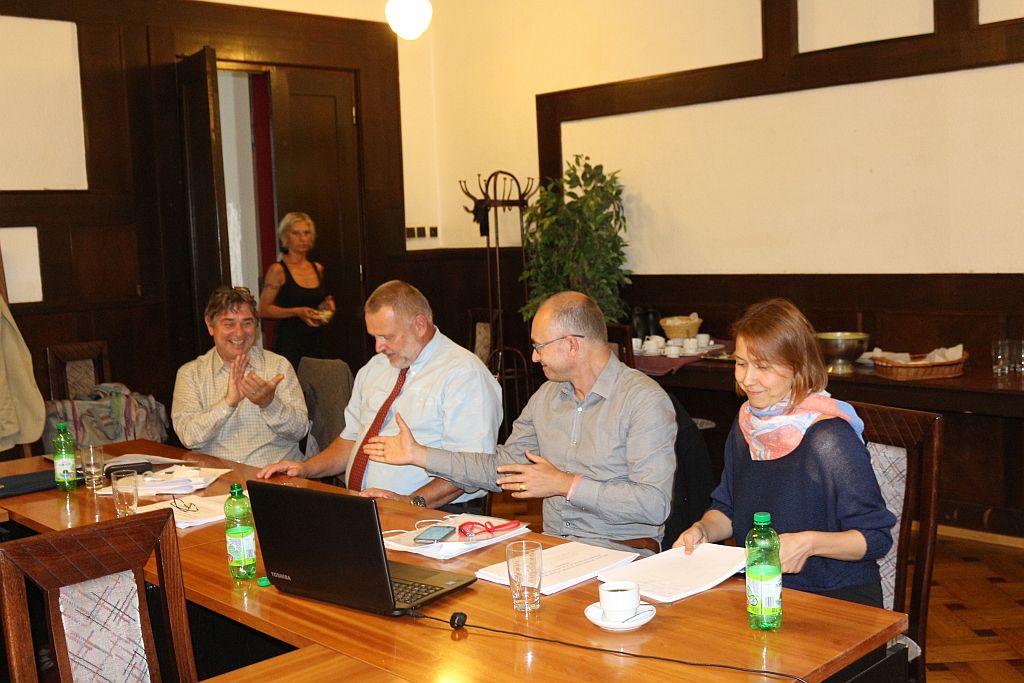
Side event of our project: a high school magazines national competition (Nejinspirativnější středoškolský časopis 2015). Here are the winners (picture credit: F. Cakl):

Czech

Contact details: OSNPM, e-mail: odborovy-svaz-novinaru@seznam.cz, website: http://www.odborovysvaznovinaru.cz


Slovakia

The European Federation of Journalists (EFJ), its Austrian union GPA-djp and the Slovak Union of Journalists (Slovenský syndikát novinárov) organized a meeting in Vienna, on 30 October 2014. Trade unionists and media students from both countries met in GPA-djp offices, in Vienna. The discussion on media convergence was launched by Dr. Roman Hummel, from the university of Salzburg.

Contact details: Judith Reitstaetter, judith.reitstaetter (at) gpa-djp.at


Estonia

The European Federation of Journalists (EFJ), the Estonian Union of Journalists (Eesti Ajakirjanike Liit, EAL) and the Union of Journalists in Finland (Suomen Journalistiliitto, UJF) agreed on 6 February 2015 to jointly implement the project “Workshops to Strengthen Journalists’ organisation in Estonia”.

The main objective of the project is to strengthen journalists’ organisation in Estonia, through three activities:

  • a freelance workshop in Helsinki,
  • a radio & TV negotiators workshop in Helsinki,
  • an authors’ rights seminar in Tallinn.

An action plan will be proposed for the next period.

Contact details: Juha Rekola, Juha.Rekola (at) journalistiliitto.fi, and Helle Tiikmaa, helle (at) eal.ee

 

Actions

Empowering the workforce: The growth of workers councils in Europe’s tech industry

At a time when workers are facing many challenges regarding their working conditions, they are increasingly developing solutions to join forces and fight for labor rights. One of the most effective solutions is the creation of works councils.  Despite a recurring opposition from tech employers, workers councils are multiplying all around Europe. They are essential tools implemented to strengthen a safer work culture in organisations as they allow workers to defend their rights within a specific company. Employees from works councils must be informed about the economic situation of the company and employers need to consult them for major layoffs…

Civil society coalition calls for urgent EU action against spyware threats

The European Federation of Journalists (EFJ) joins 30 civil society and journalists’ organisations to demand that the necessary regulatory measures against spyware threats are implemented by the EU institutions. A comprehensive approach and effective solutions are key to address this crucial issue for EU democratic values, public debate and healthy civic spaces. The coalition calls for the ban on the production, sale, and use of spyware during the new legislative term.  Read the full letter below:

Romania: Alarming situation in public service media must be urgently addressed

The European and International Federation of Journalists (EFJ-IFJ) and its Romanian affiliate FAIR MediaSind express alarming concern for both the public media sector and freelance media workers. In a letter sent to the Romanian authorities on 2 September, the federations urged the authorities to engage in open consultation and discussion with civil society and journalists’ unions and to ensure the fundamental rights of media workers and the sustainability of the media industry, including public support at arm’s length. The longstanding crisis in public media requires urgent action.

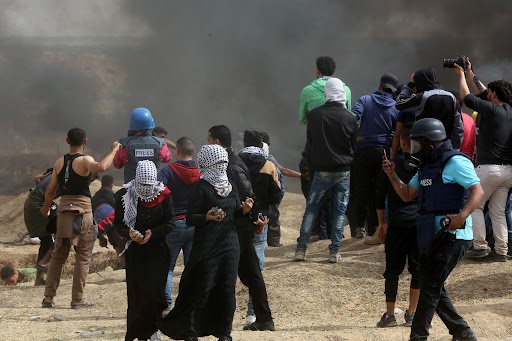
Gaza: We must not turn our heads away from the countless killings of journalists

By EFJ President Maja Sever (originally published on Social Europe) The journalist Heba al-Abdallah was born in Khan Yunis in 1993. At Al-Azhar University, she obtained a bachelor’s degree in Arabic language and media. The defence of her master’s thesis awaited. Heba was married and had a daughter, Judy. She was a news anchor and presenter at a radio station, collaborated with a university, and was on the board of directors of the Social Media Club in Palestine. She also worked on the working women’s file for the Subordinate Workers’ Movement. ‘These days are among the most difficult moments that a person…

EFJ to organise conference on self-regulation and regulation in the media sector in Brussels

On 14 October 2024, the European Federation of Journalists (EFJ) will organise a conference at ULB Solbosch in Bruxelles, Belgium, as part of its Media Councils in the Digital Age (MCDA) project. This conference will also feature a discussion on intergenerational media literacy within the E-engaged project. Recent EU legislation on media freedom but also illegal content online, transparent advertisement in the media and disinformation give regulatory bodies increasingly more responsibilities. But what are the demarcations between regulation and self-regulation, a long-standing tradition in Europe’s press sector? What will be the new roles of regulators under the European Media Freedom…

El Salvador: Justice a step closer for the four Dutch journalists murdered in 1982

After decades of impunity, there has been a move towards justice finally being served in the case of the four Dutch journalists murdered by military forces in El Salvador in 1982. The investigation, which was reopened in 2020, has identified those allegedly responsible for the crime and has been elevated to trial status. This could set a precedent for other crimes which were committed during El Salvador’s internal conflict in the 1980s and which are still to be judged. The International and European Federations of Journalists, together with the Dutch Association of Journalists (Nederlandse Vereniging van Journalisten) and the Journalists’ Association…