European Federation of Journalists

Media Freedom Rapid Response

The European Federation of Journalists (EFJ) is a partner of Media Freedom Rapid Response project (MFRR) aiming to promote an independent, pluralistic media landscape, to safeguard media workers, especially harassed female media workers and to protect the rights of journalists. The RRM helps to mitigate the consequences of the recently observed deterioration of media freedom in several European Union, Member States and Candidate Countries.

Overall Objective

The overall objective of this project is to provide practical support for journalists to improve media freedom in Europe.

The Media Freedom Rapid Response (MFRR) is designed to detect, answer and prevent violations of press and media freedom. It consists of three layers: monitoring, categorisation, responses.

Specific objectives

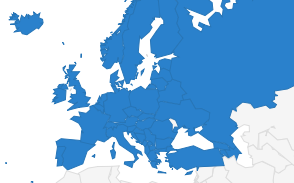
1. Mapping Media Freedom (MMF) in Europe (EU & Candidate Countries): Media violations are on the rise especially under the current coronavirus crisis. One of the key components of the project is to monitor and document a wide range of media violations conducted by any actors, whether individuals, state actors or business, so that actions can be taken rapidly to address the violations.

2. Practical supports: Based on the media violations reported, the project offers a wide range of immediate to long-term, practical support ranging from legal help, safety advice and training, safe house for journalists, advocacy and mission, and online resources. You could find more information about the legal support here and more details about safe house for journalists here.

3. Advocacy & Trial Monitoring: Joint media advocacy will also be carried out by the project including joint statements, national missions (in Czech Republic, Hungry, Spain, Serbia), roundtable advocacy meetings with EU policy-makers. The EFJ will involve the relevant national members when carrying out such national missions. Trial Monitoring especially for Turkey, Malta (for the case of Daphne Caruana Galizia) and Slovakia (for the case of Ján Kuciak) will be carried out and participated by the project partners to help find justice for journalists who are put in jails or murdered.

Anyone can submit and report a media violation to the MMF platform online.

Actions

Ukraine: Demand for justice from Russia one year after death of Victoria Roshchyna

September 19 marks one year since the death of Victoria Roshchyna, a Ukrainian journalist who had been held for over a year in Russian captivity. On this day, the European Federation of Journalists (EFJ) joins its MFRR partners in remembering Victoria and demanding justice for her death from Russian authorities. Roshchyna’s body was repatriated to Ukraine and buried in Kyiv only on 8 August 2025, almost one year after the official date of her death recorded by Russian authorities. According to Ukrainian forensic investigators, Roshchyna’s body showed numerous signs of torture, including burn marks from electric shocks, cuts on the…

Albania: Open Letter on Improving Journalists’ Access to the Parliament

The European Federation of Journalists (EFJ) joins the Safe Journalists Network (SJN) and the Media Freedom Rapid Response (MFRR) partners in expressing, in an open letter to the Parliament of Albania, our serious concern over recent proposals by the parliamentary majority to significantly restrict journalists’ access to the Parliament of Albania.

Denmark: MFRR partners oppose introduction of new state-funded media Ombudsperson

The Danish government has announced its intention to introduce a public-funded Ombudsperson for the media with broad legal powers concentrated into a single state-appointed institution. The European Federation of Journalists (EFJ) joins the partners of the Media Freedom Rapid Response (MFRR), as well as Danish media and journalist groups in opposing the proposal, warning that rather than strengthening the existing media regulatory framework, it would weaken the role of the Press Council and risks creating new avenues for unjustified or politicised interference in healthy media ecosystem. The role and powers given to the new Media Ombudsperson were outlined by the…

MFRR Monitoring Report: 709 attacks on media freedom in the first six months of 2025

This Monitoring Report takes stock of the press freedom situation in 36 EU Member States and candidate countries during the first six months of 2025. Between January and June, the Mapping Media Freedom database documented 709 press freedom violations, affecting 1249 media workers or entities.  The report documents a vast variety of attacks, indicating that media workers in Europe operate in an increasingly hostile environment. The types of attacks documented included verbal attacks – such as death threats and smear campaigns – physical attacks, attacks to property, legal incidents, and interference with reporting work.  Media workers faced threats in different…

Georgia: Journalists attacks by ruling party activists and police

The European Federation of Journalists (EFJ) joins the undersigned media freedom, journalists’, and freedom of expression organizations in strongly condemning the recent physical and verbal attacks on independent media by activists of the Georgian Dream ruling party and a police officer. These latest serious physical attacks are the result of long-standing impunity for crimes against journalists in Georgia. We demand an independent and thorough investigation into these incidents and that all those responsible be fully held accountable. On the evening of September 8, tensions near Tbilisi Mayor Kakha Kaladze’s campaign office escalated between peaceful protesters and Georgian Dream activists. Reports…

Turkey: Stop throttling social media platforms and messaging services

Turkey is increasingly throttling social media platforms and messaging apps to silence online communication at moments of profound political or social importance. The European Federation of Journalists (EFJ) joins the undersigned human rights and press freedom organisations in condemn Turkey’s actions, which isolate people from vital information, and stifle democratic participation. Turkey must correct course and uphold its international human rights obligations. On 7 September at 23:45, major social media platforms and messaging services X, Instagram, YouTube, TikTok, Facebook, WhatsApp, Telegram, and Signal became inaccessible in Istanbul for approximately 21 hours. The bandwidth throttling coincided with a police blockade of the main opposition Republican…