European Federation of Journalists

openMedia, investigating press freedom

Title of the project : openMedia, investigating press freedom
Lead Applicant
: openDemocracy

Partner organisations : EFJ, Index on censorship, King’s College London

The recently launched openMedia project aims to investigate and expose commercial interference in editorial decisions. The project is run by openDemocracy with the European Federation of Journalists (EFJ) as a partner alongside the Index on Censorship and King’s College London.

The project believes that there has not been enough of a concerted, ongoing spotlight on the extent and effects of commercial influence over the media, despite the dangerous consequences it poses for press freedom. For now, the project focuses on 47 countries across Europe but also has ambitions to expand.

Despite the recent launch, the project is adamant that it is not a response to the “fake news” hype of the past year or so. Rather, the project responds to scandals of commercial sponsors influencing media content; for example the Daily Telegraph’s suppression of investigations into its advertiser HSBC; and allegations that Buzzfeed deleted articles which advertisers found unfavourable.

According to the project, this power dynamic can suppress investigations of banks, pharmaceuticals, agriculture, fossil fuel giants, energy companies and other big businesses.

In addition, the project recognizes how for many readers, “sponsored content” is difficult to distinguish from genuine news content. The project therefore aims to clarify the commercial interests apparent in media to readers, and as part of the project, King’s College London will develop digital tools to help readers be better informed about news sources.

The findings of the project will be used to campaign for greater transparency and press freedom in news organisations and to empower journalists to advocate for transparency.

In order to do this, openMedia is currently conducting a confidential and anonymous survey of journalists across Europe, asking about their own working practices and experiences of commercial pressure inside newsrooms. The survey is available in English here and in many other languages here.
Actions

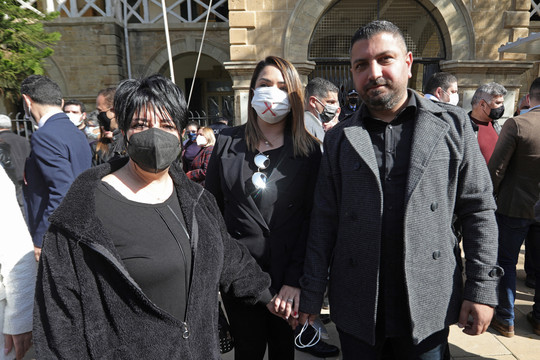
Northern Cyprus: the EFJ and IFJ demand the withdrawal of charges against the President of journalists’ union Basin-Sen

Ali Kişmir, the President of the Cyprus Turkish Journalists’ Union (Basin-Sen), an affiliate of the European and International Federations of Journalists (EFJ-IFJ), will stand trial on 6 October for an article published in 2020. Kişmir faces a ten-year prison sentence for “insulting and mocking” the security forces. The federations call for the charges against him to be dropped and urge the authorities to safeguard freedom of expression which is a cornerstone of democracy. In an opinion article published in 2020, the journalist described the state of his country’s politics as a “brothel”. Three years later, he will be tried for…

Photo exhibition: “Ukraine: Journalists in war zones”, 17 October 2023, Brussels

The European Federation of Journalists (EFJ) together with the National Union of Journalists of Ukraine (NUJU) invite you to the opening of the photo exhibition ‘Ukraine: Journalists in war zones’, which will be held on 17 October at the Ukrainian Civil Society Hub in Brussels.  The exhibition aims to draw the attention of the international community to the work of journalists during the war, their working conditions and the actions of the National Union of Journalists of Ukraine in support of the Ukrainian and international media on the front line. The event will also mark the crucial international journalistic solidarity…

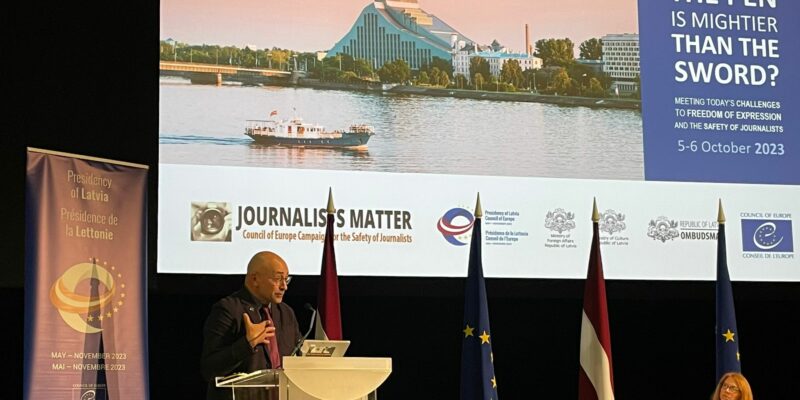
Latvia: EFJ and IFJ extremely concerned by Latvian ban of Russian-language content on PSM

The undersigned international media freedom and journalists’ organisations, including the International and European Federations of Journalists (IFJ-EFJ), are extremely concerned by Latvian government proposals to ban the broadcast of Russian language content on Latvian public service media. On 28 September, the Latvian parliament approved the “National Security Concept”, a government-backed policy planning document. It states that all “content created by public media must only be in Latvian and languages belonging to the European cultural space” from 1 January 2026. The move would essentially prohibit Latvian TV and Latvian Radio from continuing to produce content in Russian. Currently, Latvian TV and…

Report: Media freedom at a crossroads – Journalism in Poland faces uncertain future ahead of election

The Media Freedom Rapid Response (MFRR) partners organised a mission in Poland to assess the challenges that Polish media face ahead of the parliamentary elections scheduled on 15 October 2023. The main findings and a set of recommendations are included in a newly published report. This report explores how media capture and the widespread use of vexatious lawsuits have been used to create a hostile climate for independent journalism that weakens media’s ability to contribute to free and fair elections. Key findings include: The public media have been fully converted into a propaganda arm of the ruling party. The National…

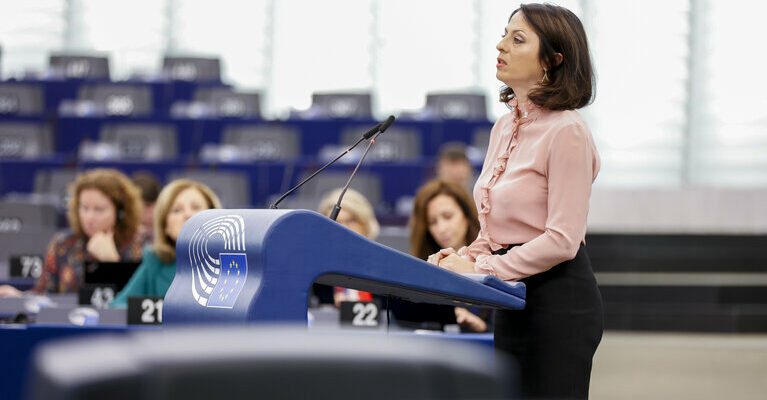
EMFA: EFJ applauds European Parliament’s vote for strengthened regulation, deplores conditional use of spyware

At the plenary session in Strasbourg, the European Parliament (EP) adopted yesterday, with an overwhelming majority, (448 votes in favour, 102 votes against and 75 abstentions) its position on the European Media Freedom Act. The European Federation of Journalists (EFJ) appreciates the European Parliament’s continued commitment to preserving and promoting media freedom in an ever more hostile and fragile media environment. Many essential changes have been made since the legislative process began, but concerns about spying on journalists remain. “After a year of advocacy in close cooperation with other media freedom, civil society and digital rights organisations, we are happy to have…

Serbia: New draft media laws represent another step backward for media freedom

The European Federation of Journalists (EFJ) joined partner organisations of the Media Freedom Rapid Response (MFRR) today in raising the alarm about two draft media laws brought forward by the Serbian government for their lack of compliance with international freedom of expression standards. If passed they would represent a regressive step with wide-ranging implications for media freedom and pluralism. As the public debate on the legislation continues, the MFRR calls on the Serbian government to withdraw the problematic changes added into the latest drafts and ensure compliance with the country’s previously agreed Media Strategy. The latest draft versions of the…