European Federation of Journalists

openMedia, investigating press freedom

Title of the project : openMedia, investigating press freedom
Lead Applicant
: openDemocracy

Partner organisations : EFJ, Index on censorship, King’s College London

The recently launched openMedia project aims to investigate and expose commercial interference in editorial decisions. The project is run by openDemocracy with the European Federation of Journalists (EFJ) as a partner alongside the Index on Censorship and King’s College London.

The project believes that there has not been enough of a concerted, ongoing spotlight on the extent and effects of commercial influence over the media, despite the dangerous consequences it poses for press freedom. For now, the project focuses on 47 countries across Europe but also has ambitions to expand.

Despite the recent launch, the project is adamant that it is not a response to the “fake news” hype of the past year or so. Rather, the project responds to scandals of commercial sponsors influencing media content; for example the Daily Telegraph’s suppression of investigations into its advertiser HSBC; and allegations that Buzzfeed deleted articles which advertisers found unfavourable.

According to the project, this power dynamic can suppress investigations of banks, pharmaceuticals, agriculture, fossil fuel giants, energy companies and other big businesses.

In addition, the project recognizes how for many readers, “sponsored content” is difficult to distinguish from genuine news content. The project therefore aims to clarify the commercial interests apparent in media to readers, and as part of the project, King’s College London will develop digital tools to help readers be better informed about news sources.

The findings of the project will be used to campaign for greater transparency and press freedom in news organisations and to empower journalists to advocate for transparency.

In order to do this, openMedia is currently conducting a confidential and anonymous survey of journalists across Europe, asking about their own working practices and experiences of commercial pressure inside newsrooms. The survey is available in English here and in many other languages here.

Actions

Germany: drastic cost-cutting plan impacts international public broadcaster DW

The European Federation of Journalists (EFJ) joins its German affiliates, dju in ver.di and DJV, in condemning the drastic reduction in programmes and staff at the international public broadcaster Deutsche Welle (DW). These cost-cutting measures jeopardise access to free and pluralistic information for millions of citizens around the world. The reduction in DW’s broadcasting comes at a time when the United States has itself withdrawn its international broadcasting. Following the German federal government’s decision to cut DW’s funding by 10 million euros in 2026, the management of the international public broadcaster adopted on Wednesday a drastic cost-cutting plan of 21…

Italy: MFRR to conduct follow-up media freedom mission to Rome

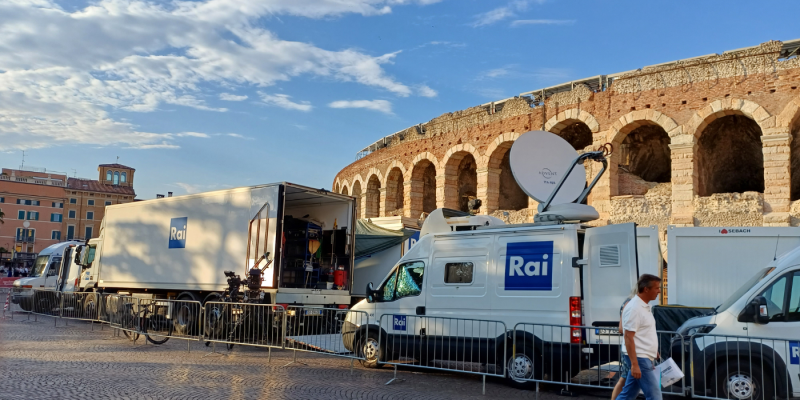
The Media Freedom Rapid Response (MFRR) partners, including the European Federation of Journalists (EFJ), will conduct an advocacy mission to Rome, Italy, on 9–10 March 2026 to assess key developments affecting press and media freedom in the country and push for implementation of crucial reforms.  The mission will focus on four main themes: the reform of the public broadcaster RAI and its compliance with the European Media Freedom Act (EMFA); the transposition of the EU Anti-SLAPP Directive and broader defamation reform; digital threats and the use of surveillance against journalists; and media market concentration and its compatibility with the EMFA. …

Kosovo: EFJ joins urgent call for adequate budget allocation for public broadcaster RTK

The European Federation of Journalists (EFJ) today joins international media freedom organisations in expressing strong concerns about the underfunding of Kosovo’s public broadcaster, Radio Television of Kosovo (RTK), and calling for legal budget requirements to be met. The Assembly of Kosovo is currently discussing the RTK budget, which is anticipated to be passed in two readings on 19 and 20 February 2026. According to the draft Law on the Budget for 2026, the parliament, based on the government’s proposal, will allocate only 8.9 million euros, which is sufficient only to cover basic operational needs such as staff salaries. The Law…

MFRR Monitoring Report 2025: 1,481 press freedom violations across 36 European countries

The Media Freedom Rapid Response (MFRR) partners today publish the Annual Monitoring Report for 2025, which documents 1,481 press freedom violations affecting 2,377 journalists or media-related entities in 36 European countries between January and December 2025. The report was compiled by the European Centre for Press and Media Freedom (ECPMF), the European Federation of Journalists (EFJ), and the International Press Institute (IPI). Journalists and media outlets across Europe faced sustained threats throughout 2025, according to the latest Monitoring Report. Based on verified cases recorded in the Mapping Media Freedom database, the report provides a comprehensive overview of the main threats facing journalists across the 27 EU Member States and nine candidate countries.…

Switzerland: US analytics firm takes Republik magazine to court

The American company Palantir Technologies has filed a lawsuit against Republik, an independent Swiss media outlet that published an in-depth investigation into its activities. The case is currently being heard by the Zurich Commercial Court. The European Federation of Journalists (EFJ) considers this legal action to be a potential case of a SLAPP suit (strategic lawsuit against public participation). Palantir develops intelligence and law enforcement software. The US Immigration and Customs Enforcement (ICE) uses Palantir products to track migrants in the United States. The Israeli army also uses Palantir software in its war in Gaza. In collaboration with the investigative…

Belgium: Unions win annulment of law criminalising leaks of state secrets to journalists

Journalists in Belgium can no longer be prosecuted for possessing a state secret. On 29 January 2026, the Belgian Constitutional Court annulled a provision allowing prison sentences for journalists receiving confidential information such as state secrets. The European Federation of Journalists (EFJ) joined its Belgian affiliates, the Association des Journalistes Professionnels (AJP) and the Vlaamse Vereeniging van Journalisten (VVJ) in welcoming the ruling. The provisions were part of the Penal Code reform adopted in February 2023, which expanded the definition of “state secret” and criminalised their unauthorised receipt, including by journalists who might obtain – or merely become aware of…