European Federation of Journalists

openMedia, investigating press freedom

Title of the project : openMedia, investigating press freedom
Lead Applicant
: openDemocracy

Partner organisations : EFJ, Index on censorship, King’s College London

The recently launched openMedia project aims to investigate and expose commercial interference in editorial decisions. The project is run by openDemocracy with the European Federation of Journalists (EFJ) as a partner alongside the Index on Censorship and King’s College London.

The project believes that there has not been enough of a concerted, ongoing spotlight on the extent and effects of commercial influence over the media, despite the dangerous consequences it poses for press freedom. For now, the project focuses on 47 countries across Europe but also has ambitions to expand.

Despite the recent launch, the project is adamant that it is not a response to the “fake news” hype of the past year or so. Rather, the project responds to scandals of commercial sponsors influencing media content; for example the Daily Telegraph’s suppression of investigations into its advertiser HSBC; and allegations that Buzzfeed deleted articles which advertisers found unfavourable.

According to the project, this power dynamic can suppress investigations of banks, pharmaceuticals, agriculture, fossil fuel giants, energy companies and other big businesses.

In addition, the project recognizes how for many readers, “sponsored content” is difficult to distinguish from genuine news content. The project therefore aims to clarify the commercial interests apparent in media to readers, and as part of the project, King’s College London will develop digital tools to help readers be better informed about news sources.

The findings of the project will be used to campaign for greater transparency and press freedom in news organisations and to empower journalists to advocate for transparency.

In order to do this, openMedia is currently conducting a confidential and anonymous survey of journalists across Europe, asking about their own working practices and experiences of commercial pressure inside newsrooms. The survey is available in English here and in many other languages here.
Actions

EFJ meets Slovak journalists in aftermath of Ján Kuciak’s murder

The director of the European Federation of Journalists (EFJ), Renate Schroeder met with a group of Slovak journalists from various Slovak media on 11 April in the European Parliament to discuss the current situation of journalists in Slovakia and what must be done to better protect (investigative) journalists. The meeting “Slovakia and Malta: killed journalists. What is changing in Europe?” organised by the Information Office of the European Parliament in Slovakia brought together 15 Slovak journalists from  TV Markiza, TV TA3. RTVS- public TV and radio, TV JOJ, Daily SME , Daily DennikN, daily PRAVDA and press agency TASR. Nora Wehofsits, advocacy…

Fact-finding mission report to the Baltics published

A new report about the fact-finding mission conducted by the European Federation of Journalists (EFJ) and the European Centre for Press and Media Freedom (ECPMF), which investigated the media situation in Estonia and Lithuania from 22 to 24 January, was published on 9 April 2018. Members of the mission interviewed almost 30 experts: representatives of the government, academia, press councils, public service media, journalists‘ organisations, investigative journalists, editors-in-chief and CEOs of major media companies. The two Baltic states were chosen in the wake of a wave of disinformation spread by Russian specialists during the US election campaign. The question, whether the comparatively small societies…

Serbian journalists attacked by police in Kosovo

The European Federation of Journalists (EFJ) joined its Serbian affiliate, the Journalists’ Union of Serbia (SINOS), the Journalists’ Association of Serbia (UNS) and the Independent Journalists’ Association of Serbia (NUNS) in condemning the attacks on Serbian cameraman Vladimir Milic as well as journalists Dragana Zecevic and Radmila Komazec on 26 March 2018 in Kosovska Mitrovica, Kosovo. They were covering a meeting of the local community about the Kosovo dialogue in the Mitrovica Community Centre. The level of violence was very high as shown in this reportage. Milic, who works for the public television Radio Television of Serbia (RTS), was reportedly attacked by Kosovar policemen who…

EFJ and press freedom groups condemn Turkey’s seizure of pro-Kurdish daily

The undersigned international press freedom groups and journalists’ organisations, including the European Federation of Journalists (EFJ), call on Turkish authorities to immediately release the 12 printworkers and staff arrested on March 28 at the premises and print works of the newspaper Özgürlükçü Demokrasi and the further 15 staff taken into custody after home raids on the morning of March 29, 2018. Authorities must also restore control over the paper and its premises to the rightful owners. The EFJ and the below-named organizations also denounce the fact that lawyers acting for those arrested have been denied contact with prosecutors or access…

Workshop: Robot Journalism – Should we be afraid?

Registration opens for the upcoming MediaRoad event Robot “journalism” is already the reality in many newsrooms churning out content faster than we can consume. News organisations are increasingly experimenting with robot journalism using computer programmes to analyse data and produce news stories because robots are more productive. But how much do we know about these robots behind the news? Are they friends or foes of journalists? Should journalists be afraid or take advantage of the technology to improve their working conditions and quality of journalism? This workshop will focus on these questions and explore the pros and cons of robot…

Western Balkans: media freedoms and safety of journalists still at risk

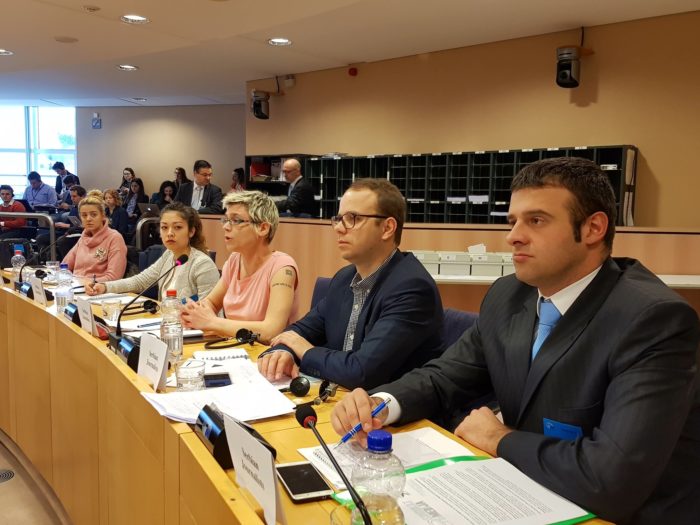
A delegation of the Western Balkans’ Regional Platform project for advocating media freedom and journalists’ safety visited Brussels on March 21st and 22nd and held meetings and consultations with the members of the European Parliament and representatives of the European Commission from the Directorate General for Neighbourhood and Enlargement negotiations (DG NEAR). Representatives of journalists’ associations and a trade union from Bosnia and Herzegovina, Macedonia, Montenegro and Serbia presented the journalists’ safety and the media situation in their countries. They emphasised joint problems their members and other journalists face, including poor working conditions, fear for personal safety due to work,…