European Federation of Journalists

openMedia, investigating press freedom

Title of the project : openMedia, investigating press freedom
Lead Applicant
: openDemocracy

Partner organisations : EFJ, Index on censorship, King’s College London

The recently launched openMedia project aims to investigate and expose commercial interference in editorial decisions. The project is run by openDemocracy with the European Federation of Journalists (EFJ) as a partner alongside the Index on Censorship and King’s College London.

The project believes that there has not been enough of a concerted, ongoing spotlight on the extent and effects of commercial influence over the media, despite the dangerous consequences it poses for press freedom. For now, the project focuses on 47 countries across Europe but also has ambitions to expand.

Despite the recent launch, the project is adamant that it is not a response to the “fake news” hype of the past year or so. Rather, the project responds to scandals of commercial sponsors influencing media content; for example the Daily Telegraph’s suppression of investigations into its advertiser HSBC; and allegations that Buzzfeed deleted articles which advertisers found unfavourable.

According to the project, this power dynamic can suppress investigations of banks, pharmaceuticals, agriculture, fossil fuel giants, energy companies and other big businesses.

In addition, the project recognizes how for many readers, “sponsored content” is difficult to distinguish from genuine news content. The project therefore aims to clarify the commercial interests apparent in media to readers, and as part of the project, King’s College London will develop digital tools to help readers be better informed about news sources.

The findings of the project will be used to campaign for greater transparency and press freedom in news organisations and to empower journalists to advocate for transparency.

In order to do this, openMedia is currently conducting a confidential and anonymous survey of journalists across Europe, asking about their own working practices and experiences of commercial pressure inside newsrooms. The survey is available in English here and in many other languages here.
Actions

EFJ responds to EU consultation on access to social protection

The European Federation of Journalists (EFJ) has responded to a consultation launched by the European Commission calling for equal access and treatment of freelance and atypical workers in journalism. The consultation on ”a possible action addressing the challenges of access to social protection for people in all forms of employment” has identified a number of issues facing the so-called ”atypical workers”. In journalism, these atypcial workers are characterised by the work of freelance journalists who mostly are precarious due to the existing gap in social protection and wage. The EFJ welcomed the consultation and the challenges identified by the Commission.…

26/06: Debate on the precarious state of journalism at the Press Club Brussels

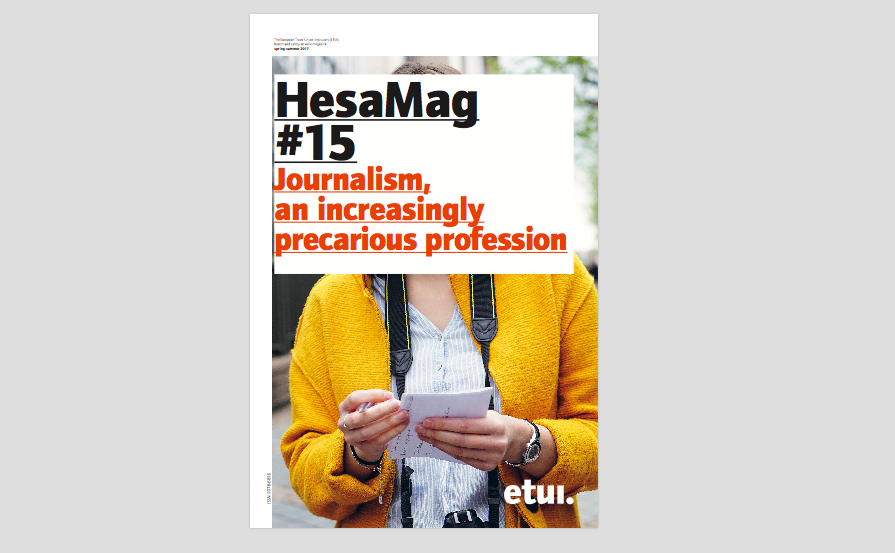
The EFJ and ETUI invite you to a debate on 26 June at the Press Club Brussels Europe at 10.30 am to 12 noon, rue Froissart 95, 1040 Brussels. There appears to be no end in view to the crisis gripping the mainstream media, the profit statements of the various media groups are far from the only pitiful sight, and information professionals are also feeling the pressure – these are just some of the conclusions to emerge from the analysis of the state of journalism in Europe which appears in the latest issue of HesaMag – the journal published by the European Trade…

EFJ responds to EU consultation on Written Statement Directive

The European Federation of Journalists (EFJ) has responded to the consultation on the Written Statement Directive that obliges employers to inform employees their rights and conditions applicable to the contract or employment relationship. The consultation was launched by the European Commission within the framework of the European Pillar of Social Rights. The EFJ welcomes the consultation looking into improved protection for workers especially the so-called atypical workers who are in precarious working conditions. Here is the EFJ’s response.

A study on the impact of the Panama Papers recommends the EU to protect whistleblowers

A recent study carried out by Blomeyer & Sanz in early 2017 – assessing the impact of the Panama Papers revelations on the economy and finances of eight European Member States – recommends the European Union to introduce measures to guarantee the protection of whistleblowers. “This will improve the availability of the data and act as a driver against the use of tax haven schemes”, the report says. More transparency is also suggested in order to better monitor and prevent the use of such schemes. Study on impact of #PanamaPapers on 8 MS economy recommends more transparency & measures to protect…

Turkey: first criminal trial against journalists over attempted coup

The International and European Federations of Journalists (IFJ and EFJ) yesterday sent an observer to Istanbul to monitor the first trial against journalists accused of participating in the 15 failed coup of last July. The trial, which may shed light on how the courts will approach numerous cases concerning the right to freedom of expression and the right to a fair trial under the state of emergency, has amplified international concerns over press freedom in Turkey. Raffaele Lorusso, General Secretary of the affiliate Federazione Nazionale della Stampa Italiana (FNSI) and an IFJ Executive Committee member, yesterday attended the trial of…

OSCE: States must urgently appoint new Representative on Freedom of the Media

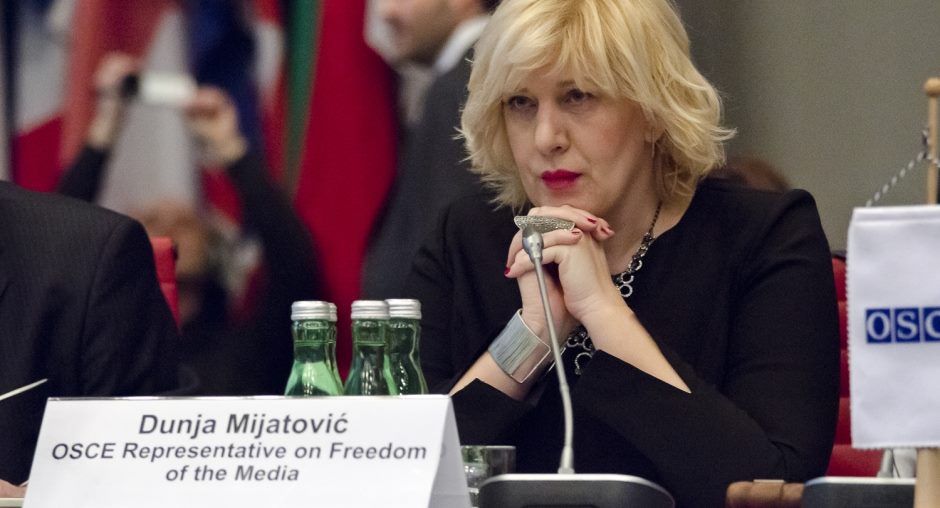
The European Federation of Journalists (EFJ) and the International Federation of Journalists (IFJ) join a coalition of freedom of expression organisations and journalists’ organisations urging OSCE Participating States to urgently appoint a new Representative on Freedom of the Media. The Representative on Freedom of the Media is an independent OSCE Institution, holding a unique mandate to protect and promote media freedom in all 57 OSCE participating States. The former mandate holder, Dunja Mijatović, left Office on 10 March 2017. There has been no announcement of her successor since. Continued failure to appoint a successor will weaken protections for freedom of…