European Federation of Journalists

openMedia, investigating press freedom

Title of the project : openMedia, investigating press freedom
Lead Applicant
: openDemocracy

Partner organisations : EFJ, Index on censorship, King’s College London

The recently launched openMedia project aims to investigate and expose commercial interference in editorial decisions. The project is run by openDemocracy with the European Federation of Journalists (EFJ) as a partner alongside the Index on Censorship and King’s College London.

The project believes that there has not been enough of a concerted, ongoing spotlight on the extent and effects of commercial influence over the media, despite the dangerous consequences it poses for press freedom. For now, the project focuses on 47 countries across Europe but also has ambitions to expand.

Despite the recent launch, the project is adamant that it is not a response to the “fake news” hype of the past year or so. Rather, the project responds to scandals of commercial sponsors influencing media content; for example the Daily Telegraph’s suppression of investigations into its advertiser HSBC; and allegations that Buzzfeed deleted articles which advertisers found unfavourable.

According to the project, this power dynamic can suppress investigations of banks, pharmaceuticals, agriculture, fossil fuel giants, energy companies and other big businesses.

In addition, the project recognizes how for many readers, “sponsored content” is difficult to distinguish from genuine news content. The project therefore aims to clarify the commercial interests apparent in media to readers, and as part of the project, King’s College London will develop digital tools to help readers be better informed about news sources.

The findings of the project will be used to campaign for greater transparency and press freedom in news organisations and to empower journalists to advocate for transparency.

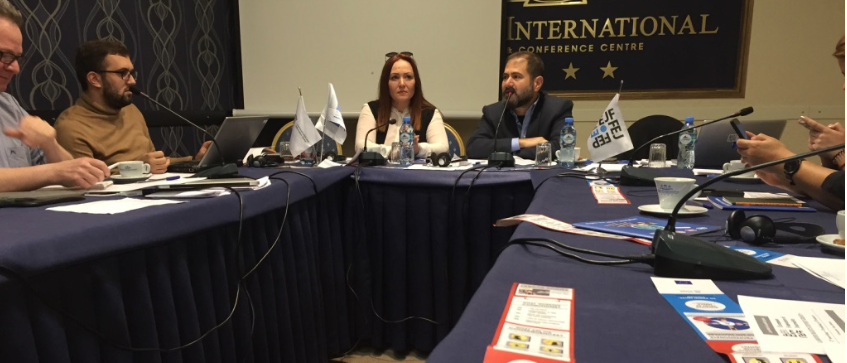
In order to do this, openMedia is currently conducting a confidential and anonymous survey of journalists across Europe, asking about their own working practices and experiences of commercial pressure inside newsrooms. The survey is available in English here and in many other languages here.
Actions

Season’s greetings 2017 + EFJ timeline year 2016

The European Federation of Journalists (EFJ) wishes all the best for 2017 to all journalists, media workers, unionists, partners and supporters. Click here to have a quick look to top events that kept EFJ busy from January to December 2016 ! Thank you for your trust and professionalism and happy season’s greetings. The EFJ team from Brussels [timeline src=”https://docs.google.com/spreadsheets/d/1dj2_P_l68xs0gMtNRRr2tMYLjkBRO6Pxx5Pt-TlJH9o/edit#gid=0″ width=”100%” height=”850″ font=”Default” lang=”en” version=”timeline3″ ]

#Media Against Hate: EFJ launches a Europe-wide campaign to counter hate speech in the media

The European Federation of Journalists (EFJ) has today launched together with partners ARTICLE 19, Media Diversity Institute (MDI), Croatian Journalists’ Association (CJA), Cooperazione per lo Sviluppo dei Paesi Emergenti (COSPE), Community Media Institute (COMMIT), Community Media Forum Europe (CMFE) a Europe-wide campaign Media Against Hate, to counter hate speech and discrimation in the media. The media and journalists play a crucial role in influencing both policy-making and societal opinion on migration and refugees. As hate speech and stereotypes targeting migrants and refugees proliferate across Europe, balanced and fair media reporting is needed more than ever. Despite some good journalism practices…

EFJ Focus December 2016

The EFJ newsletter, EFJ Focus, is available in English and in German.   EDITORIAL The situation for journalists in Turkey has worsened during this summer and after the coup attempt on July 15. Journalists were targeted during that day. One of them, Mustafa Cambaz, paid the highest prize with his life. After the coup attempt, journalists were detained, media outlets were shut down and fear were spreading. I made contact with Thorbjørn Jagland, the General Secretary of the Council of Europe, to call for an urgent meeting with partners of the Platform to promote the protection of journalism and safety…

15 points to improve working conditions for journalists in Western Balkans and Turkey

Bosnian / Türkçe / Shqiptar / Montenegro The European Federation of Journalists (EFJ) together with its affiliate the Association of Professional Journalists in Albania (APJA) have successfully organised on 19/12/2016 in Tirana (Albania) the training of trainers’ workshop for Labour Rights Expert Group (LAREG+) in the framework of its Unesco supported project called Building Trust in media in South East Europe and Turkey (#TrustinMediaSEE). Tim Dawson (NUJ President, UK) acted as expert during this event and gave the course based on his long serving experience as trade unionist in the United Kingdom to trainers from Albania, Bosnia and Herzegovina, Kosovo, Montenegro…

EFJ Focus December 2016

The EFJ newsletter, EFJ Focus, is available in English and in German. EDITORIAL As the year comes to an end, we have witnessed many ups and downs in media development. There will be challenges for us in the coming year – fighting for media freedom, quality journalism and better working conditions for journalists. But there are also hopes. Carrying on the positive spirit from this year, the European Federation of Journalists (EFJ) will continue our fight for journalists. Our focus for the coming year will be: Safety for journalists 2016 is a record year for the number of jailed journalists…

Polish government to restrict journalists’ access to parliament

The European Federation of Journalists (EFJ) has today strongly condemned the latest attack on media freedom by Poland’s ruling Law and Justice party (PiS) to restrict media access parliament. Several thousand people have protested on Friday, Saturday and Sunday in Warsaw over the government’s plans to impose restrictions on media coverage of parliament. The rules proposed by the head office of the Sejm, the lower house of parliament, will ban all recording of parliamentary sessions. Only five selected Polish TV stations will be allowed to record or broadcast parliamentary sessions. The new rules will also limit the number of journalists allowed…