
Czechia: concern over fast-tracked debate on public service media funding

The European Federation of Journalists (EFJ), its Czech affiliate, the Syndicate of Journalists of the Czech Republic (SNCR), and the undersigned media and journalists’ organisations are deeply concerned by the decision to fast-track legislation in Czechia that would abolish the licence fee and fund Czech Television (ČT) and Czech Radio (ČRo) directly from the state budget. On 23 October 2026, the Chamber of Deputies gave the bill priority in its first reading and agreed to sit late into the night and on Saturday. This raises questions about whether there is enough time for proper parliamentary scrutiny and public consultation on…
Lithuania: EFJ, IFJ and media organisations raise concerns over proposed changes to public service media framework

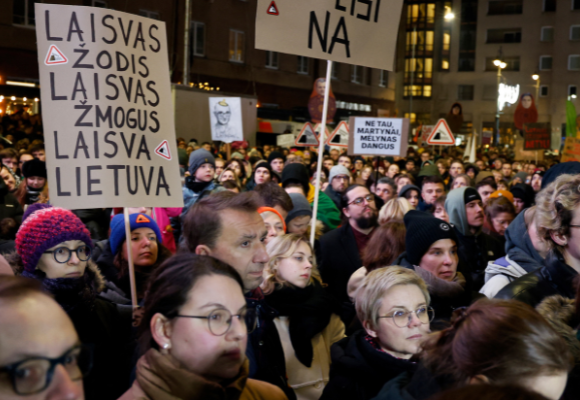
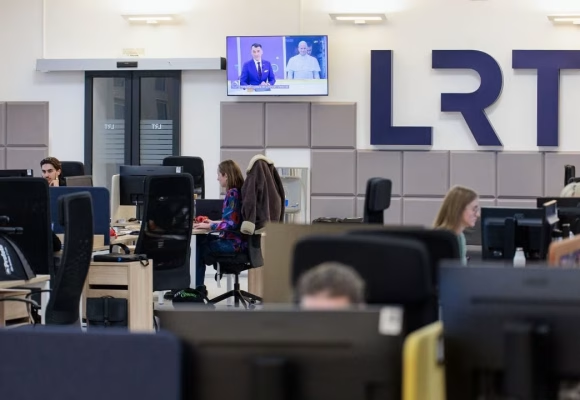
Almost 30 international organisations, including the European and International Federations of Journalists (EFJ-IFJ), raise serious concerns about proposed amendments to Lithuania’s public service media law, warning that the current draft risks undermining the independence and sustainability of the national broadcaster, LRT. The legislative process has lacked transparency and inclusiveness, and key proposals – such as funding freezes and restrictions, vague grounds for dismissing leadership, expanded political oversight, and governance changes – could expose LRT to political pressure and weaken its ability to fulfil its public service mission. We are urging Lithuanian authorities to reconsider the proposals, align reforms with European…

Belarus released 250 political prisoners including journalist Katsiaryna Andreeva

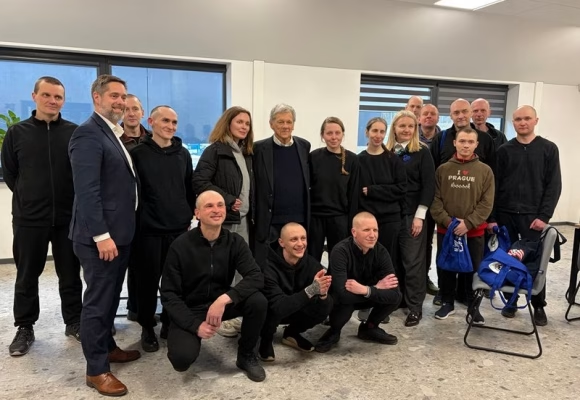
The government of Belarus released ​250 political prisoners, including journalist Katsiaryna Andreeva, on ‌Thursday in a deal brokered by the ​United States, with ​235 released domestically and ⁠15 people deported ​to Lithuania. The European Federation of Journalists (EFJ) joins its Belarusian affiliate in exile, the Belarusian Association of Journalists (BAJ), in calling for the release of the dozens of journalists and hundreds of political prisoners who remain behind bars in Belarus. The EFJ welcomes the release of the journalists who were among 250 prisoners freed on Thursday as part of a deal in which the United States agreed to ease…

Inside the Voices Festival in Florence: Key moments that sparked conversation

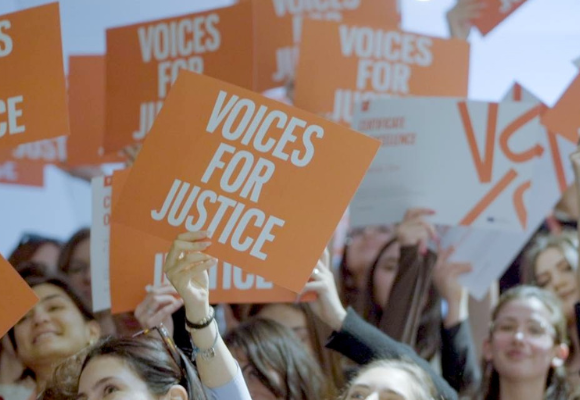
The third edition of the Voices Festival brought together more than 2,500 participants in Florence, Italy, from 10 to 12 March, confirming its ambition to become a vibrant meeting point for citizens, journalists, students, media freedom and literacy advocates. Over three days, the festival featured an inspiring programme of more than 50 debates, workshops, talks, and screenings, exploring the key challenges facing journalism today. The European Federation of Journalists (EFJ), one of the partner organisations, looks back at some of the most outstanding moments and key takeaways from this year’s edition. Tell me more about the EMFA  Nowadays, no European…

Albania: Prime Minister Edi Rama expels journalists Ambrozia Meta and Isa Myzyaj from press conference

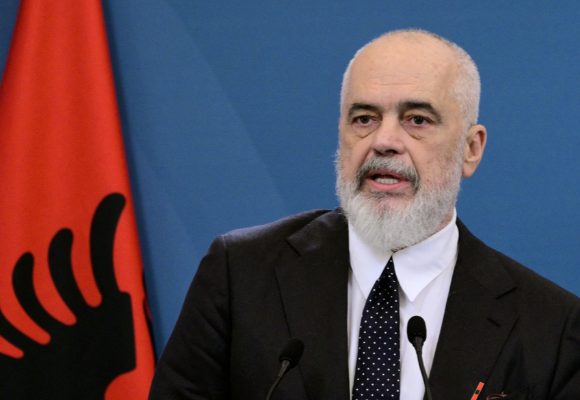
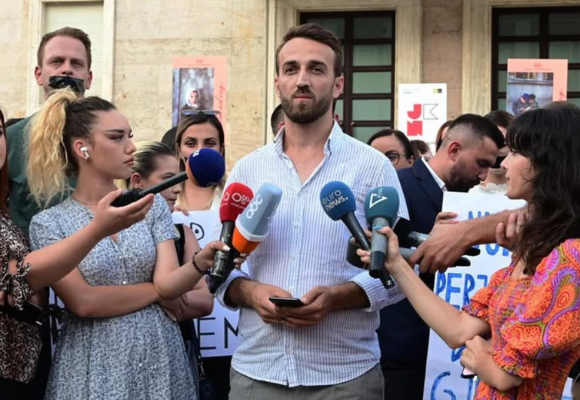
On 13 March 2026, Albanian Prime Minister Edi Rama held a press conference in Tirana during which he once again displayed disrespect towards members of the press. Journalist Ambrozia Meta of Syri TV and Isa Myzyaj of Report Tv, who also serves as chairman of the Association of Journalists of Albania (AGSH), were ultimately expelled from the conference. The European Federation of Journalists (EFJ) joins its Albanian affiliates, the  Association of Professional Journalists of Albania (APJA) and the Association of Journalists of Albania (AGSH), as well as the SafeJournalists Network (SJN), in condemning the Prime Minister’s behaviour as part of…

Kosovo: EFJ and AGK call for swift investigation into leak of private data and sexual harassment of journalist Ardiana Thaçi-Mehmeti

On 12 March 2026, personal details of journalist Ardiana Thaçi‑Mehmeti from the TV show Kiks Kosova, including her private phone number, were illegally shared in a ‘Discord’ group with over 70,000 members. The journalist received hundreds of harassing messages overnight from members of the group, including sexual and denigrating content. The European Federation of Journalists (EFJ) joins its affiliate in Kosovo, the Association of Journalists of Kosovo (AGK), in strongly condemning the online harassment against journalist Ardiana Thaçi‑Mehmeti and calling on the Kosovo Police and the Prosecutor’s Office for a swift investigation into the attack. Two weeks prior to her…

Lithuania: Parliament pushes ahead with controversial LRT reforms despite Venice Commission concerns

On 12 March 2026, the new version of the law on the governance of Lithuania’s public broadcaster LRT will be put to a vote in Parliament, while the Venice Commission of the Council of Europe has just expressed its concern about the recent amendments. The European Federation of Journalists (EFJ) joins its affiliate in Lithuania, the Association of Professional Journalists (ŽPA), in opposing the bill and calling on the authorities to abandon their plans to freeze the public broadcaster’s funding and change the procedure governing the dismissal of the Director General. The Venice Commission is an advisory body that provides…

Mission to Italy: MFRR flags ongoing media freedom erosion

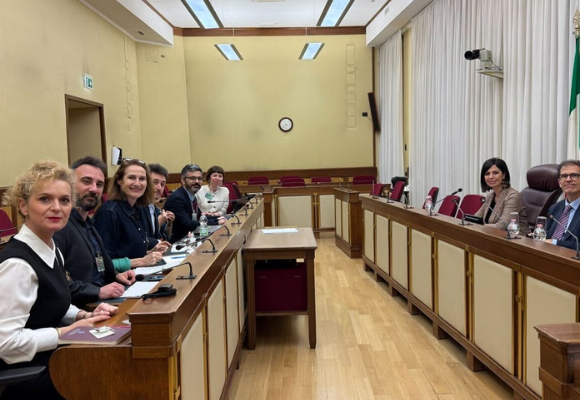
Media freedom in Italy has continued its overall downward trajectory in the past two years, amidst the car bomb attack on one of the country’s most famous journalists, new spyware attacks on reporters, politicisation of the public broadcaster, legal harassment of journalists by governing politicians, and continued concerns over media pluralism, partner organisations of the Media Freedom Rapid Response (MFRR) said today. The findings of the MFRR consortium, shared at a press conference in Rome following a follow-up advocacy mission on 9-10 March, conclude that since our organisations’ previous visit to Italy in 2024 the climate for press freedom and…

EFJ welcomes European Parliament’s call for an EU regulatory framework that protects copyright in the age of AI

Today the European Parliament adopted the report on “copyright and generative artificial intelligence” drafted by MEP Axel Voss (by 460 votes to 71, 88 abstentions). The European Federation of Journalists (EFJ) welcomes this first step as a sign of political will to strengthen and make fairer the copyright framework protecting journalists from the unauthorised use of their work in AI training and content generation. Until now, AI companies have been relying on journalistic content without seeking consent, providing remuneration, or ensuring transparency about how such material is used. This practice not only undermines journalists’ intellectual property rights but also threatens…

Switzerland: Citizens once again back strong public service media, licence fees must no longer be under attack

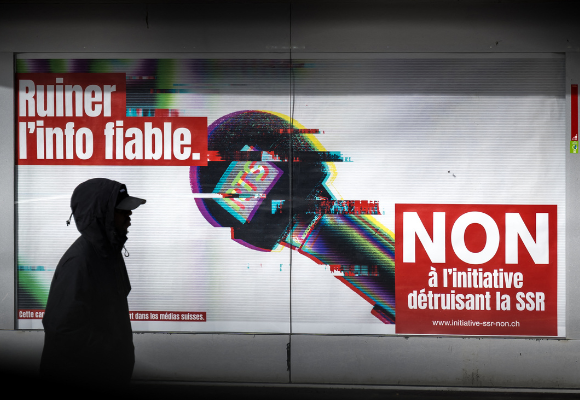
Yesterday, Swiss citizens voted by a clear majority to support independent, high-quality journalism and a strong public broadcasting system. The European Federation of Journalists (EFJ) joins its Swiss affiliates, syndicom and impressum, in welcoming the rejection of the “SBC Initiative” which sought to reduce the annual media licence fee for the Swiss Broadcasting Corporation (SBC). Put to a vote on 8 March, the right-wing Swiss People’s Party proposed to cap the annual household licence fee for SBC to 200 Swiss francs (222€) instead of 335 Swiss francs (372€), with businesses becoming exempt. This would have led to drastic job cuts…

Women’s Day: Gender-based violence, a growing weapon against women journalists

To mark International Women’s Day on 8 March, the European Federation of Journalists (EFJ) joins partners of the Media Freedom Rapid Response (MFRR) today in publishing alarming data highlighting how women journalists across Europe continue to face enhanced risk through systematic gender-based violence in the past year. Our 2025 monitoring documented 53 cases of gender-based violence targeting women media professionals across EU Member States and candidate countries, including online smear campaigns, threats of sexual violence and derogatory comments about physical appearance. This data, recorded on the MFRR’s Mapping Media Freedom platform, reaffirms that women journalists are disproportionately affected by gender-based…

North Macedonia: Appeal court ruling on Investigative Reporting Lab a worrying setback for media freedom

A recent defamation decision by the Court of Appeal in North Macedonia against the Investigative Reporting Lab (IRL) is a worrying development for media freedom in the country which should be overturned on further appeal, the European Federation of Journalists (EFJ) and organisations of the Media Freedom Rapid Response (MFRR) said today. At a public hearing before the Court of Appeal in Skopje on 26 February, the court ruled against IRL’s appeal and upheld the defamation verdict previously handed down to the media outlet and its editor-in-chief Saška Cvetkovska. IRL is an independent and non-profit investigative media platform and a local partner of the Organized…

Press freedom report: Increasingly hostile environment for journalism in Europe

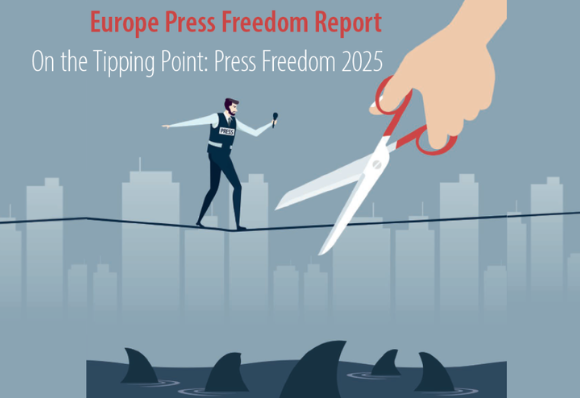
Press freedom continued to be under sustained pressure in Europe in 2025, driven by legal threats, physical attacks and intimidation, attempts of media capture and transnational repression, according to the annual report of the partner organisations to the Council of Europe’s Platform to promote the protection of journalism and safety of journalists, of which the European Federation of Journalists (EFJ) is a member. This situation was mitigated by initiatives in several states and at the European level to improve press freedom and journalists’ safety, including the adoption of action plans to protect journalists and legislation in some countries to address…

ReMeD: Meeting the Challenges of a Changing Journalism Landscape through Funding, EU Regulation and Dialogue (Report)

The European Federation of Journalists (EFJ) has published the report on the policy workshop “Meeting the Challenges of a Changing Journalism Landscape through Funding, EU Regulation and Dialogue”, authored by media expert Oliver Money-Kyrle. The workshop took place on 12 February 2026, within the framework of the Resilient Media for Democracy in the Digital Age project (ReMeD), a consortium of eight European universities and EFJ. It brought together journalists, journalists’ unions, NGOs, policymakers, and academics for a full day dedicated to discussing journalism funding, the rise of new media actors, and the challenges that journalism faces today. Panelists discussed the…

Netherlands: Writers and journalists demand that Meta ends illegal use of their texts

Authors’ texts are indispensable for AI Large Language Models, but they receive no compensation. The Dutch Writers’ Guild (Auteursbond), the Dutch Association of Journalists (NVJ) and the Lira Foundation have sent a formal demand letter to Meta, the parent company of Facebook and developer of the AI model Llama. In the letter, they request that Meta immediately cease the unlawful use of copyrighted work of Dutch writers, translators and journalists in the training of its AI models. According to Liesbet van Zoonen, president of the Auteursbond: “We are not opposed to Large Language Models, but the AI industry is a…

Why defamation should be fully decriminalised in Albania

By Isa Myzyraj, Journalist and Chairperson of the Association of Journalists of Albania (AJA) For more than a decade, dozens of journalists and media outlets in Albania have been dragged through the country’s criminal courts, accused mainly of defamation and insult. At first glance, these are provisions that protect individual reputation. In practice, they have been transformed into instruments of pressure and intimidation against the media. In the overwhelming majority of cases, criminal lawsuits have not been initiated by ordinary citizens seeking protection from defamation, but by politicians, high public officials, and companies with economic power. The purpose has not…

Ukraine: Journalists’ Solidarity Centers need support to keep protecting reporters under fire

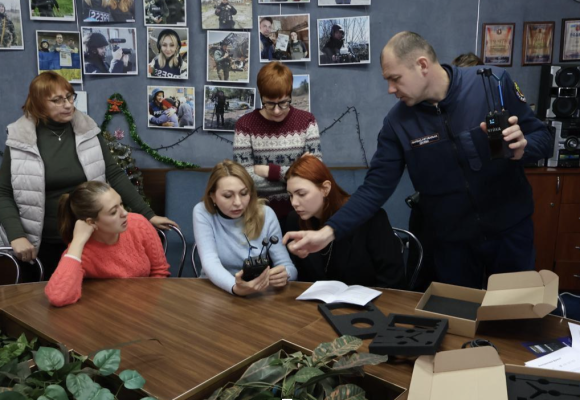
As Ukraine marks four full years since Russia’s full-scale invasion, the National Union of Journalists of Ukraine (NUJU) has launched a renewed fundraising campaign to sustain its network of six Journalists’ Solidarity Centers — safety hubs that enable Ukrainian and foreign journalists to continue reporting under wartime conditions. The European and International Federations of Journalists (EFJ/IFJ) support the NUJU campaign and invite journalists’ organisations and citizens who are able to do so to make a donation. Established in 2022 with the support of the IFJ/EFJ Safety Fund, the Centers have become a model of “safety spaces” for journalists operating in…