European Federation of Journalists

IFJ-EFJ Regional Development Fund

Czech Republic


The European Federation of Journalists (EFJ) signed an agreement on 18 December 2014 with the Union of Journalists and Media Workers of Czech Republic (OSNPM) in order to investigate the working conditions of Czech journalists and media workers. The project is implemented with the cooperation of Judith Reitstatter, from the Austrian union GPA-djp.

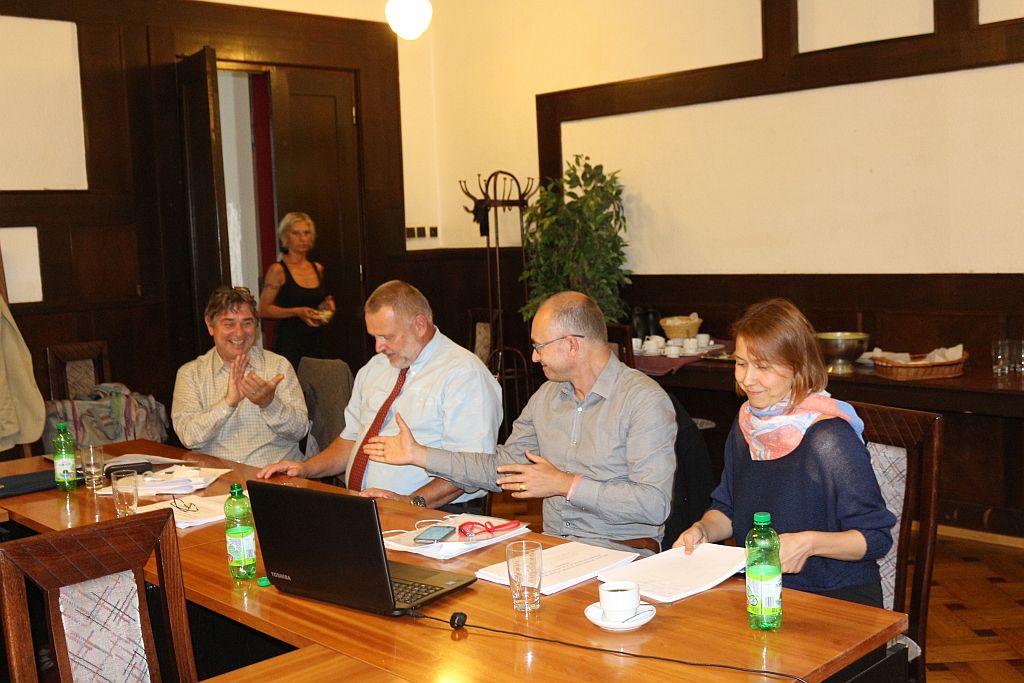
The online survey was launched on 19 May 2015. Around 2,500 journalists and media workers were invited to participate to the survey. The EFJ, OSNPM and GPA-djp analysed together the main outcomes of the survey during a round table conference, on 19 August 2015, in Prague.

The questionnaire focus mainly on labour rights. “This area is underestimated by the Czech media, journalists themselves and their employers as well,” explains Zdeněk Kučera, chairman of OSNPM.

“Over the past 25 years, journalists’ attention was focused primarily toward freedom of speech, access to information, relations with media ownership and the development of media houses. These are very serious topics. However, journalists’ status remained grossly underrated. A specific problem is the status of freelance journalists, which are increasingly numerous, particularly in regional media.”

The main findings of the survey are available on the EFJ website, here.
FOCUS EFJ

Side event of our project: a high school magazines national competition (Nejinspirativnější středoškolský časopis 2015). Here are the winners (picture credit: F. Cakl):

Czech

Contact details: OSNPM, e-mail: odborovy-svaz-novinaru@seznam.cz, website: http://www.odborovysvaznovinaru.cz


Slovakia

The European Federation of Journalists (EFJ), its Austrian union GPA-djp and the Slovak Union of Journalists (Slovenský syndikát novinárov) organized a meeting in Vienna, on 30 October 2014. Trade unionists and media students from both countries met in GPA-djp offices, in Vienna. The discussion on media convergence was launched by Dr. Roman Hummel, from the university of Salzburg.

Contact details: Judith Reitstaetter, judith.reitstaetter (at) gpa-djp.at


Estonia

The European Federation of Journalists (EFJ), the Estonian Union of Journalists (Eesti Ajakirjanike Liit, EAL) and the Union of Journalists in Finland (Suomen Journalistiliitto, UJF) agreed on 6 February 2015 to jointly implement the project “Workshops to Strengthen Journalists’ organisation in Estonia”.

The main objective of the project is to strengthen journalists’ organisation in Estonia, through three activities:

  • a freelance workshop in Helsinki,
  • a radio & TV negotiators workshop in Helsinki,
  • an authors’ rights seminar in Tallinn.

An action plan will be proposed for the next period.

Contact details: Juha Rekola, Juha.Rekola (at) journalistiliitto.fi, and Helle Tiikmaa, helle (at) eal.ee


Actions

Greece: Concern over criminal charges against investigative reporters

The European Federation of Journalists (EFJ) today joined international media freedom and freedom of expression organisations in registering concern over the serious criminal charges levelled against two investigative journalists in Greece linked to their reporting on a major corruption scandal. Our organisations are following these two legal cases with utmost scrutiny given the obvious concerns they raise with regard to press freedom. Authorities must issue guarantees that the process is demonstrably independent and free of any political interference. On January 19, Kostas Vaxevanis, a veteran investigative journalist and publisher of the newspaper Documento, testified at the Special High Court on…

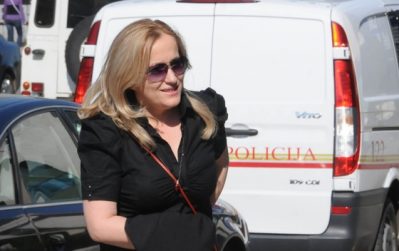
Montenegro: Impunity must end for shooting of journalist Olivera Lakić

The European Federation of Journalists (EFJ) joined partners of the Media Freedom Rapid Response (MFRR) and affiliate in Montenegro (TUMM) today to renew our call for an end to impunity for the shooting of investigative journalist Olivera Lakić in 2018 and hope the recent arrest of suspects will lead to all those involved ultimately facing justice. Our organisations also welcome the recent cross party approval of amendments to the criminal code which will strengthen protections for journalists but stress the need for further reforms to create a safe and open environment for independent journalism. Lakić, an investigative journalist covering organised…

Digital Services Act: EFJ supports amendment binding platforms to  fundamental rights

On 20 January 2022, the European Parliament in Strasbourg’s plenary session will vote on the Digital Services Act (DSA), a bill designed to shape the digital future and clean up the Internet. In the future, illegal content shall be easier to delete, personalized advertising easier to change, manipulative ads shall be banned and access to important data improved. The European Federation of Journalists (EFJ) welcomed the proposed DSA as a crucial and long overdue tool to create a safer, fairer and more accountable online environment. The EFJ advocates for a stronger DSA  in order to guarantee a digital media ecosystem…

BBC Turkey goes on strike for decent pay

After roughly five months of negotiations, BBC journalists in Turkey are on strike today. The walkout comes after the British broadcaster refused to propose a reasonable offer to the Turkish Union of Journalists (TGS) over a pay rise that keeps up with the country’s inflation rate, better access to health care, and other key issues. Their walkout is backed by the European Federation of Journalists (EFJ), the National Union of Journalists (NUJ) in the UK and Ireland, UNI Global Union and UK media union BECTU. With the inflation rate as high as nearly 36 per cent according to the BBC,…

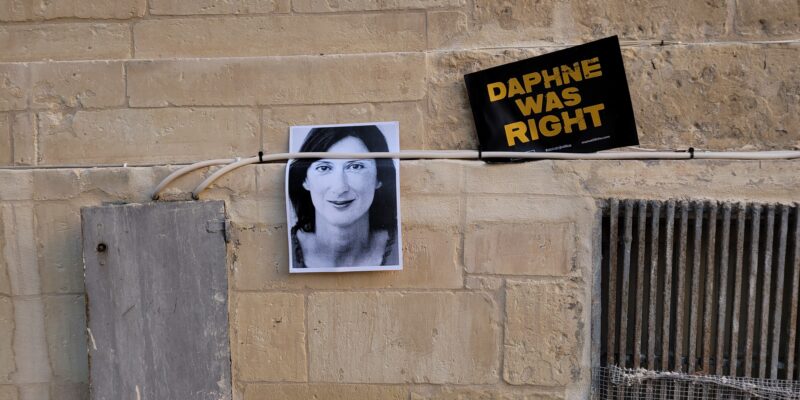
Malta: government must do better to guarantee media freedom

The European Federation of Journalists (EFJ) co-signed with nine other organisations an appeal to the Maltese government to strengthen media freedom and the rule of law in Malta, following the appointment of a Committee of Experts to make recommendations to the authorities. The EFJ welcomes the inclusion of its Maltese affiliate, the Institute of Maltese Journalists (IGM), in the Committee. The EFJ and the nine co-signatory organisations will closely follow the work of the Committee and the implementation of its recommendations. Our organisations note Prime Minister Abela’s announcement that a Committee of Experts has been appointed to implement the recommendations of the…

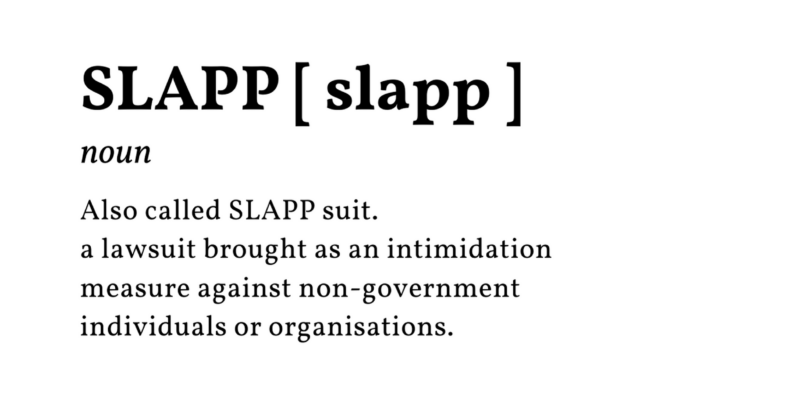
​Policy paper: How the EU can protect public watchdogs from abusive lawsuits

The Coalition Against SLAPPs in Europe (CASE), which reunites journalists, press freedom, and other rights groups – including the European Federation of Journalists (EFJ) – has been advocating for an EU anti-SLAPP directive for two years. As part of the public consultation launched by the European Commission, the CASE coalition has submitted the following policy paper to inform the upcoming EU initiative. Accessible here, the paper explains what SLAPPs are, provides preliminary and previously unpublished data from CASE research on SLAPPs mapping in Europe and sets out recommendations on what governments and the EU should do tackle the problem. Here…