European Federation of Journalists

IFJ-EFJ Regional Development Fund

Czech Republic


The European Federation of Journalists (EFJ) signed an agreement on 18 December 2014 with the Union of Journalists and Media Workers of Czech Republic (OSNPM) in order to investigate the working conditions of Czech journalists and media workers. The project is implemented with the cooperation of Judith Reitstatter, from the Austrian union GPA-djp.

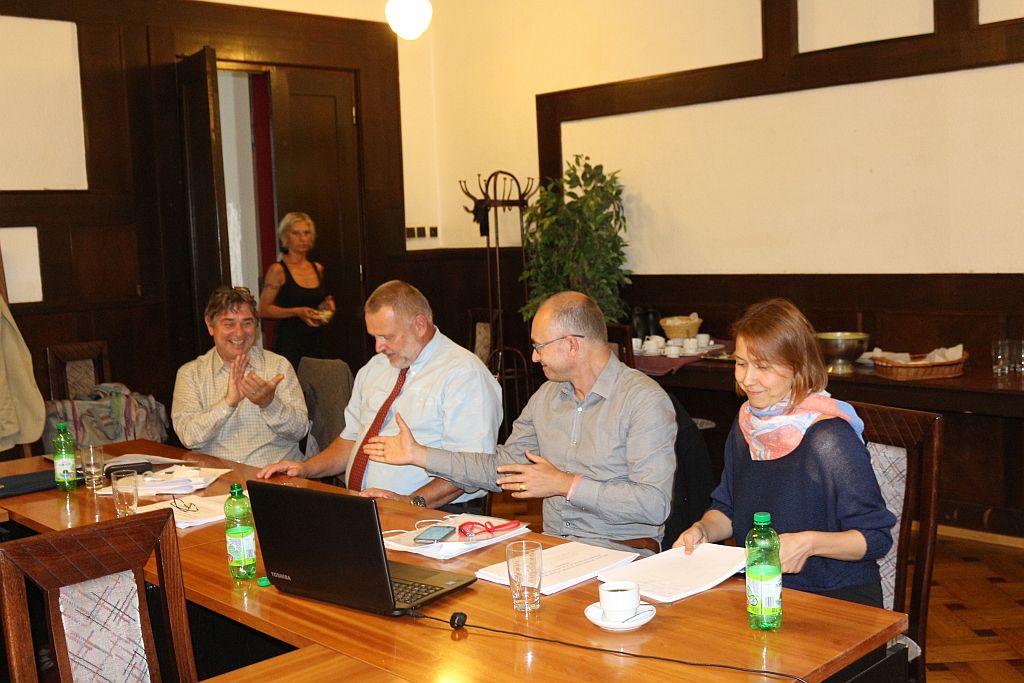
The online survey was launched on 19 May 2015. Around 2,500 journalists and media workers were invited to participate to the survey. The EFJ, OSNPM and GPA-djp analysed together the main outcomes of the survey during a round table conference, on 19 August 2015, in Prague.

The questionnaire focus mainly on labour rights. “This area is underestimated by the Czech media, journalists themselves and their employers as well,” explains Zdeněk Kučera, chairman of OSNPM.

“Over the past 25 years, journalists’ attention was focused primarily toward freedom of speech, access to information, relations with media ownership and the development of media houses. These are very serious topics. However, journalists’ status remained grossly underrated. A specific problem is the status of freelance journalists, which are increasingly numerous, particularly in regional media.”

The main findings of the survey are available on the EFJ website, here.
FOCUS EFJ

Side event of our project: a high school magazines national competition (Nejinspirativnější středoškolský časopis 2015). Here are the winners (picture credit: F. Cakl):

Czech

Contact details: OSNPM, e-mail: odborovy-svaz-novinaru@seznam.cz, website: http://www.odborovysvaznovinaru.cz


Slovakia

The European Federation of Journalists (EFJ), its Austrian union GPA-djp and the Slovak Union of Journalists (Slovenský syndikát novinárov) organized a meeting in Vienna, on 30 October 2014. Trade unionists and media students from both countries met in GPA-djp offices, in Vienna. The discussion on media convergence was launched by Dr. Roman Hummel, from the university of Salzburg.

Contact details: Judith Reitstaetter, judith.reitstaetter (at) gpa-djp.at


Estonia

The European Federation of Journalists (EFJ), the Estonian Union of Journalists (Eesti Ajakirjanike Liit, EAL) and the Union of Journalists in Finland (Suomen Journalistiliitto, UJF) agreed on 6 February 2015 to jointly implement the project “Workshops to Strengthen Journalists’ organisation in Estonia”.

The main objective of the project is to strengthen journalists’ organisation in Estonia, through three activities:

  • a freelance workshop in Helsinki,
  • a radio & TV negotiators workshop in Helsinki,
  • an authors’ rights seminar in Tallinn.

An action plan will be proposed for the next period.

Contact details: Juha Rekola, Juha.Rekola (at) journalistiliitto.fi, and Helle Tiikmaa, helle (at) eal.ee
 

Actions

Russian ‘foreign agents’ media law threatens media freedom

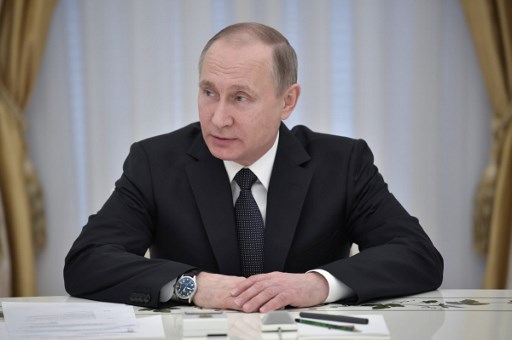
The European Federation of Journalists (EFJ) has expressed grave concern over the recent adoption of a new law that would allow the state to have more control and scrutiny over foreign media and journalists in Russia. On 25 November 2017, Russian president Vladimir Putin signed a new law which will allow authorities to classify foreign journalists and media outlets as “foreign agents”. In practice, the law means that Russia now has the power to force foreign journalists and media to register themselves as “foreign agents”, to submit their content to scrutiny and to reveal their funding sources. Failure to comply…

Belarus: harrassment against freelance journalists on the rise

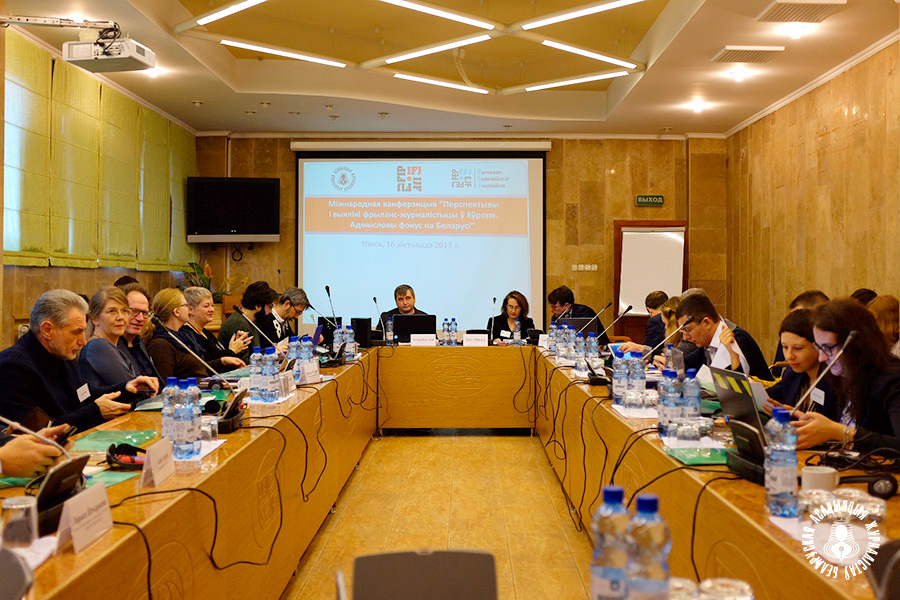
On 16 November 2017, the Belarus Association of Journalists (BAJ) in cooperation with the International Federation of Journalists (IFJ) and European Federation of Journalists (EFJ), organised a one-day meeting in Minsk focusing on “The Perspectives and challenges for freelance journalism in Belarus and Europe”.  Around 40 journalists, including media lawyers, EFJ/IFJ affiliates and the EU Delegation to Belarus, discussed how to best put the desperate issue of freelance journalism at the heart of local and national authorities in Belarus and the European Union. Renate Schroeder from the EFJ, Michael Hirschler from the German Journalists’ Association (DJV), and other colleagues from the EFJ’s Freelance Expert Group (FREG)…

Manifesto of Venice against gender-based violence

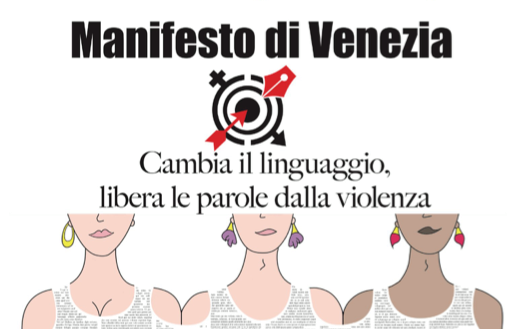
The “Manifesto of Venice”, a manifesto for gender equality and correct information, will be launched on the World Day for the Elimination of Violence against Women and Girls, on 25 November 2017. Signed by 800 journalists, including directors of national newspapers in Italy, the manifesto will be launched by the EFJ affiliate in Italy, the Federazione Nazionale Stampa Italiana (FNSI) Equal Opportunities Committee (CPO). It is a result of their collaboration with the CPO of Unione Sindacale Giornalisti Rai and Giornaliste Unite Libere Autonome (GiULiA), following a proposal by the Veneto Journalists’ Union. “We, journalist signatories of the Manifesto of Venice, are…

News Impact Summit returns with focus on media and politics

The News Impact Summit returns to Brussels on 4 December 2017, with the theme of “A Year is a Long Time in Politics”. Organised by the European Journalism Centre with help from the Google News Lab, the day of speakers, workshops and discussion will look back on the relationship between media and politics this year. The event will focus on how the global political upheaval shaped the way journalists covered the news, as well as how evolving journalism practices changed the face of politics. Editors, reporters, technologists and researchers from International Consortium of Investigative Journalists (ICIJ), Euronews, First Draft, Berliner…

EFJ Focus November 2017

The latest EFJ newsletter, EFJ Focus, is available here EDITORIAL: Lack of leaders standing up for media freedom in Western Balkans The EU- Western Balkans Media Days that recently took place in Tirana, Albania, proved the importance of having a very firm focus on press freedom in the region where journalists are often caught in cross-fire. Firstly, journalists in the region are often attacked, harassed and even imprisoned. In particular, female journalists are exposed to harassments and threats. Impunity for crimes against journalists remains as a common practice. Governments have the duty to support media and journalists. Swift actions should be taken whenever there is a…

Study recommends EU action to protect atypical workers

A recent study explored ‘Temporary contracts, precarious employment, employees’ fundamental rights and EU employment law‘, commissioned by the European Parliament’s Policy Department for Citizens’ Rights and Constitutional Affairs at the request of the Committee on Petitions. The findings have implications for journalists, as atypical and precarious employment has been tied to media industries and digitisation. The study emphasises that precarious employment is a fundamental rights issue of enormous weight and significance within the EU’s normative order. Some groups, such as women and younger workers, are more affected by precarious employment. Self-employment, which affects many freelancers and journalists, is discussed in…