European Federation of Journalists

IFJ-EFJ Regional Development Fund

Czech Republic


The European Federation of Journalists (EFJ) signed an agreement on 18 December 2014 with the Union of Journalists and Media Workers of Czech Republic (OSNPM) in order to investigate the working conditions of Czech journalists and media workers. The project is implemented with the cooperation of Judith Reitstatter, from the Austrian union GPA-djp.

The online survey was launched on 19 May 2015. Around 2,500 journalists and media workers were invited to participate to the survey. The EFJ, OSNPM and GPA-djp analysed together the main outcomes of the survey during a round table conference, on 19 August 2015, in Prague.

The questionnaire focus mainly on labour rights. “This area is underestimated by the Czech media, journalists themselves and their employers as well,” explains Zdeněk Kučera, chairman of OSNPM.

“Over the past 25 years, journalists’ attention was focused primarily toward freedom of speech, access to information, relations with media ownership and the development of media houses. These are very serious topics. However, journalists’ status remained grossly underrated. A specific problem is the status of freelance journalists, which are increasingly numerous, particularly in regional media.”

The main findings of the survey are available on the EFJ website, here.
FOCUS EFJ

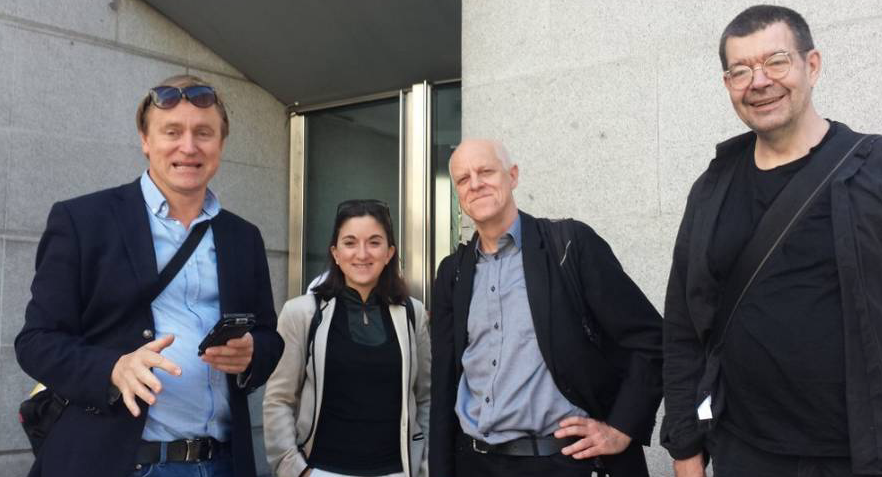
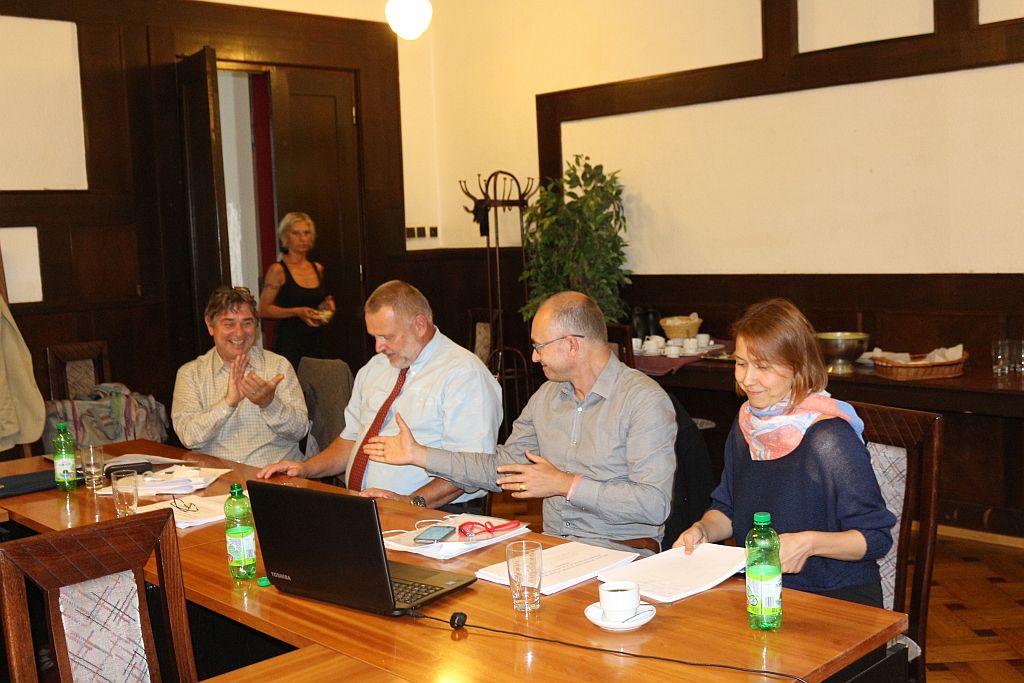
Side event of our project: a high school magazines national competition (Nejinspirativnější středoškolský časopis 2015). Here are the winners (picture credit: F. Cakl):

Czech

Contact details: OSNPM, e-mail: odborovy-svaz-novinaru@seznam.cz, website: http://www.odborovysvaznovinaru.cz


Slovakia

The European Federation of Journalists (EFJ), its Austrian union GPA-djp and the Slovak Union of Journalists (Slovenský syndikát novinárov) organized a meeting in Vienna, on 30 October 2014. Trade unionists and media students from both countries met in GPA-djp offices, in Vienna. The discussion on media convergence was launched by Dr. Roman Hummel, from the university of Salzburg.

Contact details: Judith Reitstaetter, judith.reitstaetter (at) gpa-djp.at


Estonia

The European Federation of Journalists (EFJ), the Estonian Union of Journalists (Eesti Ajakirjanike Liit, EAL) and the Union of Journalists in Finland (Suomen Journalistiliitto, UJF) agreed on 6 February 2015 to jointly implement the project “Workshops to Strengthen Journalists’ organisation in Estonia”.

The main objective of the project is to strengthen journalists’ organisation in Estonia, through three activities:

  • a freelance workshop in Helsinki,
  • a radio & TV negotiators workshop in Helsinki,
  • an authors’ rights seminar in Tallinn.

An action plan will be proposed for the next period.

Contact details: Juha Rekola, Juha.Rekola (at) journalistiliitto.fi, and Helle Tiikmaa, helle (at) eal.ee


Actions

Today is the World Day for Decent Work!

Today is the World Day for Decent Work! A new survey from the International Federation of Journalists (IFJ) shows that unions have helped winning higher pay, saving jobs and securing new collective agreements over the past twelve months. The survey of 60 IFJ affiliates from every continent – released to coincide with World Day for Decent Work – shows that attacks on collective bargaining, low pay and a lack of rights for freelances are threatening to further undermine working conditions for journalists across the globe. A significant majority of unions surveyed highlighted a lack of collective bargaining, a lack of…

Romania: Draft law threatens independence of AGERPRES news agency

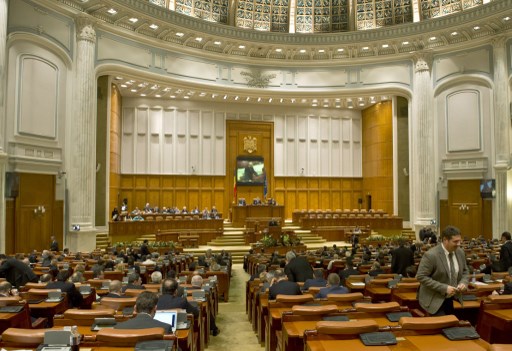
UPDATE (31/10/2017) – On 30 October 2017, 64 senators from the ruling coalition (PSD-ALDE) voted the controversial draft law (16 senators voted against and 27 senators abstained). Alexandru Giboi, AGERPRES General Director, wrote in a press statement that the Romanian minister of Culture “Lucian Romascanu is preparing the dissolution of AGERPRES as an independent press agency”. ————————— The Romanian trade union of journalists MediaSind expressed its concerns about the new draft law intended to regulate the national news agency AGERPRES, to be discussed on 11 October 2017 by the Romanian Parliament. The new law foresees that any political majority could decide to dismiss…

Safety protocol with 16 points for journalists covering conflict zones

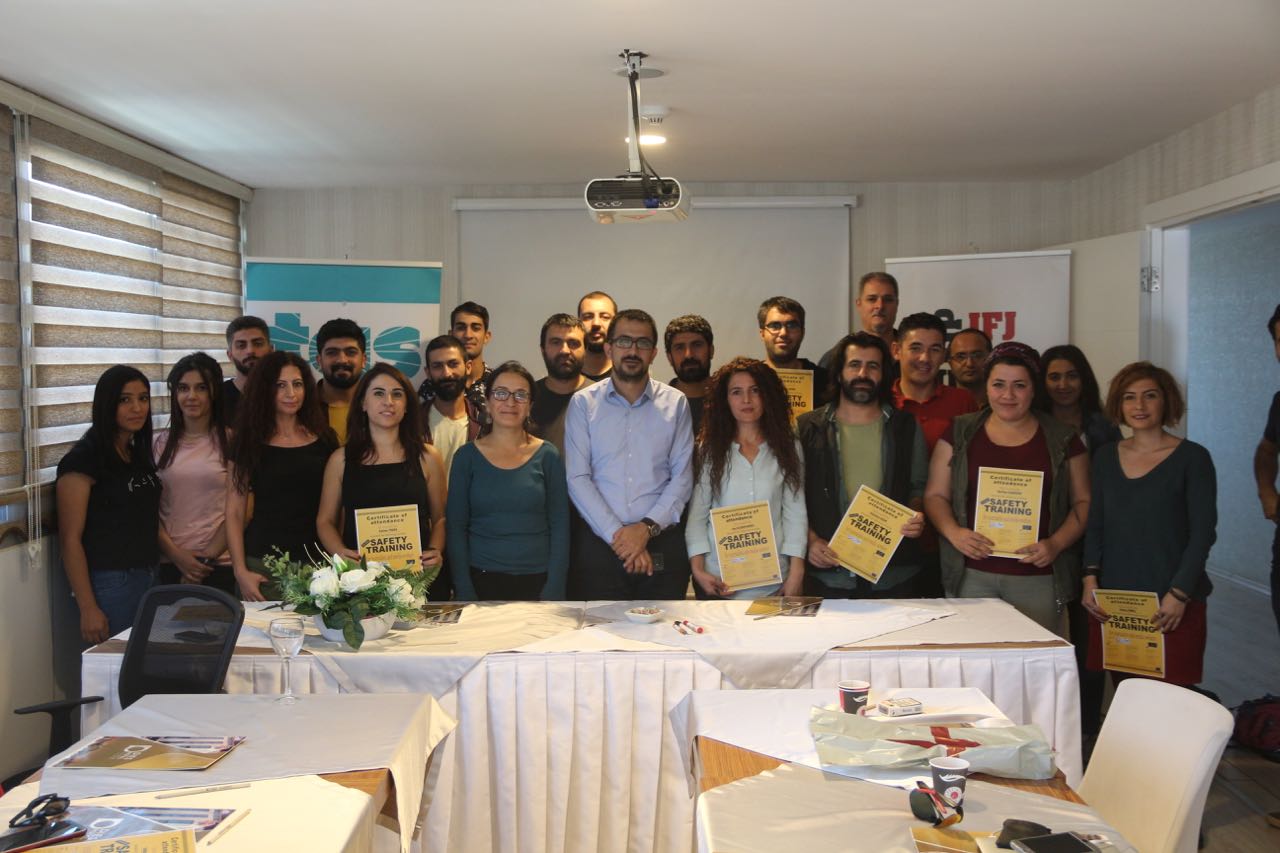
The Journalists Union of Turkey (TGS) in partnership with the European and International Federation of Journalists (EFJ-IFJ) successfully organised a 2-day Safety Workshop in Diyarbakir (Southeast of Turkey) on 03-04 October 2017 for local and visiting journalists regularly covering conflict zones in the region. This workshop was organised in the framework of the IFJ-EFJ-TGS project called #GazetecilikSuçDegildir / #JournalismisNOTaCrime, a campaign to set journalism free, develop trade union rights and defend freedom of expression in Turkey which receives the financial support of the European Instrument for Democracy and Human Rights (EIDHR) Program managed by the European Commission. 30 journalists and media workers…

Journalists harassed for their reports on Hungary’s anti-Soros campaign

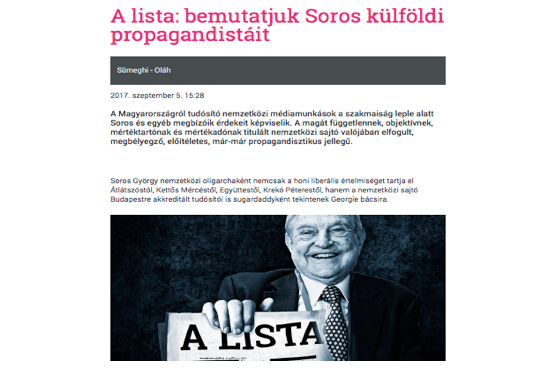
Several journalists working in Hungary for foreign media outlets alerted the European Federation of Journalists (EFJ) about the harassment they have been subjected to. The EFJ condemns those attacks and calls on the Hungarian authorities to stop harassing the journalists in question. “Propagandists”, “spokespeople”, “drug addict”: this is the kind of verbal attacks journalists reporting on Hungary’s campaign against George Soros have received, directly from the government or some pro-governmental media outlets. The EFJ recently submitted the following two cases on the Council of Europe platform for the safety of journalists. The Website 888.hu Publishes a List of Eight Journalists Described as…

Protection of sources: Norwegian journalist won in Strasbourg

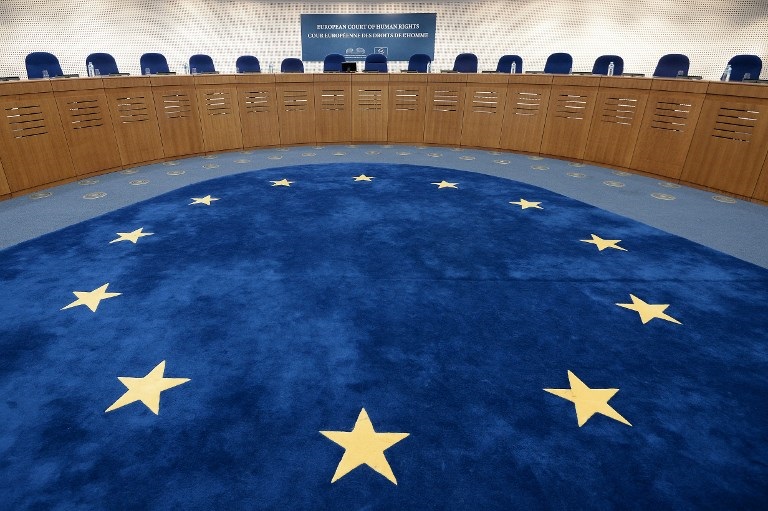
Ordering a journalist to give evidence on a source is not justified, even though the source himself has come forward to the police. That’s the main outcome of a decision of the European Court of Human Rights, today, regarding the case launched in 2012 by Norwegian journalist Cecilie Langum Becker, who was ordered to give evidence on her contacts with her source for an article about the Norwegian Oil Company, and fears that it might collapse. The European Court recalled that a journalist’s protection could not automatically be removed because of a source’s conduct. Bearing in mind its previous judgments emphasising the chilling…

Time to grant Spanish journalists full authors’ rights protection, says IFJ/EFJ

The lack of protection of journalists’ authors rights in Spain undermines their living standards and journalism ethics. A delegation of the IFJ/EFJ authors’ rights expert group (AREG) members met in Madrid on 2-3 October in solidarity with Spanish affiliates (FES-CC.OO, FESP, FAPE, ELA) to develop a strategy to change Spanish intellectual property law for a better protection of journalists’ rights. The print sector was specifically targeted. To date, Spanish publications are considered as collective works and journalists cannot claim any recognition for their authors’ rights, either from a moral rights’ (right to integrity and paternity) or an economic rights’ (remuneration…