European Federation of Journalists

IFJ-EFJ Regional Development Fund

Czech Republic


The European Federation of Journalists (EFJ) signed an agreement on 18 December 2014 with the Union of Journalists and Media Workers of Czech Republic (OSNPM) in order to investigate the working conditions of Czech journalists and media workers. The project is implemented with the cooperation of Judith Reitstatter, from the Austrian union GPA-djp.

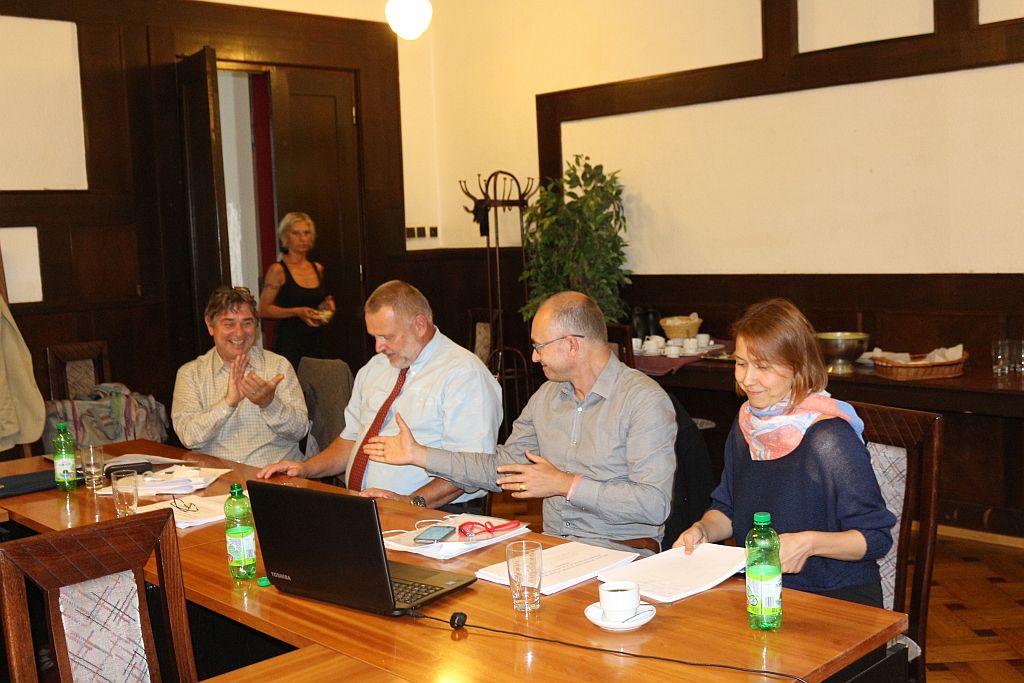
The online survey was launched on 19 May 2015. Around 2,500 journalists and media workers were invited to participate to the survey. The EFJ, OSNPM and GPA-djp analysed together the main outcomes of the survey during a round table conference, on 19 August 2015, in Prague.

The questionnaire focus mainly on labour rights. “This area is underestimated by the Czech media, journalists themselves and their employers as well,” explains Zdeněk Kučera, chairman of OSNPM.

“Over the past 25 years, journalists’ attention was focused primarily toward freedom of speech, access to information, relations with media ownership and the development of media houses. These are very serious topics. However, journalists’ status remained grossly underrated. A specific problem is the status of freelance journalists, which are increasingly numerous, particularly in regional media.”

The main findings of the survey are available on the EFJ website, here.
FOCUS EFJ

Side event of our project: a high school magazines national competition (Nejinspirativnější středoškolský časopis 2015). Here are the winners (picture credit: F. Cakl):

Czech

Contact details: OSNPM, e-mail: odborovy-svaz-novinaru@seznam.cz, website: http://www.odborovysvaznovinaru.cz


Slovakia

The European Federation of Journalists (EFJ), its Austrian union GPA-djp and the Slovak Union of Journalists (Slovenský syndikát novinárov) organized a meeting in Vienna, on 30 October 2014. Trade unionists and media students from both countries met in GPA-djp offices, in Vienna. The discussion on media convergence was launched by Dr. Roman Hummel, from the university of Salzburg.

Contact details: Judith Reitstaetter, judith.reitstaetter (at) gpa-djp.at


Estonia

The European Federation of Journalists (EFJ), the Estonian Union of Journalists (Eesti Ajakirjanike Liit, EAL) and the Union of Journalists in Finland (Suomen Journalistiliitto, UJF) agreed on 6 February 2015 to jointly implement the project “Workshops to Strengthen Journalists’ organisation in Estonia”.

The main objective of the project is to strengthen journalists’ organisation in Estonia, through three activities:

  • a freelance workshop in Helsinki,
  • a radio & TV negotiators workshop in Helsinki,
  • an authors’ rights seminar in Tallinn.

An action plan will be proposed for the next period.

Contact details: Juha Rekola, Juha.Rekola (at) journalistiliitto.fi, and Helle Tiikmaa, helle (at) eal.ee
 

Actions

Journalists role from important to essential when covering crisis

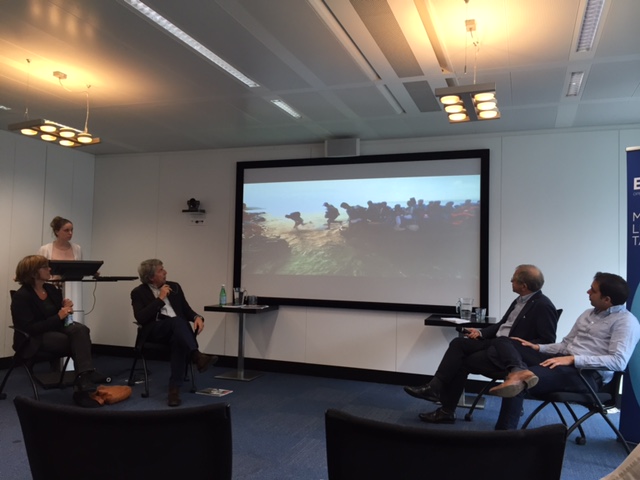
The European Federation of Journalists (EFJ) and the European Broadcasting Union (EBU) organised today (20/10/2015) a Media Lunchtime Talk on Reporting the refugee crisis. During the past months, the media all over Europe have been extensively reporting on the refugee and migrant crisis. Despite most of them reporting responsibly, a number of questions arose about the limit of publishing sensitive images. Nicola Frank, EBU Head of European Affairs and Ricardo Gutiérrez, EFJ General Secretary, started the discussion by addressing their common concerns on the importance of ethical reporting and the role of media and journalists in combatting hate speech and stereotypes. “The EU media…

Montenegro: Violence against journalists is unacceptable and dangerous

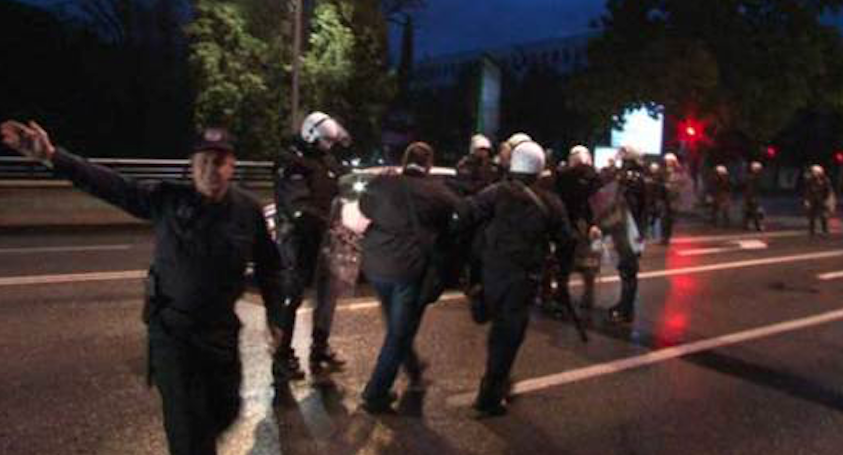
On Saturday (17/10/2015), the police in Montenegro violently broke peaceful protests and two journalists were subsequently detained. Drazen Zivkovic, a journalist working for the daily newspaper Dan and Gojko Raičević, the chief editor of an online news portal IN4S were detained after being obstructed from filming the police action against politicians from the opposition parties. Press photographers who came to the site of obstruction were also pushed by police and banned to report from the scene. Montenegro: Two journalists arrested with force at protest https://t.co/W23V35fuLy #MediaFreedom #ECPMF #mapmf — Index on Censorship (@IndexCensorship) October 20, 2015 “The Trade Union of Media of Montenegro (SMCG)…

Reporting the refugee crisis

LUNCH TIME DEBATE The European Federation of Journalists (EFJ) cordially invite you to join us at a lunch time debate on ”Reporting the refugee crisis”  on 20 October at 12:30 – 14:00 in Brussels organised by EFJ and the European Broadcasting Union (EBU). During the past few weeks the media all over Europe have been extensively reporting on the refugee and migrant crisis. Despite most of them reporting responsibly, a number of questions arose about the limits of publishing sensitive images. The debate will focus on the importance of ethical reporting, the roles and responsibilities of media and journalists in countering stereotypes and hate…

Joint international emergency press freedom mission visiting Turkey ahead of election

The European Federation of Journalists (EFJ) and the International Federation of Journalists (IFJ) are this week taking part in an emergency mission in Turkey in solidarity with journalists, media workers and the Journalists Union of Turkey (TGS) facing more repression than ever due to the forthcoming elections of November 1. “More than ever after the horrifying bombing on October 10 in Ankara killing more than 100 people and on the eve of the new elections, the international community needs to show strong and effective support to journalists and unionists fighting to defend freedom of expression against brutal censorship, violences, insults, repression, threats of…

1 in 3 French journalists want to quit their job

Journalism seems to be no longer an attractive profession. At least, this seems to be the conclusion suggested by the survey “Evolution and changes in the journalism professions” carried out by the National Union of Journalists (SNJ) and the evaluation and prevention of occupational risks office Technologia. The study has analysed the evolution of journalism in France since 2010 and revealed that 34% of journalists respondents said they would quite the profession. The study is the follow-up of a first research “Actual journalists’ work, quality of information and democracy” launched in 2011 by the above organisations. The latest study showed three…

What journalists unions, governments and employers must do to defend freedom of association ?

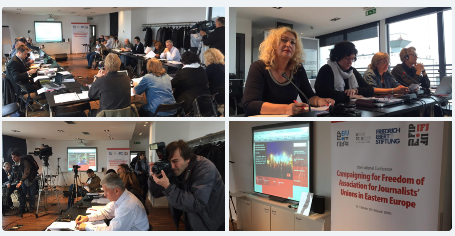
Journalists from across the Balkans and Eastern Europe met in Belgrade (Serbia) on 10-11 October 2015 to discuss the status of journalism in the region and the campaign for freedom of association to enable journalists to freely organise in unions. They discussed the struggles facing journalists, the precariousness of their employment, the low salaries and poor contracts the hostility of employers to journalists unions and the pervading climate of insecurity and fear. This is a struggle not just for improved conditions for journalists, but for a healthy and vibrant journalists sector that can play its democratic role in serving the…