Public Service Media in Western Balkans – Ensuring editorial independence and credibility

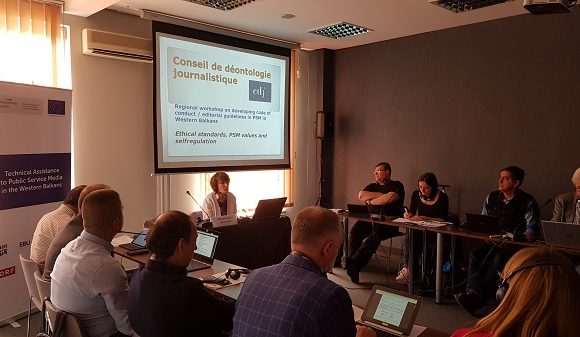
The regional workshop on developing code of conduct/editorial guidelines for Public Service Media in Western Balkans has started today, 18 October, in Hotel 88 Rooms, Belgrade. The workshop brings together the program directors and editors-in-chief from the six PSM (RTSh Albania, BHRT Bosnia and Herzegovina, RTK Kosovo, MRTV Macedonia, RTCG Montenegro and PSB Serbia) to discuss, examine and assess code of conducts and editorial guidelines with European experts in the field. How to ensure independence, how to be accurate & relevant, connected & accountable as well as fair & respectful are the challenges for all journalists and media; for public…
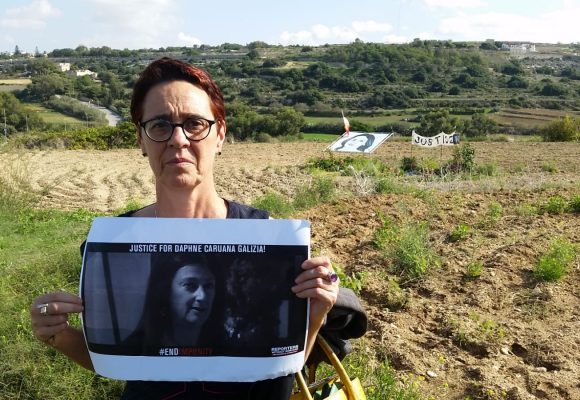
Anna Del Freo: “It is time to get journalists unionised in Malta”

From 15-17 October 2018, the European Federation of Journalists (EFJ) took part in an international freedom of expression mission to Malta, together with the Committee to Protect Journalists (CPJ), the European Centre for Press and Media Freedom (ECPMF), the International Press Institute (IPI), PEN International, and Reporters Without Borders (RSF). The mission took place exactly one year after the murder of investigative journalist Daphne Caruana Galizia, while the ongoing investigation is being questioned and journalists in the country are under pressure. The EFJ was represented by Steering Committee member and FNSI (Italian journalists’ union) deputy General Secretary Anna del Freo. She encouraged Maltese…

UK: new terror bill may restrict free speech

The United Kingdom is currently discussing a new terror bill including a wide range of anti-terrorism and border security measures. Many voices, including the National Union of Journalists (NUJ), and recently the influential Joint Committee on Human Rights (JCHR), raised concerns on the bill and its possible side effects on freedom of the press. The bill aims to close a number of loopholes in existing counter-terrorism legislation, in order to guarantee enough powers to the police and security services. However, according to the NUJ, “a number of clauses that could gravely endanger legitimate, public interest, media reporting of terrorists and…

New report shows that law often denies rights to self-employed workers

This article was originally published on the ETUC website: Despite a steady increase in the number of self-employed workers – who now represent 1 in 10 of all workers – the self-employed are denied the rights enjoyed by employees reveals a new report by the European Trade Union Confederation (ETUC). ‘Trade unions protecting self-employed workers’ published today by the ETUC shows that self-employed workers are not allowed by law from joining trade unions in some European countries, cannot negotiate standard rates and working conditions through collective bargaining in many EU member states – supposedly due to due EU competition law, do…

International coalition calls for independent public inquiry for the death of Daphne Caruana Galizia

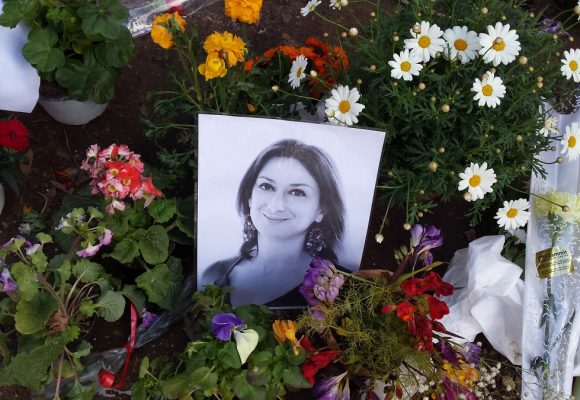
Prior to the anniversary of the murder of the Maltese investigative journalist Daphne Caruana Galizia on 16 October, the European Federation of Journalists (EFJ) has today joined a coalition of international organisations calling for a public inquiry into the her murder. The 26 international media freedom and journalists’ organisations have published an open letter to the Maltese Prime Minister, Mr. Joseph Muscat. The letter reads: Dear Prime Minister Joseph Muscat, I write to you on behalf of the European Centre for Press and Media Freedom and 25 organisations (listed below) representing thousands of journalists and human rights activists concerning Malta’s response…

Lithuanian journalists criticise new restriction to access public information

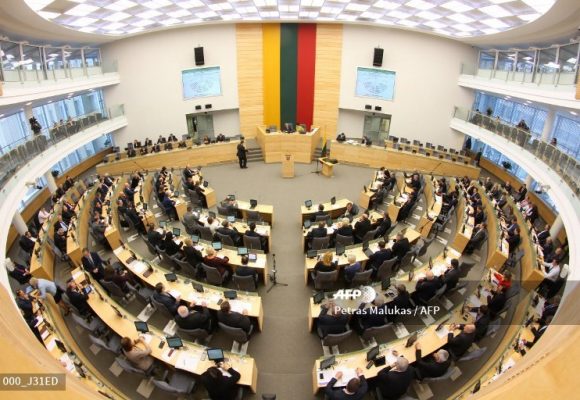
Journalists and editors have written to the Lithuanian Centre of Registers complaining about the recent policy to restrict media’s access to public data. The European Federation of Journalists (EFJ) criticises the Centre for restricting free press and supports the requests made by the journalists to the Lithuanian government. On 14 September, the Lithuanian Centre of Registers ended its long-time practice of providing the media with registry data free of charge. This happened without any prior notice to the media. Since the new policy implemented, registry data are provided to the media for the same fees as those paid by other commercial users.…

Parliament adopts revised EU Audiovisual Directive to ensure media independence

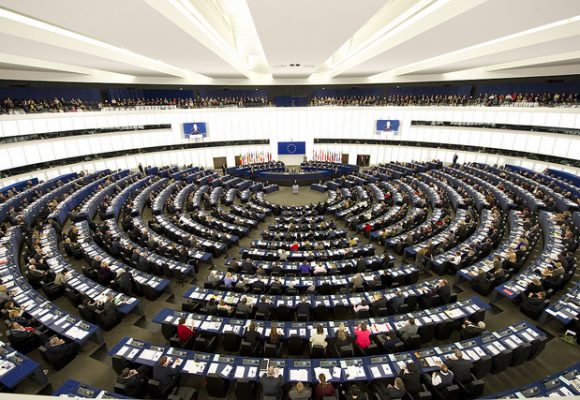
On 2 October, the European Parliament approved the revised Audiovisual Media Services Directive (AVMSD). The new rules aim to guarantee a fairer regulatory environment for the entire audiovisual sector. The European Federation of Journalists (EFJ) welcomed in particular the new requirement for Member States to have independent regulatory authorities for audiovisual media services. The Directive establishes a set of criteria that the regulator has to follow in ordered to be considered independent. First of all, it should be legally distinct from the government and functionally independent. Secondly, it should not take instructions from any other body in accomplishing its tasks.…

The European Parliament calls for free press in Belarus

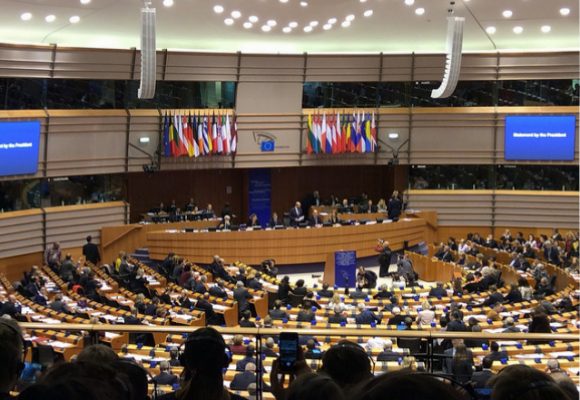
On 4 October, the European Parliament unanimously approved a resolution “on deterioration of media freedom in Belarus, notably the case of Charter 97” condemning the current situation of press freedom in Belarus, where independent news outlet and journalists suffer constant detention and state harassment. The resolution addresses the Belarusian government’s decision to block the internet access to the news website Charter 97 as well as pressures against journalists, freelancers and independent media. It calls on the EU institutions to monitor the situation of media freedom within the country and to condition the negotiations with Belarussian government to its commitment for the independence…

Netherlands: New ‘Source Protection Act’ finally enters into force

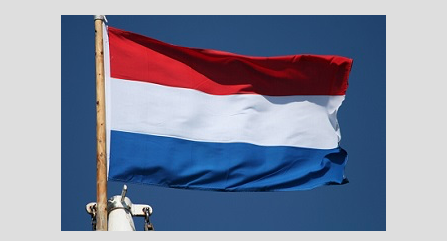
On 1st October, the Source Protection Act in Criminal Cases has finally become effective in the Netherlands. The law provides strengthened protection for the confidentiality of journalists’ sources, which have been recognised in several cases as an essential part of freedom of expression by the European Court of Human Rights. The European Federation of Journalists (EFJ) joined its Dutch affiliate the NVJ in welcoming the law, defined by NVJ General Secretary Thomas Bruning as “necessary to the correct functioning of journalism”. With the Source Protection Act, there will always be a preliminary consideration by a judge before the police can have access to the sources data…

Mafia aggressor against an Italian journalist condemned

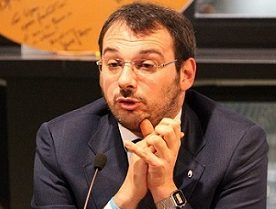
On 28th September, the Italian court of Ragusa sentenced the aggressor of Paolo Borrometi, a 44 years old freelance investigative journalist and the president of Articolo 21, the Italian association promoting freedom of expression. Venerando Lauretta was sentenced for the death threats he made against the journalist, aggravated by the mafia method, to one year and six months imprisonment. Lauretta, regent of the mafia clan Carbonaro-Dominante of Vittoria (Ragusa), begun to threaten Borrometi after identifying the journalist as responsible for the opening of investigations against his person. Paolo Borrometi is the editor of anti-mafia investigative website LaSpia.it, where he reports on the Sicilian…

Austrian Interior Ministry attempts to restrict freedom of press

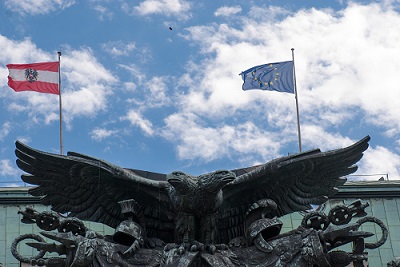
The intention of the Austrian Interior Ministry to restrict communication to “critical media” has been revealed in an email leaked to the press on Tuesday 25 September. In the four pages email, top ministry spokesman Christoph Pölzl, explicitly demanded regional police to “restrict communication with these media to only the most necessary (legally required) degree”. The European Federation of Journalists (EFJ) joined its affiliate in Austria, GPA-djp and Younion, in condemning this attack on press freedom. The media labeled as “critical” include the dailies Der Standard and Kurier as well as the weekly Falter. According to the Ministry, they have “operated…

The EU General Court denies a group of journalists access to MEPs’ expenses

The General Court of the European Union ruled on 25 September 2018 that MEPs expenses can remain secret. The highest court confirmed the European Parliament’s refusal to give access to documents related to MEPs’ expenses to a group of journalists, claiming that this would undermine MEPs’ personal privacy. The European Federation of Journalists (EFJ) condemns this decision and renews its call to improve transparency and access to information in the European Union. The request was forwarded to the European Parliament (EP) in 2015 by a group of 29 journalists, who wanted to access information on the MEPs’ spending records. According to Euractiv,…

Turkey: Austrian journalist Max Zirngast arrested in Ankara

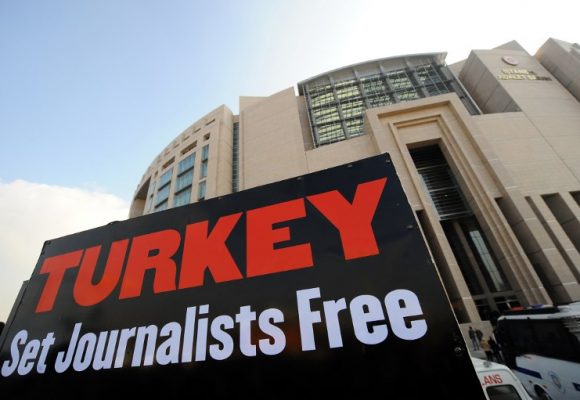
UPDATE 24.09.2018: On 21 September, Max Zirngast has been formally arrested with the accusation of  being a member in the leftist TKP/Kıvılcım group, which Turkey has banned and considers a terrorist organization. Austrian journalist Max Zirngast has been detained together with two other Turkish citizens, in the early hours of 11 September by anti-terror authorities in his apartment in Ankara, Turkey. The reason for detention has not been published yet, but according to media reports, he could have been detained on charges of “support for a terrorist organization” and because of his “political publications”. Allegations might be related to his civil and political activism against…

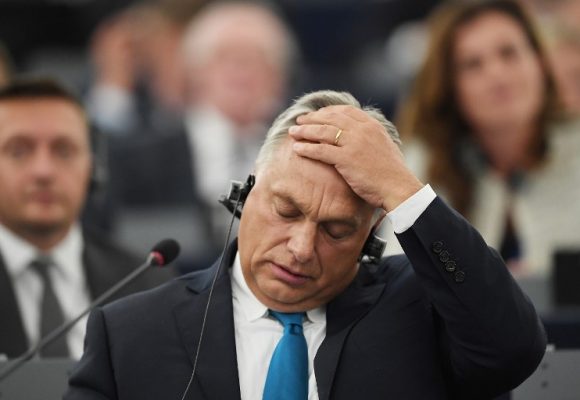
Hungary should be sanctioned for violating the Rule of Law, said the European Parliament

For the first time, members of the European Parliament called on the European Union to sanction one of its Member States, Hungary, on Wednesday 12 September. The government led by Prime Minister Victor Orban was accused of silencing independent media, targeting NGOs and removing independent judges, among other violations of democracy and common European values. The text adopted outlines in particular the bad state of freedom of expression in Hungary and the situation of Hungarian media since 2011, which has been constantly raising concerns on the issues of concentration and politicisation of media ownership; media law; self-censorship; denial of accreditation;  targeting of journalists; and…

European Parliament approves new Copyright Directive

The European Parliament today overwhelmingly approved the Directive on Copyright in the Digital Single Market (DSM) – a major step forward in protecting authors’ rights. The European and International Federations of Journalists (EFJ-IFJ) warmly welcomed the vote which is crucial to ensuring that journalists can make a living from their work and remain independent in their reporting. Independent journalists are essential to the good functioning of democratic societies. Members of the European Parliament today voted in favour of the European Parliament’s legal affairs Committee (JURI) report on the Commission’s proposal for a directive on copyright in the digital single market with 438 for,…

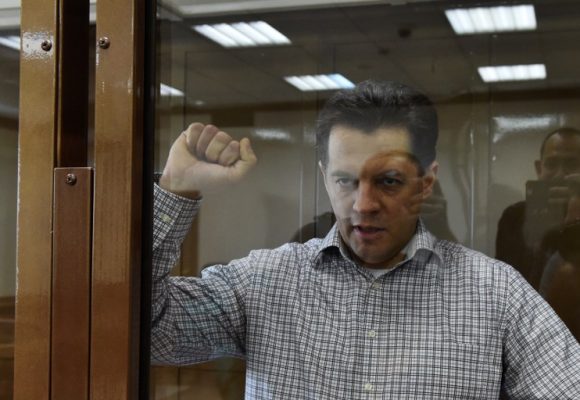
Ukraine: EFJ and IFJ condemn Russian jailing of journalist Roman Sushchenko for espionage

UPDATE 12.09.2018: On 12 September, the Supreme Court of the Russian Federation upheld the verdict delivered by the Moscow City Court to Ukrinform journalist Roman Sushchenko, who was sentenced to 12 years in a high-security prison. The European and International Federations of Journalists (EFJ-IFJ) have urged the Russian authorities to release a Ukrainian journalist given a 12-year sentence for alleged espionage. Roman Sushchenko was sentenced to 12 years in a high-security prison on 4 June 2018, after he was found guilty of spying by a Moscow court. The EFJ-IFJ joined its affiliates the National Union of Journalists of Ukraine (NUJU) and the…