European Federation of Journalists

openMedia, investigating press freedom

Title of the project : openMedia, investigating press freedom
Lead Applicant
: openDemocracy

Partner organisations : EFJ, Index on censorship, King’s College London

The recently launched openMedia project aims to investigate and expose commercial interference in editorial decisions. The project is run by openDemocracy with the European Federation of Journalists (EFJ) as a partner alongside the Index on Censorship and King’s College London.

The project believes that there has not been enough of a concerted, ongoing spotlight on the extent and effects of commercial influence over the media, despite the dangerous consequences it poses for press freedom. For now, the project focuses on 47 countries across Europe but also has ambitions to expand.

Despite the recent launch, the project is adamant that it is not a response to the “fake news” hype of the past year or so. Rather, the project responds to scandals of commercial sponsors influencing media content; for example the Daily Telegraph’s suppression of investigations into its advertiser HSBC; and allegations that Buzzfeed deleted articles which advertisers found unfavourable.

According to the project, this power dynamic can suppress investigations of banks, pharmaceuticals, agriculture, fossil fuel giants, energy companies and other big businesses.

In addition, the project recognizes how for many readers, “sponsored content” is difficult to distinguish from genuine news content. The project therefore aims to clarify the commercial interests apparent in media to readers, and as part of the project, King’s College London will develop digital tools to help readers be better informed about news sources.

The findings of the project will be used to campaign for greater transparency and press freedom in news organisations and to empower journalists to advocate for transparency.

In order to do this, openMedia is currently conducting a confidential and anonymous survey of journalists across Europe, asking about their own working practices and experiences of commercial pressure inside newsrooms. The survey is available in English here and in many other languages here.

Actions

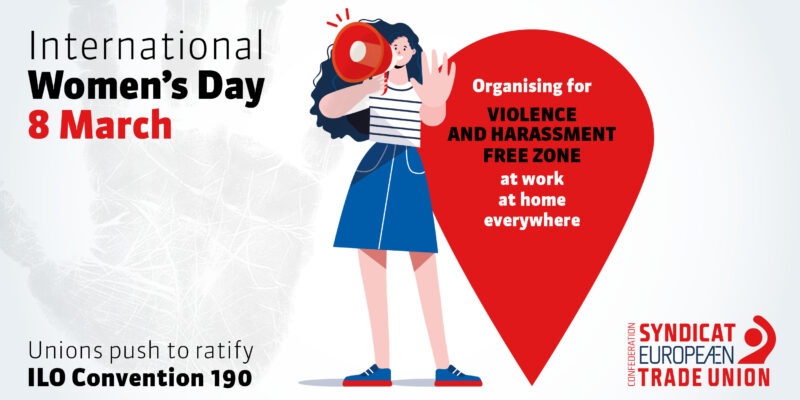
International Women’s Day: More support for female journalists as Covid sets back gender equality 

On 8 March International Women’s Day, the European Federation of Journalists (EFJ) calls for more vigorous actions to be made by governments and employers’ organisations to improve gender equality as the Covid crisis has deepened gender inequality.  Members of the EFJ experts groups on labour rights and freelances have looked at the working conditions of journalists during this period and noticed that working-from-home and lockdown policy has had a much greater impact on female journalists.  In Germany, according to a study from the Hans-Böckler Stiftung, women spend 1.7 hours more on work concerning family duties, since men tend to work…

Employers & governments not doing enough to tackle violence and harassment at work

The European Federation of Journalists (EFJ) joins the European Trade Union Confederation (ETUC) in calling on employers, legislators and law enforcement bodies to take action to tackle violence and harassment at work. Carried out January-February 2021, the ETUC survey of women union leaders in 21 European countries found that only 16% say that employers have updated their policies to address online harassment associated with telework; 23% thought that employers did enough to tackle violence and harassment at work, including online; 16% think their national laws are strong enough to tackle violence and harassment at work, including online; 17% believe their…

Nine Belarusian journalists are in jail: send them a letter of support

Update (13 and 23/03/2021) Denis Ivashin is the 10th journalist in jail in Belarus. His address: Prison № 1. 230023, Grodna, st. Kirava, 1, Belarus. Yasep Palubiatka is the 11th journalist behind bars in Belarus. —————————- Nine journalists are behind bars just for doing their job in Belarus. All are victims of the indiscriminate repression launched by the regime of illegitimate President Lukashenko. Some are serving an unjustified harsh sentence. Others are awaiting criminal trials. The European Federation of Journalists (EFJ) joins the call of the Belarusian Association of Journalists (BAJ) and invites you to send them a letter of…

Media4Europe summit called for greater collaboration between media professionals and outlets

The Media4Europe summit, organised on 3 March 2021 by Europe’s Media Lab (Fondation Euractiv), called for greater collaboration between media professionals and media outlets. Publishers, EU policy makers, media and journalists’ representatives, including EFJ President Mogens Blicher Bjerregard, discussed solutions to make the media sector more financially sustainable and close to citizens’ needs. The COVID-19 pandemic has shown that journalists and reliable news information are more necessary than ever. It has also tested the weaknesses and limitations of most of the European media business models. The awareness at the European level is growing: “the health of the news media sector…

Germany: Freelancers in urgent need of long-awaited financial support

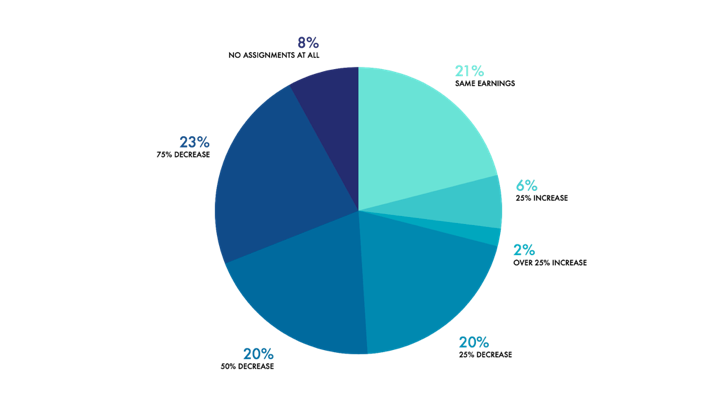
The German Journalists Association (DJV) has conducted a survey on the economic impact of the Covid-19 pandemic on Freelance journalists in Germany. About one year after the beginning of the crisis, the results show that many freelance journalists face an increasingly precarious situationl due to insufficient support. The European Federation of Journalists (EFJ) joins its German affiliates in drawing attention to this particularly vulnerable group of journalists and in calling for improved financial mechanisms to address this issue. Between 29 January and 19 February 2021, 1,090 freelance journalists participated in the study. It found that the average annual income of freelancers…

Apply to join online training to improve media reporting on Muslims and Islam

The European Federation of Journalists (EFJ) is organising a series of online webinars aiming to improve media reporting on Muslims and Islam. At times, media coverage and representations have too often been discriminatory, exclusive and biased, with many important voices left unheard. The upcoming training attempts to address these issues through ethical and unbiased reporting. There are 30 spots available for journalists from EU and candidate countries or Council of Europe members. The training aims to improve the understanding of Muslims and Islam through unbiased media reporting, connecting with Muslims and religious representatives as well as diversifying the medias’ respective views…