European Federation of Journalists

openMedia, investigating press freedom

Title of the project : openMedia, investigating press freedom
Lead Applicant
: openDemocracy

Partner organisations : EFJ, Index on censorship, King’s College London

The recently launched openMedia project aims to investigate and expose commercial interference in editorial decisions. The project is run by openDemocracy with the European Federation of Journalists (EFJ) as a partner alongside the Index on Censorship and King’s College London.

The project believes that there has not been enough of a concerted, ongoing spotlight on the extent and effects of commercial influence over the media, despite the dangerous consequences it poses for press freedom. For now, the project focuses on 47 countries across Europe but also has ambitions to expand.

Despite the recent launch, the project is adamant that it is not a response to the “fake news” hype of the past year or so. Rather, the project responds to scandals of commercial sponsors influencing media content; for example the Daily Telegraph’s suppression of investigations into its advertiser HSBC; and allegations that Buzzfeed deleted articles which advertisers found unfavourable.

According to the project, this power dynamic can suppress investigations of banks, pharmaceuticals, agriculture, fossil fuel giants, energy companies and other big businesses.

In addition, the project recognizes how for many readers, “sponsored content” is difficult to distinguish from genuine news content. The project therefore aims to clarify the commercial interests apparent in media to readers, and as part of the project, King’s College London will develop digital tools to help readers be better informed about news sources.

The findings of the project will be used to campaign for greater transparency and press freedom in news organisations and to empower journalists to advocate for transparency.

In order to do this, openMedia is currently conducting a confidential and anonymous survey of journalists across Europe, asking about their own working practices and experiences of commercial pressure inside newsrooms. The survey is available in English here and in many other languages here.
Actions

France: “No media should be a scapegoat” appeal

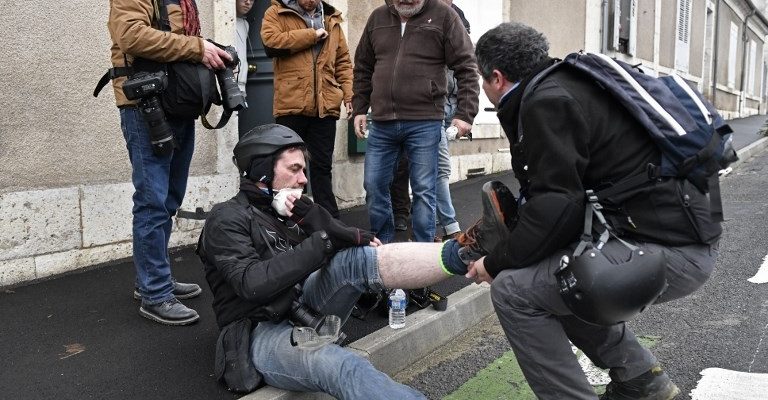
French journalists ‘safety is being increasingly threatened amid tensions covering the Gilet Jaunes (Yellow Vests) demonstrations across France. From insults and menaces to physical injuries, journalists are under attack from both demonstrators and the police. Publishers face the threat of their newspapers being blocked. Invectives on social media are on the rise. Amid a climate of defiance towards the media, anti-media rhetoric is commonplace in French society. The French media industry addressed these concerns publicly in an open letter in French newspapers on 15 January 2019 which was co-signed by the European Federation of Journalist (EFJ) together with its French…

Ukraine: physical assaults against female journalists rise by 50% in 2018

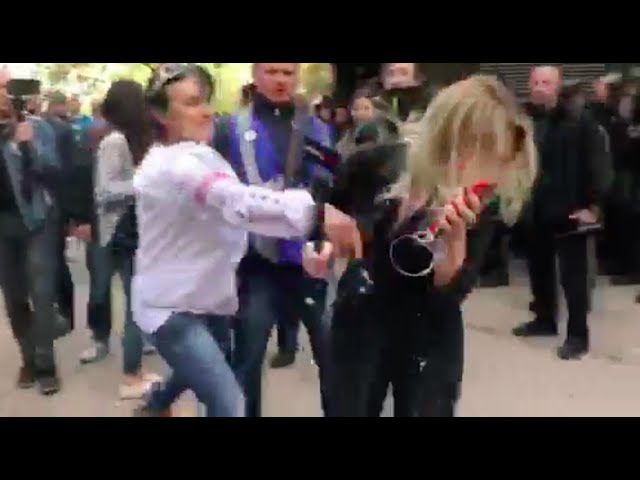
The National Union of Journalists of Ukraine (NUJU) released its 2018 “Ukraine’s Journalists Physical Safety Index”. The situation has worsened for journalists since last year with 86 attacks in 2018, with a notable rise of attacks on female journalists, from 23 in 2017 to 37 in 2018. Sergiy Tomilenko, NUJU President explains: “Such a dramatic increase in aggression against female journalists is due to the unacceptable impunity from prosecution assailants enjoy. Impunity from prosecution after attacking media workers is one of our most prevalent issues.” It is best illustrated by what happened to Donbas war reporter Natalia Nagora. Working for…

Whistleblowers: EU Council wants to limit reporting to authorities and media

Update (16.04.2019): the European Parliament approved the directive in plenary session with 591 votes in favour, 29 against and 33 abstentions. The Council of the European Union adopted on Friday 25 January its general approach on the protection of whistleblowers. The trilogue between the three European institutions has started with the aim to find a compromise before the next European elections. The political agreement between the 28 Member States determines under what conditions whistleblowers can report breaches of EU law to be granted protection against retaliation. It foresees that a whistleblower must, as a rule, first make a report inside his/her…

Grenoble: arson ravages France Bleu Isère radio

UPDATE (30-01-2019) – French Anarchist blog has claimed arson on both Radio Bleu Isère and an Haute-Jarrie telecoms relay tower, last night, in a strategy of systemic attacks on French Media in the region. Sunday night around 2:30 a.m., France Bleu Isère radio studios and offices were set on fire after arsonist(s) broke in. The police found enough evidence to immediately start a criminal investigation. The Editor-in-Chief of the French public regional station, Léopold Strajnic, told the police he had not received any threats prior to the attack. In the current climate, the European Federation of Journalists (EFJ) vigorously condemns another attack…

Sweden: Freelance journalists successfully obtain fee rise

The freelance section of the Swedish Union of Journalists (SJ) obtained a fee rise agreement with several big Swedish newspaper publishers. Agreements were reached thanks to a joint effort of individual freelance journalists, the Swedish Freelance Section of the Swedish Union of Journalists, Frilans Riks, and the local trade union branches at the publishing companies. The SJ issued its recommended new fees for freelance journalists last November to come into effect in 2019. Two Morning papers: Sydsvenska Dagbladet and Helsingborgs Dagblad will be implementing a two percent yearly increase, the first raise since a substential raise in 2015. Sweden’s biggest…

Turkey: solidarity with a newspaper is not a crime

UPDATE (29-01-2019) : Ayşe Düzkan and four other journalists were sentenced to prison because of participating in the “Editor-in-Chief on Duty” campaign with the now-closed Özgür Gündem newspaper. Today, Ayşe Düzkan went to the prosecution office and was sent to Bakırköy prison. Her friends, her colleagues and also DİSK Basın İş members were with her. She was sentenced to 1 year and 6 months in prison. But it is not certain how much time she will stay in prison yet. The European Federation of Journalists (EFJ) is calling the Turkish authorities to immediately release Ayse and the other journalists sentenced in the framework…