European Federation of Journalists

openMedia, investigating press freedom

Title of the project : openMedia, investigating press freedom
Lead Applicant
: openDemocracy

Partner organisations : EFJ, Index on censorship, King’s College London

The recently launched openMedia project aims to investigate and expose commercial interference in editorial decisions. The project is run by openDemocracy with the European Federation of Journalists (EFJ) as a partner alongside the Index on Censorship and King’s College London.

The project believes that there has not been enough of a concerted, ongoing spotlight on the extent and effects of commercial influence over the media, despite the dangerous consequences it poses for press freedom. For now, the project focuses on 47 countries across Europe but also has ambitions to expand.

Despite the recent launch, the project is adamant that it is not a response to the “fake news” hype of the past year or so. Rather, the project responds to scandals of commercial sponsors influencing media content; for example the Daily Telegraph’s suppression of investigations into its advertiser HSBC; and allegations that Buzzfeed deleted articles which advertisers found unfavourable.

According to the project, this power dynamic can suppress investigations of banks, pharmaceuticals, agriculture, fossil fuel giants, energy companies and other big businesses.

In addition, the project recognizes how for many readers, “sponsored content” is difficult to distinguish from genuine news content. The project therefore aims to clarify the commercial interests apparent in media to readers, and as part of the project, King’s College London will develop digital tools to help readers be better informed about news sources.

The findings of the project will be used to campaign for greater transparency and press freedom in news organisations and to empower journalists to advocate for transparency.

In order to do this, openMedia is currently conducting a confidential and anonymous survey of journalists across Europe, asking about their own working practices and experiences of commercial pressure inside newsrooms. The survey is available in English here and in many other languages here.
Actions

The EU General Court denies a group of journalists access to MEPs’ expenses

The General Court of the European Union ruled on 25 September 2018 that MEPs expenses can remain secret. The highest court confirmed the European Parliament’s refusal to give access to documents related to MEPs’ expenses to a group of journalists, claiming that this would undermine MEPs’ personal privacy. The European Federation of Journalists (EFJ) condemns this decision and renews its call to improve transparency and access to information in the European Union. The request was forwarded to the European Parliament (EP) in 2015 by a group of 29 journalists, who wanted to access information on the MEPs’ spending records. According to Euractiv,…

New brochure examines whistleblowing from the journalists’ perspective

The European Commission published on 23 April 2018 a proposal for a directive on the protection of persons reporting on breaches of Union law. The European Federation of Journalists (EFJ) welcomed this initiative, while warning that the legislative text doesn’t fully meet the criteria to establish a robust protection against retaliation for whistleblowers at the European level. In a brochure published in September, Quentin Van Enis, a legal expert specialised in media, lecturer at the University of Namur and member of the Belgian press council (CDJ), analysed for the EFJ the draft directive from the journalists’ perspective. The author highlighted the…

President of the Croatia Journalists’ Association threatened with dismissal

UPDATE 01.10.2018: The Croatian Journalists’ Association (CJA) published an open letter  entitled “CJA’s appeal for freedom of journalism” calling for an urgent public response for public broadcaster HRT and the emblematic case of Hrvoje Zovko. The International and European Federations of Journalists (IFJ and EFJ) joined today their Croatian affiliate, Croatia Journalists’ Association (CJA), to strongly condemn the launching by the Croatian public broadcaster HRT of a procedure to fire journalist Hrvoje Zovko, president of CJA. On 12 September, Hrvoje Zovko decided to resign as deputy editor-in-chief of public TV channel HTV4. Hrvoje Zovko has been a journalist and an editor…

Nordic Freelance conference: solidarity to support freelance journalists under attack in Belarus

The Nordic Freelance Conference 2018 took place this year in Malmö, Sweden. The Frilans Riks, the freelance section within the Swedish Union of Journalist (SJF), organised a two day conference focusing on threats against freelance journalists in particular from right wing extremists, rise in self-censorship, dialogue with the police, media situation in Belarus, as well as the power structure of the big tech companies (“GAFA”). EFJ Director Renate Schroeder outlined the work of EFJ and its Freelance Expert Group (FREG) with a special focus on its advocacy work in Brussels for improving freelance rights and monitoring increasing threats against (freelance)…

Media censorship in Belarus: “it is time for the EU to react”

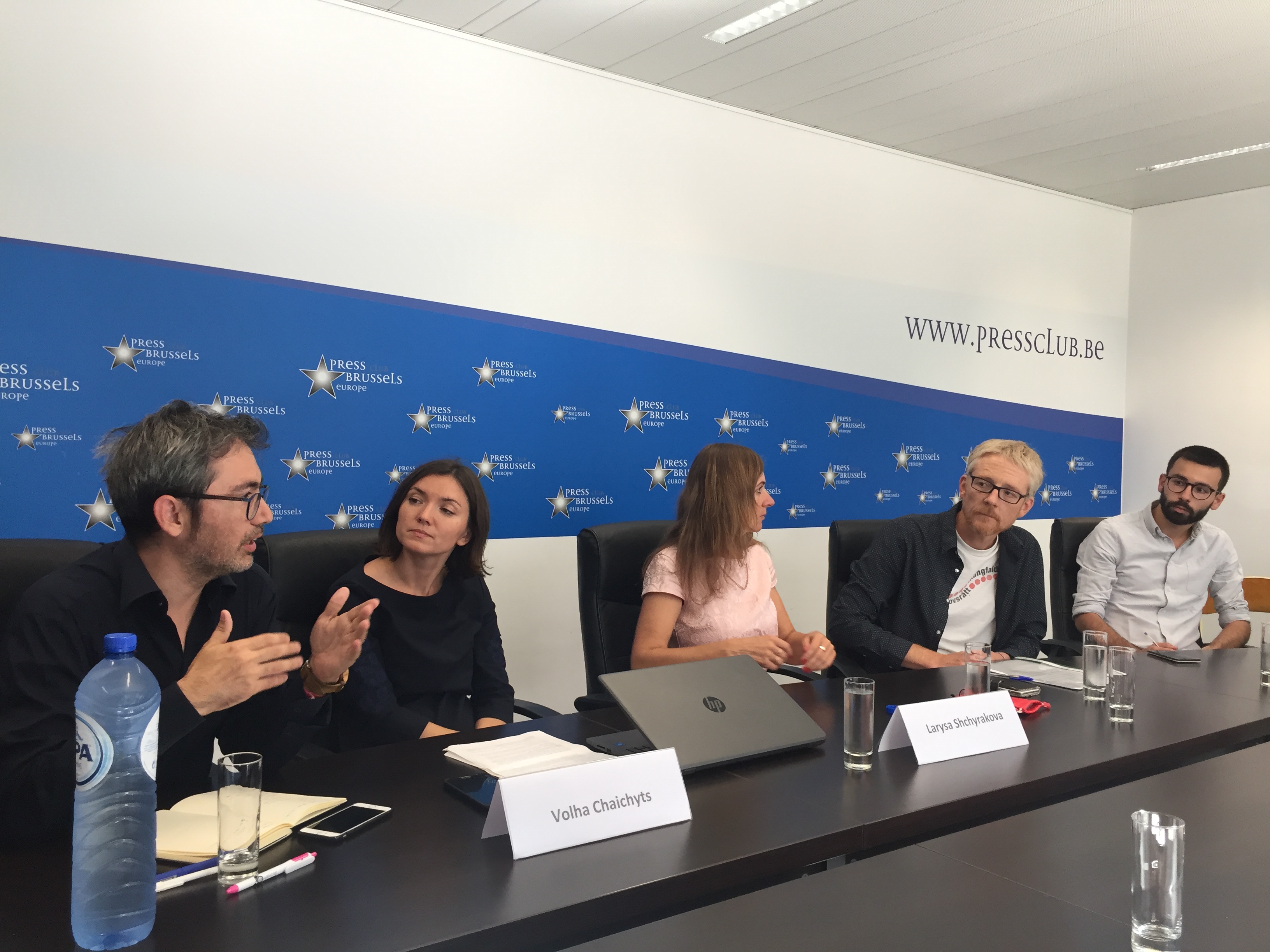
Freelance journalists in Belarus face increasing threats, pressure and censorship and this is a concern Europeans should share, said Belarussian journalists Larysa Shchyrakova and Volha Chaichyts at a press conference held in Brussels, on Tuesday 18 September. The event was jointly organised by the International and European Federations of Journalists (IFJ-EFJ) together with their affiliate the Belarus Association of Journalists (BAJ). Larysa Shchyrakova and Volha Chaichyts are two Belarusian freelance journalists, working for Belsat TV, a ten-year-old television channel based in Warsaw, Poland. During the conference, the two female journalists exposed several problems they face in their country that they…

Danish public broadcaster DR to cut 400 jobs

Danish public broadcaster DR will cut between 375 and 400 jobs and close down three TV channels and three radio channels, as a consequence of the package of media reforms agreed by Denmark’s governing right-wing coalition. DR will lose 20% of its funding over the next five years. The European Federation of Journalists (EFJ) joins its affiliate, the Danish Union of Journalists (DJ), in strongly condemning these unprecedented layoffs in what some are calling an act of “revenge” by the Danish government. A significant driver of the cuts is the right-wing populist Danish People’s Party (DF), which is a supporting partner of the…