European Federation of Journalists

openMedia, investigating press freedom

Title of the project : openMedia, investigating press freedom
Lead Applicant
: openDemocracy

Partner organisations : EFJ, Index on censorship, King’s College London

The recently launched openMedia project aims to investigate and expose commercial interference in editorial decisions. The project is run by openDemocracy with the European Federation of Journalists (EFJ) as a partner alongside the Index on Censorship and King’s College London.

The project believes that there has not been enough of a concerted, ongoing spotlight on the extent and effects of commercial influence over the media, despite the dangerous consequences it poses for press freedom. For now, the project focuses on 47 countries across Europe but also has ambitions to expand.

Despite the recent launch, the project is adamant that it is not a response to the “fake news” hype of the past year or so. Rather, the project responds to scandals of commercial sponsors influencing media content; for example the Daily Telegraph’s suppression of investigations into its advertiser HSBC; and allegations that Buzzfeed deleted articles which advertisers found unfavourable.

According to the project, this power dynamic can suppress investigations of banks, pharmaceuticals, agriculture, fossil fuel giants, energy companies and other big businesses.

In addition, the project recognizes how for many readers, “sponsored content” is difficult to distinguish from genuine news content. The project therefore aims to clarify the commercial interests apparent in media to readers, and as part of the project, King’s College London will develop digital tools to help readers be better informed about news sources.

The findings of the project will be used to campaign for greater transparency and press freedom in news organisations and to empower journalists to advocate for transparency.

In order to do this, openMedia is currently conducting a confidential and anonymous survey of journalists across Europe, asking about their own working practices and experiences of commercial pressure inside newsrooms. The survey is available in English here and in many other languages here.

Actions

Turkey: Cumhuriyet journalists and executives heavily convicted for changes in “editorial policy”

On Wednesday (25/05/2018), the court in Silivri (Turkey) severely convicted 13 journalists and executives from the opposition newspaper Cumhuriyet to jail sentences between two to eight years. The court is convinced that editorial policy changes adopted by the newspaper were aimed at helping multiple illegal terrorist organisations in Turkey. All the defendants have been released pending the confirmation of the jail sentences by the upper court. The judge also ordered the release of Cumhuriyet chairman Akin Atalay who had been in jail for 532 days until yesterday. “As we always say they cannot intimidate Cumhuriyet newspaper which will continue to…

EU conference on digital sector: policymakers and citizens join forces to shape digital future

A High Level Conference “Shaping our digital future” brought together around 600 participants including MEPs, ministers and citizens to discuss challenges and opportunities of the digital sector on 25 April in Brussels. The event was jointly organised by the European Parliament and the European Commission in the light of the rapidly changing digital landscape to enter into a dialogue with policy makers and citizens about Europe’s digital future. Four panels discussed the following topics: Investing in connectivity and the data economy infrastructure (5G, High Performance Computing, Artificial Intelligence) and avoiding a digital divide Innovation in the digital age based on…

Whistleblower directive: the European Commission takes “an important step” but improvement on public reporting yet to be made

On 23 April, the European Commission issued a proposal for a directive on the protection of persons reporting on breaches of Union law. This is an important step in acknowledging the crucial importance of the protection of whistleblowers against intimidation and retaliation in European democracies. The proposed directive emphasises the important role of whistleblowers as journalistic sources for investigative journalism, allowing the industry to fulfil its ‘watchdog’ role. It also acknowledges that sufficient whistleblower protection is needed to ensure the freedom of expression as well as the public’s right to access information and media freedom. This is indeed crucial as…

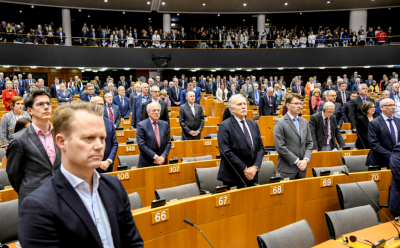
Resolution calls for protection of investigative journalists in the wake of murders of Ján and Daphne

A resolution on the protection of investigative journalists in Europe, passed by Members of the European Parliament (MEPs)  on 19 April 2018 during the plenary session in Strasbourg, calls for better protection of investigative journalists and whistle-blowers. In the wake of the murders of investigative journalists Daphne Caruana Galizia and Ján Kuciak, MEPs demand better protection of journalists who are regularly subject to lawsuits intended to censor their work a permanent financial EU scheme to support independent investigative journalism a draft EU directive to protect whistle-blowers the Commission to address challenges to media freedom and pluralism in the EU better monitoring of media…

Enforce moral rights to fight misinformation

Everyone needs reliable information and ways to fight misinformation – and that requires sound protection of authors’ moral rights, say the International and the European Federation of Journalists (IFJ and EFJ) ahead of World Book and Copyright Day, 23 April. A large part of today’s discussions on the media focus on fighting disinformation and so-called “fake news”. But – so far – there is little discussion of legislation or of improved media practices to enhance and defend the authenticity of journalistic works through the reinforcement of journalists’ moral rights. “In the ‘cut-and-paste’ logic of online news our stories can be…

Report calls on EU states to collaborate with journalists’ unions for gender equality

A report on “Gender Equality in the Media Sector in the EU”, passed by Members of the European Parliament (MEPs) during the plenary session in Strasbourg on 17 April 2018, calls on Member States and the European Commission to collaborate with journalists’ trade unions and media organisations to promote co-regulation in the media sector through codes of conduct. In order to safeguard and ensure gender equality, media companies are urged to draw up codes of conduct and self-regulation systems together with representatives from journalists’ trade unions. This aims to allow preventive action and impose sanctions regarding gender-based discrimination in media productions. The…