European Federation of Journalists

openMedia, investigating press freedom

Title of the project : openMedia, investigating press freedom
Lead Applicant
: openDemocracy

Partner organisations : EFJ, Index on censorship, King’s College London

The recently launched openMedia project aims to investigate and expose commercial interference in editorial decisions. The project is run by openDemocracy with the European Federation of Journalists (EFJ) as a partner alongside the Index on Censorship and King’s College London.

The project believes that there has not been enough of a concerted, ongoing spotlight on the extent and effects of commercial influence over the media, despite the dangerous consequences it poses for press freedom. For now, the project focuses on 47 countries across Europe but also has ambitions to expand.

Despite the recent launch, the project is adamant that it is not a response to the “fake news” hype of the past year or so. Rather, the project responds to scandals of commercial sponsors influencing media content; for example the Daily Telegraph’s suppression of investigations into its advertiser HSBC; and allegations that Buzzfeed deleted articles which advertisers found unfavourable.

According to the project, this power dynamic can suppress investigations of banks, pharmaceuticals, agriculture, fossil fuel giants, energy companies and other big businesses.

In addition, the project recognizes how for many readers, “sponsored content” is difficult to distinguish from genuine news content. The project therefore aims to clarify the commercial interests apparent in media to readers, and as part of the project, King’s College London will develop digital tools to help readers be better informed about news sources.

The findings of the project will be used to campaign for greater transparency and press freedom in news organisations and to empower journalists to advocate for transparency.

In order to do this, openMedia is currently conducting a confidential and anonymous survey of journalists across Europe, asking about their own working practices and experiences of commercial pressure inside newsrooms. The survey is available in English here and in many other languages here.

Actions

‘Media (literacy) and Refugees’ events to discuss media role in representing migrants

The European Association of Viewers’ Interests (EAVI) and MyStory project have announced their ‘Media (Literacy) and Refugees’ event, taking place on 5 December 2017 at L42 Rue de la Loi. EAVI is a non-profit international organisation, working across Europe to promote media literacy. In the morning, a series of roundtable discussions will look at the way media shapes citizens’ perceptions of migrants and refugees. The discussions will highlight the success of grassroots organisations and their media initiatives, and touch on media literacy, journalism, civil society and fake news. The project Media Against Hate will be presented at this occasion. Registration here.…

Russian ‘foreign agents’ media law threatens media freedom

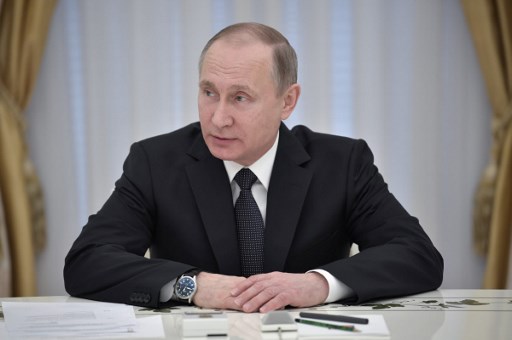
The European Federation of Journalists (EFJ) has expressed grave concern over the recent adoption of a new law that would allow the state to have more control and scrutiny over foreign media and journalists in Russia. On 25 November 2017, Russian president Vladimir Putin signed a new law which will allow authorities to classify foreign journalists and media outlets as “foreign agents”. In practice, the law means that Russia now has the power to force foreign journalists and media to register themselves as “foreign agents”, to submit their content to scrutiny and to reveal their funding sources. Failure to comply…

Belarus: harrassment against freelance journalists on the rise

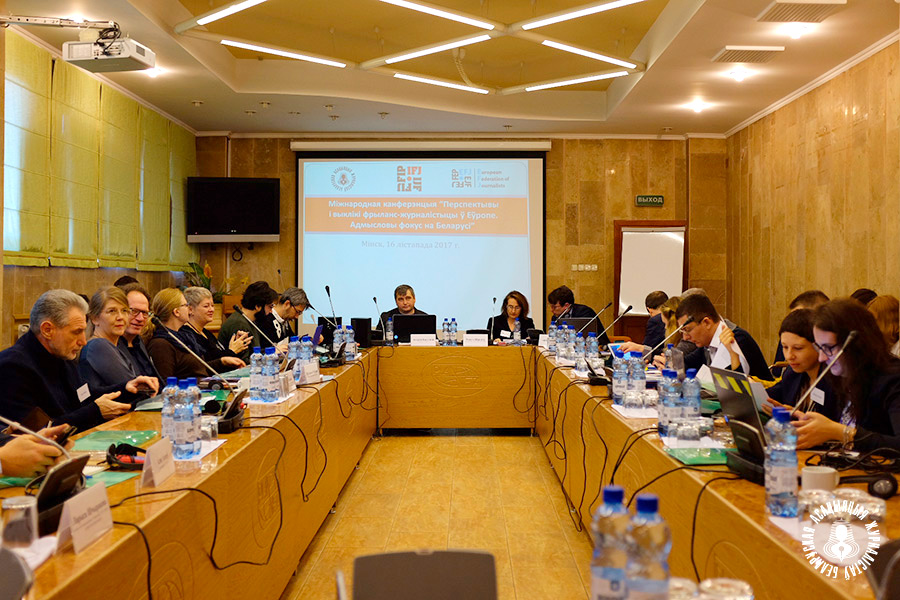
On 16 November 2017, the Belarus Association of Journalists (BAJ) in cooperation with the International Federation of Journalists (IFJ) and European Federation of Journalists (EFJ), organised a one-day meeting in Minsk focusing on “The Perspectives and challenges for freelance journalism in Belarus and Europe”.  Around 40 journalists, including media lawyers, EFJ/IFJ affiliates and the EU Delegation to Belarus, discussed how to best put the desperate issue of freelance journalism at the heart of local and national authorities in Belarus and the European Union. Renate Schroeder from the EFJ, Michael Hirschler from the German Journalists’ Association (DJV), and other colleagues from the EFJ’s Freelance Expert Group (FREG)…

Manifesto of Venice against gender-based violence

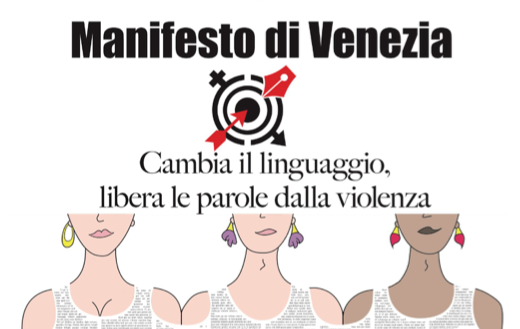
The “Manifesto of Venice”, a manifesto for gender equality and correct information, will be launched on the World Day for the Elimination of Violence against Women and Girls, on 25 November 2017. Signed by 800 journalists, including directors of national newspapers in Italy, the manifesto will be launched by the EFJ affiliate in Italy, the Federazione Nazionale Stampa Italiana (FNSI) Equal Opportunities Committee (CPO). It is a result of their collaboration with the CPO of Unione Sindacale Giornalisti Rai and Giornaliste Unite Libere Autonome (GiULiA), following a proposal by the Veneto Journalists’ Union. “We, journalist signatories of the Manifesto of Venice, are…

News Impact Summit returns with focus on media and politics

The News Impact Summit returns to Brussels on 4 December 2017, with the theme of “A Year is a Long Time in Politics”. Organised by the European Journalism Centre with help from the Google News Lab, the day of speakers, workshops and discussion will look back on the relationship between media and politics this year. The event will focus on how the global political upheaval shaped the way journalists covered the news, as well as how evolving journalism practices changed the face of politics. Editors, reporters, technologists and researchers from International Consortium of Investigative Journalists (ICIJ), Euronews, First Draft, Berliner…

EFJ Focus November 2017

The latest EFJ newsletter, EFJ Focus, is available here EDITORIAL: Lack of leaders standing up for media freedom in Western Balkans The EU- Western Balkans Media Days that recently took place in Tirana, Albania, proved the importance of having a very firm focus on press freedom in the region where journalists are often caught in cross-fire. Firstly, journalists in the region are often attacked, harassed and even imprisoned. In particular, female journalists are exposed to harassments and threats. Impunity for crimes against journalists remains as a common practice. Governments have the duty to support media and journalists. Swift actions should be taken whenever there is a…