European Federation of Journalists

openMedia, investigating press freedom

Title of the project : openMedia, investigating press freedom
Lead Applicant
: openDemocracy

Partner organisations : EFJ, Index on censorship, King’s College London

The recently launched openMedia project aims to investigate and expose commercial interference in editorial decisions. The project is run by openDemocracy with the European Federation of Journalists (EFJ) as a partner alongside the Index on Censorship and King’s College London.

The project believes that there has not been enough of a concerted, ongoing spotlight on the extent and effects of commercial influence over the media, despite the dangerous consequences it poses for press freedom. For now, the project focuses on 47 countries across Europe but also has ambitions to expand.

Despite the recent launch, the project is adamant that it is not a response to the “fake news” hype of the past year or so. Rather, the project responds to scandals of commercial sponsors influencing media content; for example the Daily Telegraph’s suppression of investigations into its advertiser HSBC; and allegations that Buzzfeed deleted articles which advertisers found unfavourable.

According to the project, this power dynamic can suppress investigations of banks, pharmaceuticals, agriculture, fossil fuel giants, energy companies and other big businesses.

In addition, the project recognizes how for many readers, “sponsored content” is difficult to distinguish from genuine news content. The project therefore aims to clarify the commercial interests apparent in media to readers, and as part of the project, King’s College London will develop digital tools to help readers be better informed about news sources.

The findings of the project will be used to campaign for greater transparency and press freedom in news organisations and to empower journalists to advocate for transparency.

In order to do this, openMedia is currently conducting a confidential and anonymous survey of journalists across Europe, asking about their own working practices and experiences of commercial pressure inside newsrooms. The survey is available in English here and in many other languages here.
Actions

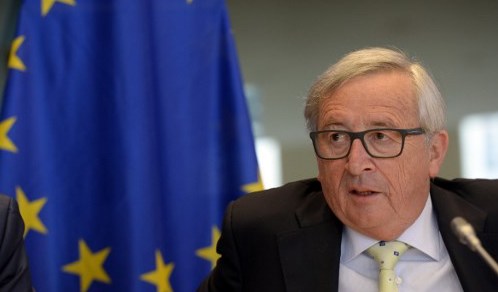
EFJ’s reaction to President Juncker’s State of the Union Speech

Jean-Claude Juncker, President of the European Commission, has made his State of the Union speech outlining his vision for the future of Europe. Commenting on the State of the Union speech, the European Federation of Journalists (EFJ) welcomes his commitment to address the social dimension of the digital single market in particular in the area of social and workers’ rights. In his speech, President Juncker said: “In a Union of equals, there can be no second class workers. Workers should earn the same pay for the same work in the same place.” Ricardo Gutiérrez, EFJ General Secretary said: “We welcome…

Montenegro: Journalist Vladimir Otasevic received death threat

A Montenegrin journalist working for Dan newspaper, Vladimir Otasevic, reported that the Prime Minister’s brother, Velizar Markovic, had threatened his safety during a phone call on Monday 11 September. In the conversation, Otasevic was asking for a phone number of the Prime Minister’s other brother when Markovic  insulted and verbally threatened him, saying that he shouldn’t be surprised if someone ends up dead at the end. An audio recording of the conversation was released by Dan on Tuesday. The European Federation of Journalists (EFJ) today strongly condemned the death threats and backed its affiliate in Montenegro, the Trade Union Media…

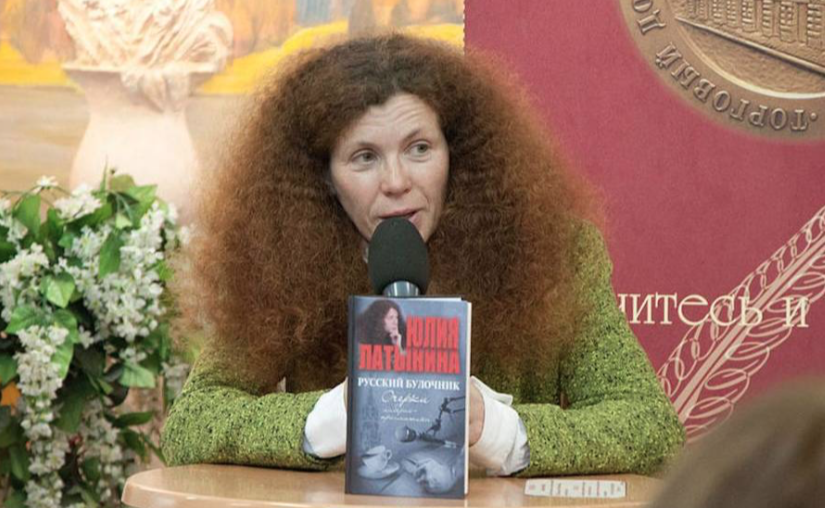
Prominent journalist Yulia Latynina flees Russia after attacks

Russian journalist Yulia Latynina has fled Russia after a series of attacks led her to fear for her life. The Russian Union of Journalists (RUJ) has appealed to the Russian government to investigate the attacks. The International and European Federation of Journalists joined its affiliate the RUJ in condemning the attacks on Yulia Latynina and called on the Russian government to bring the perpetrators to justice. This latest attack is part of a string of attempts to intimidate and silence the journalist. In July 2017, Latynina’s home was sprayed with an unknown chemical, causing breathing problems for several children and elderly…

Pre-trial detention extended for Cumhuriyet journalists despite clear demonstrations

The European and International Federations of Journalists (EFJ-IFJ) condemn the court’s decision to maintain the five Cumhuriyet journalists and media workers in pre-trial detention, after a 13-hour long hearing at Silivri prison, on 11 September 2017. The court ordered their detention despite clear demonstration by the defendants’ lawyers that the accusations of “without being a member of that organisation, spreading propaganda on behalf of an illegal terrorist organisation” were completely baseless. An international delegation including the EFJ-IFJ, IPI, PEN International, Norsk PEN, PEN Vlaanderen, RSF, foreign consulate representatives, foreign press correspondents and MEP Rebecca Harms has attended the hearing and shared solidarity…

Azerbaijan: EFJ/IFJ welcome release of Mehman Aliyev and Alexander Lapshin

The European and International Federations of Journalists welcome the release of two Azerbaijani journalists, Mehman Aliyev and Alexander Lapshin, on the 11th of September 2017. Azerbaijan’s President Ilham Aliyev today pardoned Russian travel blogger Alexander Lapshing. He was arrested in Minsk in December 2016 and extradited to Azerbaijan, after the Supreme Court in Belarus decided to send him to Baku despite the objections from Moscow. Lapshin was accused of illegally visiting Nagorno-Karabakh, the disputed territory between Azerbaijan and Armenia, and calling for independence of the region. The second journalist, Mehman Aliyev, editor-in-chief of the Turan news agency, has been released today from pretrial detention, on condition that he…

What is the future of financing digital journalism?

The media environment is becoming increasingly digital, mobile and more and more people consume news directly on social media. Which innovative financing tools will make quality journalism sustainable in the future and how can we preserve a lively news environment that informs citizens and scrutinizes societal power hubs? Those were the main questions of the debate, organised yesterday (07/09/2017) by the Friedrich Naumann Foundation (FNF) in cooperation with the European Federation of journalists (EFJ). It was moderated by Caroline Margaux Haury, European Affairs Manager at the FNF. Renate Schroeder, director of the EFJ, gave opening remarks. “The evolution of the…