European Federation of Journalists

openMedia, investigating press freedom

Title of the project : openMedia, investigating press freedom
Lead Applicant
: openDemocracy

Partner organisations : EFJ, Index on censorship, King’s College London

The recently launched openMedia project aims to investigate and expose commercial interference in editorial decisions. The project is run by openDemocracy with the European Federation of Journalists (EFJ) as a partner alongside the Index on Censorship and King’s College London.

The project believes that there has not been enough of a concerted, ongoing spotlight on the extent and effects of commercial influence over the media, despite the dangerous consequences it poses for press freedom. For now, the project focuses on 47 countries across Europe but also has ambitions to expand.

Despite the recent launch, the project is adamant that it is not a response to the “fake news” hype of the past year or so. Rather, the project responds to scandals of commercial sponsors influencing media content; for example the Daily Telegraph’s suppression of investigations into its advertiser HSBC; and allegations that Buzzfeed deleted articles which advertisers found unfavourable.

According to the project, this power dynamic can suppress investigations of banks, pharmaceuticals, agriculture, fossil fuel giants, energy companies and other big businesses.

In addition, the project recognizes how for many readers, “sponsored content” is difficult to distinguish from genuine news content. The project therefore aims to clarify the commercial interests apparent in media to readers, and as part of the project, King’s College London will develop digital tools to help readers be better informed about news sources.

The findings of the project will be used to campaign for greater transparency and press freedom in news organisations and to empower journalists to advocate for transparency.

In order to do this, openMedia is currently conducting a confidential and anonymous survey of journalists across Europe, asking about their own working practices and experiences of commercial pressure inside newsrooms. The survey is available in English here and in many other languages here.
Actions

Mijatović: Journalists’ safety still the main issue plaguing media freedom

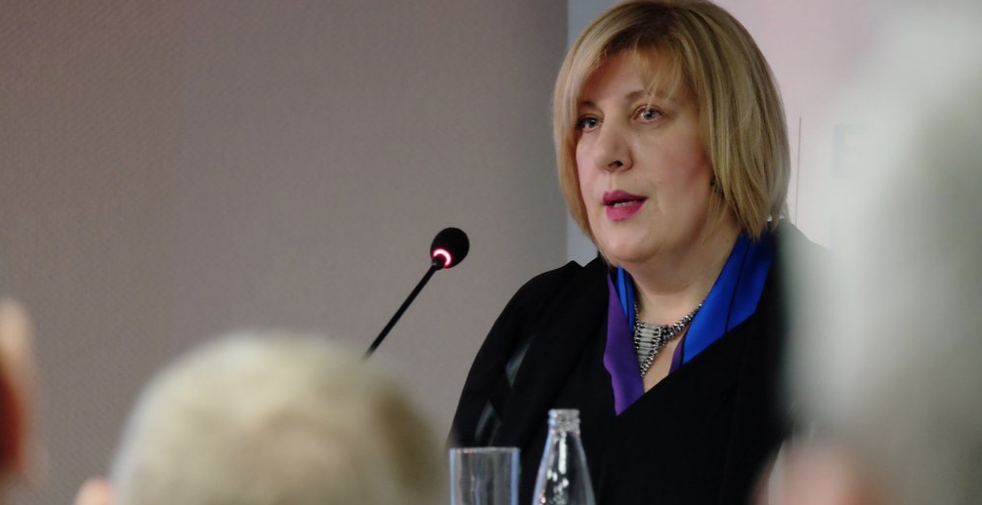
The safety of journalists remains the main threat to media freedom in the OSCE region, OSCE Representative on Freedom of the Media Dunja Mijatović said today during her visit to Sarajevo, Bosnia and Herzegovina. During her visit, Mijatović also participated in the European Federation of Journalists’ General Meeting held in Sarajevo and delivered the keynote speech at the event. “Any rational discussion about the state of media freedom must begin with an analysis of the state of the safety of journalists,” Mijatović told some 100 delegates from journalist federations from across Europe. “It is unacceptable that journalists every day are…

EFJ Focus April 2016

The EFJ newsletter, EFJ Focus, is available in English and in French.   EDITORIAL Building stronger unions and quality journalism No one will doubt the importance of high quality journalism in a democratic society especially with recent revelations from the investigative reporting of the ‘‘Panama Papers’’ and ‘‘LuxLeaks’’. The revelations reaffirm that independent and quality journalism is a prerequisite and a fundamental pillar for democracy. This is why we need investment in journalism in order to allow journalists to do their job in an environment media freedom, decent working conditions and authors’ rights are respected. This will be the main topic…

Palestinian journalist Omar Nazzal arrested on his way to the EFJ General Meeting

The European Federation of Journalists and the International Federation of Journalists condemned the arrest of Palestinian journalist Omar Nazzal who was on his way to Sarajevo (Bosnia and Herzegovina) for the General Meeting of the EFJ. Omar Nazzal, member of the General Secretariat of the Palestinian Journalists’ Syndicate (PJS) in the West Bank, was arrested by Israeli forces on the al-Karameh crossing between Palestine and Jordan on Saturday, 23 April. He was taken to the Etzion interrogation center. The president of PJS, Nasser Abu Baker, who is also participating in the EFJ meeting, also condemned Nazzal’s arrest. A delegation of Palestinian journalists (Nasser Abu…

Kosovo: Ethical media audits and guidelines for quality journalism

This report arises from a visit to Prishtina and covers a series of interviews and meetings with Kosovo media leaders and regulatory bodies to develop draft guidelines for ethical audits and good governance at media enterprise level. In line with the working programme for 2016 the EJN has begun to prepare materials to perform internal audits (these are attached). The initial material has been circulated to local media selected for co-operation: Koha Ditore, Zëri, Insider Online Agency, Kosovo 2.0 and Radio Television Kosova. The meetings also examined the current media situation and the major challenges for ethical practice and good…

World Copyright Day: Outlaw unfair contractual practices!

Legislators must take concrete steps against unfair contractual clauses in their laws. This is the message put across by the European Federation of Journalists (EFJ) and the International Federation of Journalists (IFJ) to mark World Copyright and Book Day tomorrow 23 April. The organisations warn against the continuing trend developed by media companies to use rights- grabbing contracts. Journalists who sign those contracts not only lose the right to use their works autonomously, but also the (moral) right to protect the integrity of their works. These practices allow for the same work to be used many times for one single payment…

Debate – “I can’t write that”: Self-censorship in European media, 2 May 2016 in Brussels

The European Federation of Journalists (EFJ) together with the Friedrich Naumann Foundation for Freedom will organise a debate on self-censorship in European media on 2 May in Brussels. If an internet search has the potential to land a journalist on the blacklist of security services or if a reporter cannot guarantee for the anonymity of sources, free reporting is in danger. The same goes for journalists who have to pick their words carefully in order to secure their media company’s advertisement revenue. In several Central European states and in Europe’s neighborhood, particularly in Turkey, the government is tightening its grip on media companies.…