European Federation of Journalists

IFJ-EFJ Regional Development Fund

Czech Republic


The European Federation of Journalists (EFJ) signed an agreement on 18 December 2014 with the Union of Journalists and Media Workers of Czech Republic (OSNPM) in order to investigate the working conditions of Czech journalists and media workers. The project is implemented with the cooperation of Judith Reitstatter, from the Austrian union GPA-djp.

The online survey was launched on 19 May 2015. Around 2,500 journalists and media workers were invited to participate to the survey. The EFJ, OSNPM and GPA-djp analysed together the main outcomes of the survey during a round table conference, on 19 August 2015, in Prague.

The questionnaire focus mainly on labour rights. “This area is underestimated by the Czech media, journalists themselves and their employers as well,” explains Zdeněk Kučera, chairman of OSNPM.

“Over the past 25 years, journalists’ attention was focused primarily toward freedom of speech, access to information, relations with media ownership and the development of media houses. These are very serious topics. However, journalists’ status remained grossly underrated. A specific problem is the status of freelance journalists, which are increasingly numerous, particularly in regional media.”

The main findings of the survey are available on the EFJ website, here.
FOCUS EFJ

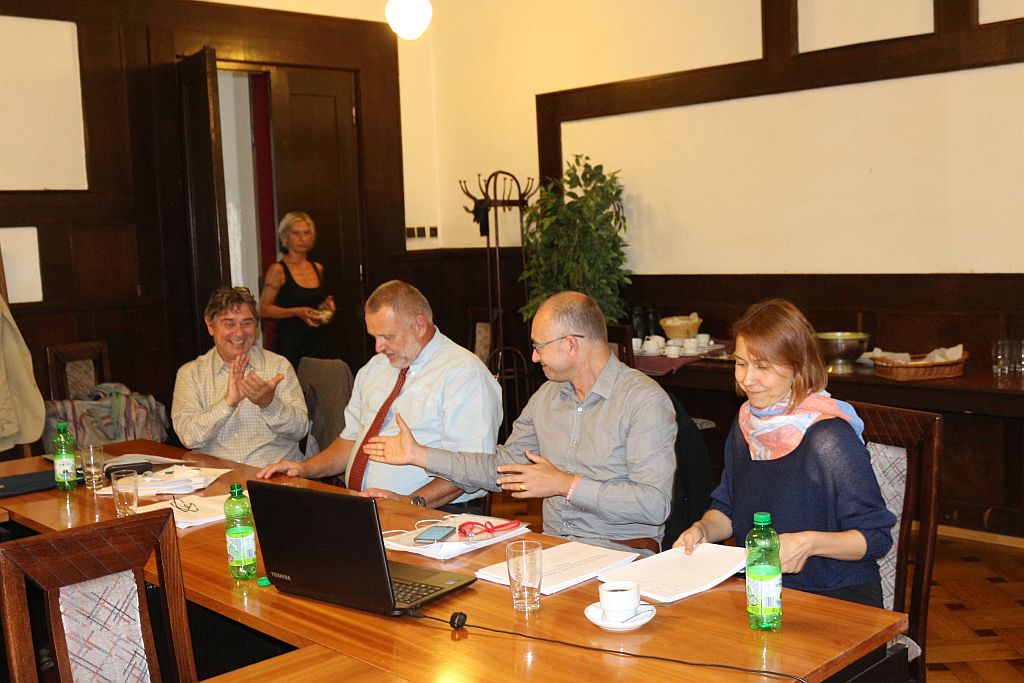
Side event of our project: a high school magazines national competition (Nejinspirativnější středoškolský časopis 2015). Here are the winners (picture credit: F. Cakl):

Czech

Contact details: OSNPM, e-mail: odborovy-svaz-novinaru@seznam.cz, website: http://www.odborovysvaznovinaru.cz


Slovakia

The European Federation of Journalists (EFJ), its Austrian union GPA-djp and the Slovak Union of Journalists (Slovenský syndikát novinárov) organized a meeting in Vienna, on 30 October 2014. Trade unionists and media students from both countries met in GPA-djp offices, in Vienna. The discussion on media convergence was launched by Dr. Roman Hummel, from the university of Salzburg.

Contact details: Judith Reitstaetter, judith.reitstaetter (at) gpa-djp.at


Estonia

The European Federation of Journalists (EFJ), the Estonian Union of Journalists (Eesti Ajakirjanike Liit, EAL) and the Union of Journalists in Finland (Suomen Journalistiliitto, UJF) agreed on 6 February 2015 to jointly implement the project “Workshops to Strengthen Journalists’ organisation in Estonia”.

The main objective of the project is to strengthen journalists’ organisation in Estonia, through three activities:

  • a freelance workshop in Helsinki,
  • a radio & TV negotiators workshop in Helsinki,
  • an authors’ rights seminar in Tallinn.

An action plan will be proposed for the next period.

Contact details: Juha Rekola, Juha.Rekola (at) journalistiliitto.fi, and Helle Tiikmaa, helle (at) eal.ee
 

Actions

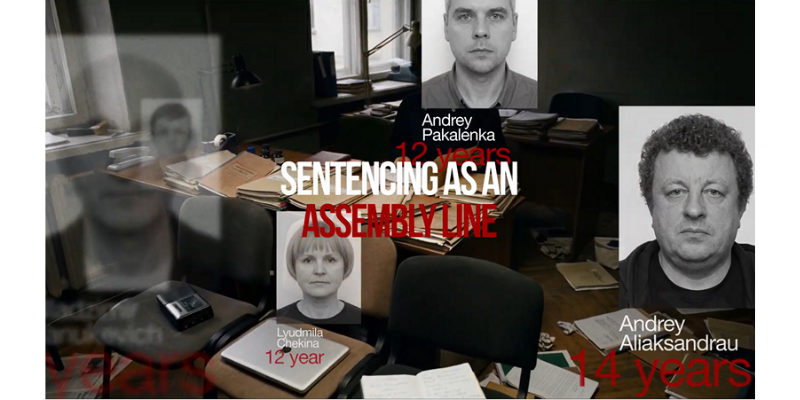
Belarus: 22 journalists spend World Press Freedom Day behind bars

Today, on World Press Freedom Day, 22 journalists are still behind bars in Belarus. The situation with freedom of speech in Belarus remains the worst in Europe. Since the sweeping repression that began in 2020, hundreds of Belarusian media workers have endured detention, arrest, and persecution. The European Federation of Journalists (EFJ) joins its affiliates the Belarusian Association of Journalists (BAJ) in calling for the release of all Belarusian journalists. Recently, several well-known journalists were released. But we worry about those who remain behind bars. In February and March of this year, after large-scale releases of political prisoners, several media…

Turkey: EFJ and partner organisations condemn escalating use of “disinformation law” against journalists and call for its repeal

The European Federation of Journalists (EFJ) joins the undersigned organisations in strongly condemning the intensifying use of Article 217/A of the Turkish Penal Code — widely known as the “disinformation law” — to arrest, detain, and prosecute journalists, and calling on the government to repeal the provision immediately and release all journalists imprisoned under it. Since the law entered into force in October 2022, at least 83 journalists have been charged 114 times over disinformation according to news reports. The scale of Article 217/A’s use against journalists has been starkly illustrated in a recent article. The two journalists most frequently…

From Freelance Work to Artificial Intelligence: How to Build Stronger Unions in Media, Arts and Entertainment

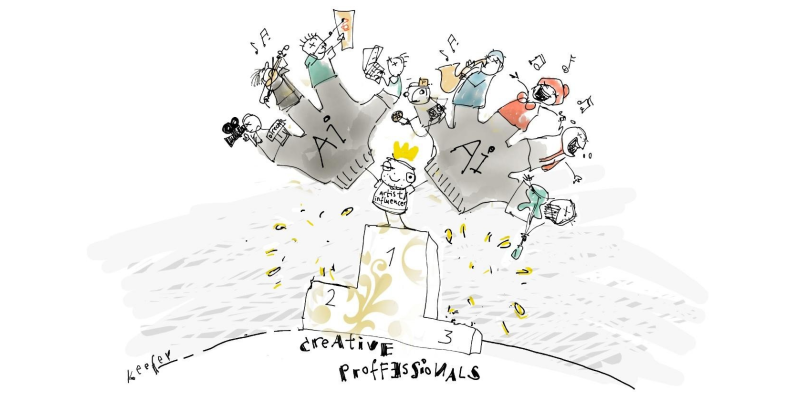
By Zoran Pehar, Trade Union of Croatian Journalists Can self-employed workers strike? Can they secure their rights through a collective agreement? How can unions protect them? And should we work with artificial intelligence or against it? Over the past two years, the project “Building stronger Unions in the Media, Arts & Entertainment Sector to Tackle the Challenges of Freelance Work, AI and Sectoral Change” has sought answers to these questions. The project is relevant to the wider cultural and creative sector, where Eurostat records around 2.5 million self-employed workers in the EU, and especially to the narrower group of creative…

Czech Republic: Public media funding bill raises concerns over compatibility with EMFA

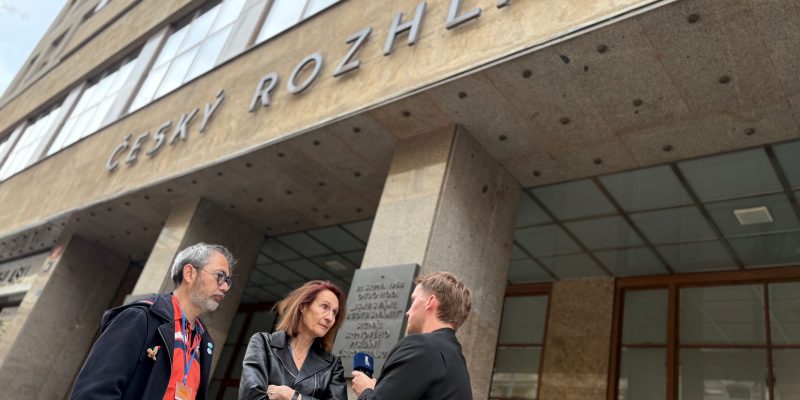
A new government bill which would overhaul the funding model for the Czech public media risks financially weakening the broadcasters, eroding safeguards for their financial independence and violating European Media Freedom Act (EMFA), the undersigned Media Freedom Rapid Response (MFRR) partners, the European Federation of Journalists (EFJ) and other media freedom, journalist and freedom of expression organisations warn today. Our organisations call on the European Commission to closely assess this bill regarding its compatibility with Article 5 of EMFA and to ensure that no reforms are undertaken which threaten the financial, editorial or institutional independence of the Czech public media.…

Malta: EFJ condemns government inaction on media reforms

The European Federation of Journalists (EFJ) and international press freedom and journalist organisations are today calling on the Maltese authorities to make long-overdue media reforms an immediate priority, and to commit to meaningful and transparent collaboration with national and international civil society.  The assassination of investigative journalist Daphne Caruana Galizia in 2017 generated significant pressure to improve working conditions for all journalists in Malta. A 2021 public inquiry, established independently to assess the circumstances of her murder found the state had to “shoulder responsibility” because it had created an “atmosphere of impunity” and failed to take reasonable steps to protect…

Voices Podcast: Ukraine-Palestine discussion on award-winning Solidarity Centres supporting journalists during war

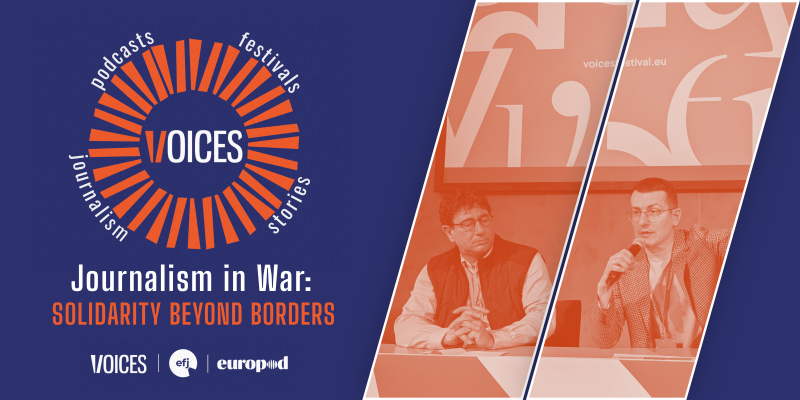
The European Federation of Journalists (EFJ) with Europod released their first episode of the Voices podcast “Journalism in War: Solidarity Beyond Borders”. Recorded in March during the third edition of Voices Festival, it explores the challenges journalists face when reporting from conflict zones and the structures that have been established to support them. At this year’s festival, Voices presented the Media Freedom Award to the National Union of Journalists of Ukraine (NUJU) and the teams behind the network of Journalists’ Solidarity Centres. These hubs were developed as a response to Russia’s full-scale invasion of Ukraine in 2022, to provide journalists…