European Federation of Journalists

IFJ-EFJ Regional Development Fund

Czech Republic


The European Federation of Journalists (EFJ) signed an agreement on 18 December 2014 with the Union of Journalists and Media Workers of Czech Republic (OSNPM) in order to investigate the working conditions of Czech journalists and media workers. The project is implemented with the cooperation of Judith Reitstatter, from the Austrian union GPA-djp.

The online survey was launched on 19 May 2015. Around 2,500 journalists and media workers were invited to participate to the survey. The EFJ, OSNPM and GPA-djp analysed together the main outcomes of the survey during a round table conference, on 19 August 2015, in Prague.

The questionnaire focus mainly on labour rights. “This area is underestimated by the Czech media, journalists themselves and their employers as well,” explains Zdeněk Kučera, chairman of OSNPM.

“Over the past 25 years, journalists’ attention was focused primarily toward freedom of speech, access to information, relations with media ownership and the development of media houses. These are very serious topics. However, journalists’ status remained grossly underrated. A specific problem is the status of freelance journalists, which are increasingly numerous, particularly in regional media.”

The main findings of the survey are available on the EFJ website, here.
FOCUS EFJ

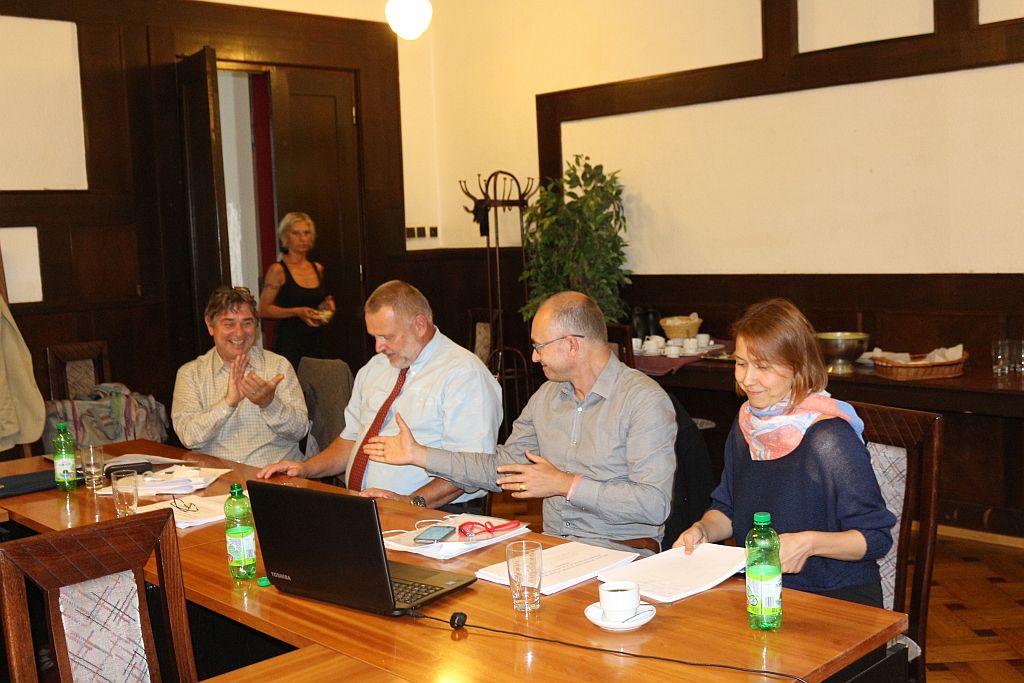
Side event of our project: a high school magazines national competition (Nejinspirativnější středoškolský časopis 2015). Here are the winners (picture credit: F. Cakl):

Czech

Contact details: OSNPM, e-mail: odborovy-svaz-novinaru@seznam.cz, website: http://www.odborovysvaznovinaru.cz


Slovakia

The European Federation of Journalists (EFJ), its Austrian union GPA-djp and the Slovak Union of Journalists (Slovenský syndikát novinárov) organized a meeting in Vienna, on 30 October 2014. Trade unionists and media students from both countries met in GPA-djp offices, in Vienna. The discussion on media convergence was launched by Dr. Roman Hummel, from the university of Salzburg.

Contact details: Judith Reitstaetter, judith.reitstaetter (at) gpa-djp.at


Estonia

The European Federation of Journalists (EFJ), the Estonian Union of Journalists (Eesti Ajakirjanike Liit, EAL) and the Union of Journalists in Finland (Suomen Journalistiliitto, UJF) agreed on 6 February 2015 to jointly implement the project “Workshops to Strengthen Journalists’ organisation in Estonia”.

The main objective of the project is to strengthen journalists’ organisation in Estonia, through three activities:

  • a freelance workshop in Helsinki,
  • a radio & TV negotiators workshop in Helsinki,
  • an authors’ rights seminar in Tallinn.

An action plan will be proposed for the next period.

Contact details: Juha Rekola, Juha.Rekola (at) journalistiliitto.fi, and Helle Tiikmaa, helle (at) eal.ee
 

Actions

COVID-19: Serbian government urged to guarantee free flow of information

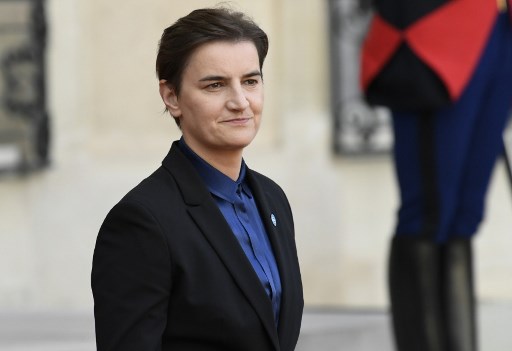
Serbian Prime Minister, Ana Brnabic, withdrew a planned decree that would have limited the publishing of information related to COVID-19 just to official sources on 2 April. The International and European Federation of Journalists (IFJ and EFJ) welcome the U-turn by the government and urges the authorities to respect the free flow of information and not to arrest journalists for their reports on COVID-19. The Serbian government had on 28 March passed a decree stating that only the Prime Minister or individuals authorized by the Crisis Management Taskforce could release information about the COVID-19 pandemic. A few days after, the Serbian…

Mapping COVID-19 support: Belgium

Media sector (emergency) In French-speaking Belgium, a package of 3 million euros was negotiated for media outlets in financial difficulty and another 3 million euros for public health advertising space through media outlets. In Flanders, 3.8 million euros were allocated to public broadcaster VRT, and another 3.8 million euros to regional broadcasters. The Flemish Audiovisual Fund and a number of smaller players can also count on another 1.9 million euros and 500,000 euros respectively. New support package of up to 15,000€ per media outlet/self-employed with a 60% drop in turnover in the period 1 August to 30 September 2020 compared…

Mapping COVID-19 support: Kosovo

Media sector (emergency relief) A package of 41 million euros. It includes a Fiscal Emergency Package, lease subsidy up to 50% of the value of the lease for small and medium enterprises for April and May (maximum 12 million euros), the coverage of the value of pension contributions for salaries for April and May, up to 8 millions euros, micro-enterprises and the self-employed are eligible for financial liquidity insurance of up to 10.000€ over 24 months through some programme of the Kosovo Credit Guarantee Fund, a financial support from 130€ was granted to companies employing with contracts of at least…

Mapping COVID-19 support: Italy

Specific measures for freelancers Freelancers with an annual income of up to 50.000€ could get a bonus of 600€. The National Institute for Italian Journalists Social Security (INGPI) implemented a package of measures of 42 000€ which allowed extensions of parental leave, the right to defer contribution, a fund for solidarity loans at zero cost, an additional economic allowance of 500€ for all contraction of activities (in case of a contraction of at least 33% of the income in the quarter March-May 2020, compared of the period October-December 2019) and possibility to suspend further financing installment in progress with the…

Mapping COVID-19 support: Germany

Media sector (emergency relief) Media outlets were eligible to the 25 billion euros aid programme, providing they meet the following conditions: decrease in revenues in April and May 2020 by at least 60% compared to 2019 and by at least 50% in the period June-August 2020. Up to 50% of fixed operating costs will be reimbursed if revenues fall by at least 50% compared to the same month of the previous year (up to 80% if decrease by more than 70%). The maximum refund was 150,000€ per company for three months. Specific measures for freelancers At the regional level: Bavaria:…

ARTICLE19 briefing: How to tackle misinformation about COVID-19

Professional journalism, ethical journalism, independent media, transparency from those in power, media literacy and the free flow of information are the best antidote to misinformation and conspiracy theories about the spread of COVID-19 across the globe. In that particular context, the European Federation of Journalists (EFJ) welcomed the policy brief recently issued by ARTICLE19. “More than ever we need professional journalists in the field. Citizens are counting on them to report on the real impact of the pandemic, to disseminate protective measures and to hold decision-makers accountable. The EFJ asks media owners to refrain from any initiative to reduce wages,…